
The blog discusses Drainage Systems for Yard Water Problems: Complete Homeowner Guide. At first glance, puddling in your yard can be an annoyance, but over time, it can cause problems with your lawn, foundation, landscaping, and even the structure of your home. When drainage is poor, lawns turn to mud, grass dries and wilts, basements leak, mosquitoes breed, and repairs are expensive.
This full guide offers any property owner the information they should know regarding drainage systems, yard drainage NY, and effective water management landscaping solutions.
Why Yard Drainage Matters
Drainage problems don’t usually reveal themselves until after heavy rain, storms, or snow melt. But if there is standing water, however, it is a sign of bigger issues that can only deteriorate with the passage of time.
Common problems caused by poor drainage
- Flooding in the basement and cracks in the foundation.
- Damage to soil and landscapes can cause erosion.
- Growth of mould and mildew
- Mosquito infestations
- The death of grass and plant disease
- Damage to the driveway and walkways
Good drainage will safeguard your home’s structure and enhance the health and usability of your outside living.
Signs Your Yard Needs a Drainage System
If you see any of the following, you might need a drainage solution:
- Water pooling after rain for more than 24 hours
- Soggy or muddy lawn areas
- Water flowing toward your home
- Basement dampness or leaks
- Soil erosion around landscaping
- Plants are dying from overwatering
Even small issues can lead to bigger problems if ignored.
What Causes Yard Drainage Problems?
When you know what caused the problem, you’ll know what to use for a solution.
1. Poor Soil Composition
Pools and runoff are associated with clayey soils, which have poor permeability.
2. Improper Yard Grading
Water can flow to your home’s foundation if your yard is sloping toward your home.
3. Heavy Rain & Snowmelt
New York has seasonal storms and snow accumulations that can overwhelm natural drainage.
4. Compacted Soil
Heavy foot traffic and construction compact the soil, decreasing the water absorption.
Types of Yard Drainage Systems
Each yard is unique and will need a different solution. In many cases, it is best to use a combination.
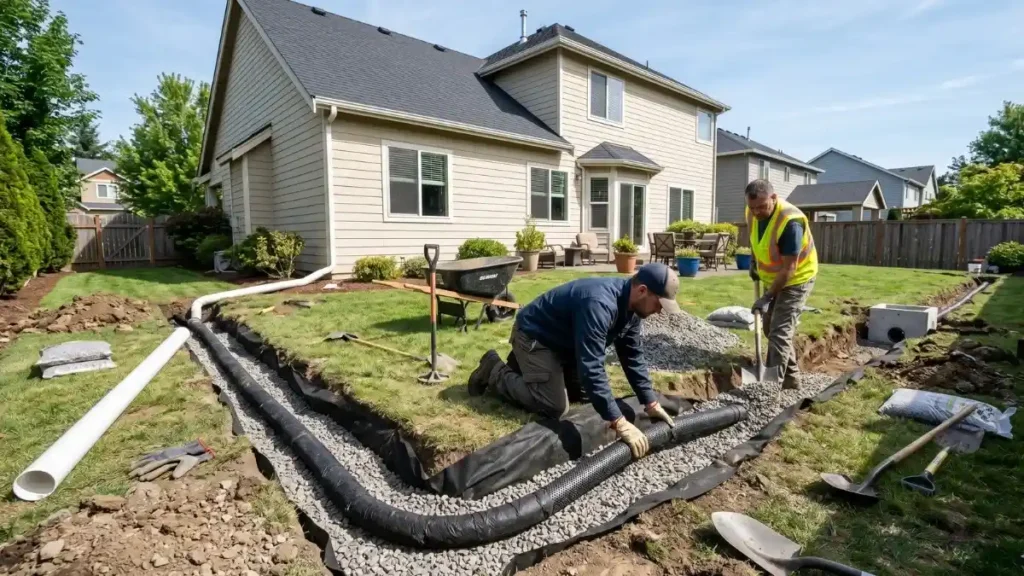
1. French Drains
One of the most sought-after yard drainage systems is a French drain.
How it works
A gravel-filled pipe with holes is laid in the ground. Water is directed into the pipe and away from your lawn.
Best for:
- Soggy lawns
- Buckled or broken concrete slabs and pavers
- Basement flooding prevention
Pros
- Highly effective
- Long-lasting solution
- Hidden underground
2. Channel Drains
A channel drain (also known as trench drain) is a long surface drain placed in a driveway, patio, or walkway.
Best for:
- Driveways
- Garage entrances
- Pool decks
- Patios
They readily accumulate surface water and channel it away.
3. Dry Wells
Water is caught in a dry well and slowly infiltrates into the soil.
Ideal for:
- Downspout runoff
- Small yard drainage problems
- Moderate soil absorption areas
They are environmentally friendly and contribute to the recharge of groundwater.
4. Catch Basins
Large quantities of surface water and debris are collected in catch basins.
Best for:
- Large yards
- Flooding history and potential for future occurrences
- Heavy rainfall regions
They help to keep water from flooding your property.
5. Downspout Extensions
Simple, yet effective, downspout extensions are easy to install and capture roof water away from your home.
Benefits
- Affordable
- Easy installation
- Prevents foundation damage
Often, the first step in solving drainage issues
6. Grading and Sloping
Sometimes, the easiest answer is to reshape your yard.
Proper grading should:
- Slope away from your home
- Direct water toward drains or safe areas
- Prevent water from pooling
This is a foundational step in water management landscaping.
Water Management Landscaping Solutions
Drainage need not be a problem for an attractive lawn. Smart landscaping can enhance functionality and aesthetics.
Rain Gardens
Rain gardens: shallow, planted, water-absorbing, and water-filtering areas.
Benefits
- Eco-friendly drainage solution
- Attracts pollinators and wildlife
- Improves curb appeal
They are especially popular in New York for sustainable landscaping.
Dry Creek Beds
Dry creek bed: creates a stream bed with rocks and gravel to simulate a natural stream bed.
Advantages
- Directs runoff naturally
- Prevents erosion
- Beautiful landscape feature
Permeable Pavers
Concrete traps water, and permeable pavers let water in.
Perfect for:
- Driveways
- Patios
- Walkways
They help to prevent runoff and flooding.
Yard Drainage Solutions for the New York Climate
New York homeowners have to deal with distinct drainage problems as a result of:
- Heavy snowfalls/snowmelt.
- Spring rainstorms
- Freeze-thaw cycles
- Clay-heavy soils
Key tips for NY homes:
- Install drains below the frost line
- Prepare for snowmelt runoff
- Combine drainage and landscaping solutions
- Schedule seasonal inspections
DIY vs Professional Drainage Installation
DIY Projects
Suitable for:
- Downspout extensions
- Small grading adjustments
- Simple dry wells
Professional Installation
Recommended for:
- French drains
- Large flooding problems
- Foundation drainage
- Major yard redesign
Long-lasting effectiveness with professional design.
How Much Do Yard Drainage Systems Cost?
The prices are dependent on the yard size and the nature of the solution.
Average cost ranges
- Downspout extensions: $200–$800
- Dry wells: $1,000–$4,000
- French drains: $3,000–$10,000
- Grading: $1,500–$6,000
- Full drainage systems: $5,000–$15,000+
Prevention of future higher repair bills can be achieved by investing early.
Maintenance Tips for Drainage Systems
If it is properly maintained, systems perform well after installation.
Annual maintenance checklist
- Clean gutters and downspouts
- Remove debris from drains
- Inspect for soil erosion
- Check grading and slopes
- Flush French drain pipes
Frequent maintenance to extend system life.
Preventing Future Drainage Problems
Smart homeowner habits
- Avoid overwatering lawns
- Plant water-absorbing vegetation
- Cover with mulch and ground cover
- Clean gutters all year long
- Heavy rain will require monitoring of the yard.
It is always less expensive to prevent a problem than to fix it.
When to Call a Drainage Specialist
If you’re having any of these symptoms, please reach out to a professional:
- Basement flooding
- Water near the foundation
- Large yard pooling
- Erosion problems
- Persistent drainage issues
Early intervention saves money and protects your home.
How Poor Drainage Impacts Your Home’s Foundation
The real danger of the yard water problems is long-term foundation damage. Many homeowners don’t know that over time, water constantly erodes the soil around their home. This can lead to the movement, cracking, and expensive structural repair over time.
Near the foundation of the house, as water accumulates, it expands and contracts as it absorbs and dries. The continual motion stresses the walls and concrete floors below. Over time, tiny cracks develop, which can allow water to enter the basement or crawlspace.
Foundation drainage issues can be identified by the following:
- Cracks in walls and floors
- Doors and windows are sticking in place or out of place.
- The basement musty smells
- Peeling paint or mold
- Uneven floors
Repairing foundation issues can be very expensive, tens of thousands of dollars, so it’s one of the best investments homeowners can make to address foundation issues early on.
How Drainage Improves Lawn Health
Proper watering and aeration of the lawn are essential to a healthy lawn. Grass roots will not receive oxygen if the soil is kept saturated for extended periods of time. This results in grass being mowed down, patches of yellow grass, and disease on the lawn.
Excess water also promotes fungal growth, which spreads rapidly and hurts plants. When you see mushrooms and moss, or if the ground is always damp, your lawn has drainage issues.
Good drainage will:
- Improving soil aeration
- To promote the growth of deeper roots
- Preventing fungal diseases
- Supporting healthier landscaping
With proper watering, many homeowners notice a dramatic improvement in the quality of their lawns in one growing season.
Smart Plant Choices for Water Management Landscaping
Selecting the appropriate plants is a tremendous method to naturally control excess water. Certain plants can absorb much more moisture; they are suitable for damp areas.
Water-loving plants for drainage areas
- Native grasses
- Ferns
- Hostas
- Daylilies
- Willows (Large yard)
These plants grow well in moist soil and will drink up excess water before it becomes an issue.
Plants for erosion control
When rain washes soil downhill, it can cause soil erosion problems on sloped yards. Soil is held by deep-rooted plants, and there is less runoff.
Here are some good erosion control plants:
- Groundcovers
- Shrubs
- Ornamental grasses
- Native perennials
Properly planned plantings create a pleasing landscape rather than problem areas.
Seasonal Yard Drainage Tips
Drainage problems vary from time to time, particularly in cooler climates.
Spring
The greatest threat to flooding is from the spring snow melt or from rain.
- Inspect drains for winter debris
- Test sump pumps
- Check yard grading after thawing
Summer
High winds and heavy rain may cause drainage to become overloaded.
- Regularly clean catch basins.
- Monitor in pools following storms.
- Trim plants that are blocking water flow.
Fall
One of the primary issues of clogged drainage is when the leaves fall off.
- Clean gutters frequently
- Remove leaves from drains
- Inspect downspout extensions
Winter
Frozen ground prevents water absorption.
- Ensure drainage systems are winter-ready
- Keep snow piles away from the foundation
- Plan drainage upgrades before the spring melt
Seasonal maintenance helps your drainage system perform year-round.
Combining Multiple Drainage Solutions
A single drainage solution will not solve all of the yard issues. Typically, the best system is a combination of multiple systems.
Sample of a full list of drainage plans.
- Gutters and downspouts direct roof water away
- French drains handle underground water flow
- Catch basins collect surface water
- Grading improvements direct runoff safely
- Rain gardens absorb excess moisture naturally
This layered approach ensures water never accumulates in one place.
Eco-Friendly Drainage Solutions
People nowadays are opting for eco-friendly drainage systems that not only save water but also help in promoting sustainability.
Rainwater harvesting
Rain barrel installations can capture rainwater and use it to irrigate landscapes. This will help save water and stop excess runoff.
Permeable landscaping
Using permeable materials instead of concrete will allow water to naturally penetrate the soil, thus decreasing stormwater runoff.
Native landscaping
Native plants will not need as much water and work well in a local landscape, making them ideal for water management landscaping.
Sustainable drainage will enhance your garden and benefit the environment.
Common Drainage Mistakes to Avoid
Some homeowners make errors that aggravate drainage issues.
1. Ignoring small puddles
If your child has a few patches of pooling, it may be an indicator of more serious problems.
2. Installing short downspouts
Water should flow at least 6-10 feet from the house.
3. Overwatering lawns
Excessive irrigation may lead to drainage problems.
4. Blocking of the natural water circuit.
Water may be purposefully (or not) contained by fences, garden beds, or walls.
6. Avoiding professional designs for significant issues
It takes expert planning to effectively implement large drainage projects.
The key to avoiding these and saving time, money, and frustration is to learn how to avoid them.
Final Thoughts
Good drainage is vital to the protection of your home, yard, and landscaping investment. Installing an extension on the downspout or an entire drainage system will help you to control water properly, which will help you avoid any kind of costly damage as well as keep your outdoor space healthy.
Water management landscaping will allow homeowners to combine smart drainage systems with their wet and muddy yards to create attractive, long-lasting outdoor spaces.
FAQ
1. What is the best drainage system for a wet yard?
The best system depends on the problem. French drains handle underground water, catch basins manage surface runoff, and grading fixes slope issues. Many yards need a combination for long-term results.
2. How do I know if my yard has drainage problems?
Common signs include standing water after rain, soggy grass, basement dampness, soil erosion, and water flowing toward your home’s foundation. These symptoms indicate poor water absorption or improper grading.
3. Are yard drainage systems expensive to install?
Costs vary by solution and yard size. Simple fixes may cost a few hundred dollars, while full drainage systems can cost several thousand. Investing early prevents much higher repair expenses later.
4. Can poor drainage damage my home foundation?
Yes. Water pooling near the foundation causes soil expansion and pressure on basement walls, leading to cracks, leaks, mold, and costly structural repairs over time if not corrected.
5. Do French drains work in snowy climates?
Yes. French drains are highly effective in snowy regions because they manage snowmelt and heavy rain. Proper installation below the frost line ensures year-round performance and prevents freezing issues.
6. Can landscaping help with yard drainage?
Absolutely. Rain gardens, native plants, permeable pavers, and dry creek beds absorb and redirect water naturally, improving drainage while enhancing the beauty and functionality of your outdoor space.
7. How long do drainage systems last?
Well-installed drainage systems can last 20–30 years or longer with proper maintenance. Regular cleaning of gutters, drains, and catch basins helps extend their lifespan significantly.
8. Should I install drainage myself or hire a professional?
Small projects like downspout extensions can be DIY, but larger systems such as French drains or grading require professional design and installation to ensure long-term effectiveness.
9. How often should yard drainage systems be maintained?
Inspect and clean drainage systems at least once a year, especially before spring and after fall. Regular maintenance prevents clogs, improves performance, and avoids costly repairs.
10. Will a drainage system increase property value?
Yes. Proper drainage protects the foundation, improves curb appeal, prevents flooding issues, and reassures buyers, making your property more attractive and valuable in the real estate market.


