
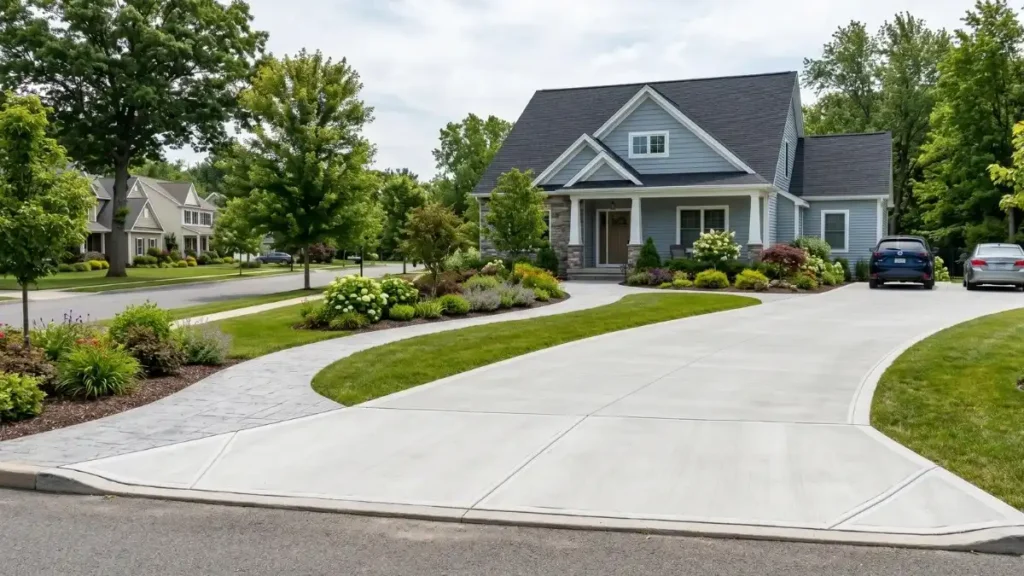
The blog explains about Concrete Driveways & Walkways: Durable Solutions for NY Homes. One of the more functional and durable improvements that homeowners can make is to their concrete driveways Albany, NY and walkways NY. In New York, where the weather is severe, with heavy rainfalls and temperature variations, it is critical to have durable outdoor surfaces to ensure safety, curb appeal, and property value. A professionally installed cement driveway or walkway can be strong, low-maintenance, and have a timeless style.
If you’re constructing a new home or updating an older one, knowing about the advantages and alternatives will assist you in making your best investment in the outside area.
Why Concrete Is Ideal for New York Homes
NY weather is challenging for outdoor surfaces. Many materials crack or break easily when it snows, freezes over, gets salted, or is exposed to salt and extremes of temperature. Concrete is a material that is especially strong and can withstand harsh conditions.
Concrete surfaces provide:
- Exceptional durability
- Long lifespan (25–40 years)
- Heavy vehicles and foot traffic resistant
- Low maintenance requirements
- Improved property value
Concrete driveways Albany, NY and walkways NY are a great way for homeowners in Albany and the surrounding area to have a durable and affordable driveway or walkway.
Benefits of Concrete Driveways
A concrete driveway can do more than provide parking for the car. It enhances the functionality and looks of your house.
1. Long-Term Durability
Concrete is one of the strongest paving materials that is available. With proper installation, driveways can endure for decades without needing any repairs.
2. Low Maintenance
Concrete is easy to maintain, unlike gravel or asphalt. Appearance and strength are maintained by occasional cleaning and sealing.
3. Clean and Modern Appearance
Concrete gives a clean and polished appearance, which looks good in both modern and traditional homes.
4. Increased Home Value
A good driveway makes your home more attractive and adds value to your property; it’s a great investment for the long haul.
Advantages of Concrete Walkways
Walkways between outdoor areas of your home increase safety and accessibility and connect your home to the outside.
Concrete walkways provide:
- Safe, slip-resistant surfaces
- Clear pathways around the property
- Improved landscaping design
- Reduced mud and erosion
- Better accessibility for guests
Good walkways will be functional and attractive.
Types of Concrete Driveway Finishes
Concrete can be customized in many ways, and homeowners can select finishes to complement their tastes and budgets.
Standard Broom Finish
The simplest and cheapest of choices. Offers a surface with texture to provide traction and safety.
Stamped Concrete
Stamped concrete is designed to look like stone, brick, or pavers. It is cheaper than natural materials and adds a decorative appeal.
Exposed Aggregate
This finish brings out concrete’s small stones for a textured, decorative look.
Colored Concrete
Various pigments are available for making a variety of colors that go with your home’s exterior.
Designing Beautiful Walkways
Concrete walks can be designed to fit within the landscaping and architecture of your home.
The most popular types of walkways are:
- Curved garden paths
- Straight modern pathways
- Stepping-stone style designs
- Lines, borders, and edges for decoration.
- Integrated lighting features
Outdoor spaces are more inviting and functional by means of creative walkway designs.
Concrete vs Asphalt Driveways
Homeowners often make the decision of whether to use asphalt or concrete. Concrete has a higher initial cost, but is more valuable in the long-term.
| Feature | Concrete | Asphalt |
| Lifespan | 25–40 years | 15–20 years |
| Maintenance | Low | Moderate |
| Appearance | Clean and modern | Basic and dark |
| Durability | High | Moderate |
| Cost Over Time | Lower | Higher |
The longer lifespan of concrete can contribute to the smart investment.
The Installation Process
Knowing how to install the device helps homeowners to prepare for the project.
Step 1: Site Preparation
The site is prepared by clearing, grading, and compacting for a good foundation.
Step 2: Formwork Installation
The driveway or walk is made of wood or metal.
Step 3: Pouring Concrete
Concrete is poured and evenly distributed.
Step 4: Finishing and Texturing
The surface is smoothed, and texture is applied to it.
Step 5: Curing
Concrete hardens for days after it’s poured.
When installed correctly, it will be durable and will last a long time.
Maintenance Tips for Concrete Surfaces
Concrete is a low-maintenance material, but it can be extended with simple maintenance.
Recommended maintenance includes:
- Cleaning twice per year
- Sealing every 2–3 years
- Removing snow with plastic shovels
- Avoiding harsh de-icing chemicals
- Repairing small cracks early
Regular upkeep ensures that surfaces stay fresh and are ready for years to come.
Winter Performance and Snow Resistance
With proper installation, concrete is very successful in snowy climates. Freeze-thaw damage is prevented with proper drainage and sealing.
Benefits during winter:
- The building has a high resistance to heavy snow loading.
- Minimising the potential of pothole formation
- Easier snow removal
- New textured finishes provide better grip.
This makes concrete ideal for New York winters.
Eco-Friendly Benefits of Concrete
Concrete is an environmentally friendly paving choice.
Sustainability benefits include:
- Long lifespan reduces replacement waste
- Reflects sunlight and reduces heat absorption
- Can incorporate recycled materials
- Requires fewer repairs over time
Concrete is a choice for sustainability.
Cost of Concrete Driveways Albany, NY
The prices will depend on the size, design, and finish.
Typical price ranges:
- Basic driveway (with stone chips): $10 – $15 per square foot
- Decorative Concrete: $10-$18 per square foot.
- Walkways: $8-$15 per square foot.
While the initial expenses are greater than those of asphalt, concrete is a cost-effective investment.
Enhancing Curb Appeal
Concrete driveways Albany, NY, and walkways NY make a huge difference in curb appeal.
They create:
- A clean, organized appearance
- Defined outdoor spaces
- A welcoming entrance
- A modern aesthetic
These enhancements definitely catch the attention of visitors the first time they visit.
Choosing the Right Contractor
Selecting an experienced contractor ensures a successful project.
Check for contractors with the following:
- Proven experience
- Positive reviews
- Proper licensing and insurance
- Clear pricing and timelines
- Warranty options
A professional contractor can ensure quality results.
Planning Your Concrete Project the Right Way
When considering the installation of a concrete driveway or walkway, careful planning will ensure you end up with a driveway that is suitable for your needs and budget. Homeowners typically take a few steps lightly, but this is one of them, and it will affect the surface’s performance over the next many years.
First, consider the use of the space. Take into account how many cars will be going on and off the trailer, the driveway size, and the need for additional parking or turnaround space. Walkways should be wide enough for easy and comfortable walking and easy snow removal during the winter.
Drainage and grading are also factors to consider. Guidance is always to have water move away from your home and garage to avoid any water accumulation and ice buildup. With planning, the finished surface will look great and have a long lifespan throughout the year.
Importance of a Strong Foundation
The foundation for a durable concrete driveway is the strength of its base. Even the best materials can fail if not properly prepared under the concrete.
The bottom is usually made up of compacted gravel or crushed rock for stability and to keep the material from shifting. This layer provides uniform weight distribution and shelter from ground movement and moisture to the concrete.
Freeze–thaw cycles are common in New York, making a solid foundation all the more crucial. If the concrete is not properly prepared and left to freeze while water is in it, it expands and cracks the concrete. This risk can be minimized, and your driveway will last longer if it is properly constructed.
Reinforcement for Long-Term Strength
Concrete may be reinforced by professional contractors to enhance its strength and durability. This might be accomplished with a steel rebar or wire mesh that is embedded in the concrete slab itself.
These reinforcements help:
- Prevent large cracks
- Support the heavy weight of vehicles
- Reduce damage from temperature variations.
- Increase overall structural strength
Reinforced concrete is particularly appropriate for driveways where several vehicles, trucks, and recreational vehicles are involved.
Custom Edging and Borders
If you want to make your driveway or walkway more attractive and durable, choose to add borders or edging to it. Decorative edges offer a decorative finish and help to protect the surface from damage over time.
Common edging choices are:
- Brick or stone edging
- Contrasting colored concrete
- Curved or beveled edges
- Decorative stamped borders
The little details in these designs can really make your driveway pop out of the parking lot.
Integrating Landscaping With Concrete
When paired with some careful landscaping, concrete driveways and walkways can look terrific. When used in conjunction with plants and outdoor elements, hardscaping can enhance a cohesive and welcoming outdoor space.
Consider adding:
- Flower beds along walkways
- Decorative lighting for safety and ambiance
- Grass or gravel strips for visual contrast
- Trees or shrubs for shade and privacy
A combination of landscaping and concrete can make for a harmonious outdoor space that will improve the overall aesthetics of the property.
Concrete for Outdoor Living Spaces
Concrete doesn’t have to be used for driveways and walkways. Many homeowners have the material extended to the outside areas for a consistent aesthetic.
Concrete can be employed in the following applications:
- Patio extensions
- Outdoor seating areas
- Fire pit surrounds
- Poolside walkways
- Garden paths
Consistency and style in the use of the same material in outdoor environments.
Improving Safety With Concrete Walkways
There are many advantages to concrete walkways, and safety is one of them. Stable, unobstructed routes minimise the risk of trips and falls, particularly when wet or icy.
Safety-enhancing features encompass:
- Slip-resistant finishes
- Gentle slopes instead of steep steps
- Adequate pathway width
- Proper lighting integration
These enhancements help ensure that your home is safer for family, guests, and delivery.
Increasing Property Value With Hardscaping
Outdoor elements are critical to home buyers. A clean and handsome driveway and walkways may add to the value of the home.
Upgraded driveways can be a major selling point for real estate professionals. Modern and clean hardscaping, especially around the house, communicates that the home is well-maintained and alleviates worries of future repairs.
If you want to sell your home someday, you can expect to make a good return on investment from concrete surfaces.
Preventing Water Damage With Proper Drainage
One of the most critical design features of a driveway and walkway is drainage. Without proper water management, rain and melting snow can cause long-term damage.
When designing concrete surfaces, the professional contractor will plan for somewhat sloping surfaces or drainage systems that will carry the water away from structures. This will stop erosion, surface cracking, and basement leaks.
Proper drainage is important not only for your driveway, but for your home’s foundation, too.
Seasonal Maintenance Checklist
Regular maintenance of your concrete driveway and walkways throughout the year will keep them looking and functioning their best.
Spring:
Look for cracks, sweep out debris, and seal if necessary.
Summer:
Clean surfaces and get rid of stains caused by oil or dirt.
Fall:
Clean up leaves and ready for winter sealing (if needed).
Winter:
Be sure to use safe de-icing products, and do not use metal shovels.
Keeping up with seasonal maintenance procedures ensures your concrete remains in excellent condition, year after year.
Conclusion
Concrete driveways and walkways offer the perfect solution for New York homeowners who are looking for a durable, attractive, and low-maintenance surface. They can provide decades of durability with proper installation and maintenance and improve safety, curb appeal, and property value.
The concrete is an excellent investment decision that is not only durable but also fashion-forward. Concrete provides dependable performance that can be expected to last in the tough New York weather, whether it’s an upgrade to an existing driveway or a new walkway installation.
Frequently Asked Questions
1. How long do concrete driveways last in New York?
Concrete driveways typically last 25-40 years when installed properly and maintained regularly. Sealing, cleaning, and repairing small cracks early helps extend the lifespan and keeps the surface strong despite harsh winter conditions.
2. How much does a concrete driveway cost in Albany, NY?
Cost usually ranges from $6 to $ 18 per square foot, depending on size, thickness, and decorative finishes. Larger driveways or custom designs may increase costs, but durability makes concrete a long-term investment.
3. Is concrete better than asphalt for cold climates?
Yes, concrete generally performs better in freeze-thaw climates when installed correctly. It resists rutting and potholes better than asphalt and offers a longer lifespan with less frequent maintenance requirements over time.
4. How long does concrete take to cure?
Concrete typically sets within 24 – 48 hours for light foot traffic. However, full curing takes about 28 days. During this time, heavy vehicles should be avoided to ensure maximum strength and durability.
5. Do concrete walkways get slippery in winter?
Textured finishes like broom or stamped surfaces provide traction, reducing slip risk. Applying sealers with anti-slip risk. Applying sealers with anti-slip additives and clearing snow quickly further improves safety during icy winter conditions.
6. How often should concrete be sealed?
Concrete should be sealed every two to three years. Sealing protects against moisture, salt, stains, and cracking, helping maintain appearance and extending the lifespan of driveways and walkways.
7. Can decorative designs be added to concrete?
Yes, concrete can be stamped, colored, or textured to mimic stone, brick, or tile. Decorative options enhance curb appeal while maintaining the durability and affordability of traditional concrete surfaces.
8. What causes cracks in concrete driveways?
Cracks can result from temperature changes, ground movement, heavy loads, or poor installation. Proper foundation preparation, reinforcement, and sealing help minimize cracking and maintain long-term performance.
9. Is concrete environmentally friendly?
Concrete is considered eco-friendly due to its long lifespan and minimal maintenance. It reflects sunlight, reduces heat absorption, and can include recycled materials, making it a sustainable choice for outdoor surfaces.
10. How long does installation take?
Most concrete driveway installations take three to five days, including preparation, pouring, and finishing. Weather conditions and project size may affect timelines, but experienced contractors ensure efficient project completion.


