
The blog tells about Stone Walkways & Steps in Albany, NY: Natural Beauty for Your Yard. Creating a beautiful and functional outdoor space begins with the details that guide movement through your landscape. Stone walkways and steps offer a timeless, elegant solution that blends practicality with natural charm. For homeowners seeking stone walkways Albany, NY, adding natural stone paths and garden steps is one of the most effective ways to enhance curb appeal, improve accessibility, and increase property value.
From materials to design concepts, this guide covers everything homeowners need to know about natural stone paths, including installation and maintenance tips.
Why Stone Walkways Are Perfect for Albany Homes
The climate in Albany throughout the year calls for outdoor elements that can resist snow, rain, and temperature fluctuations. Natural stone is one of the most resilient materials that can be found, and it’s a great choice for walkways and steps.
Stone paths provide many advantages:
- Long-lasting durability
- Natural slip resistance
- Weather resistance
- Timeless visual appeal
- Increased property value
Stone is an excellent choice for areas where landscaping is desired, as concrete or asphalt does not integrate as well. Stone also develops character with age that is beautiful.
Popular Types of Stone for Walkways and Steps
When designing a natural stone pathway, it is important to select the right material. There are certain distinctive properties and aesthetic qualities of each of these types of stone.
Bluestone
In New York landscaping, bluestone is one of the most popular materials. It has natural blue-gray colors that match both classic and modern houses. Strong, weatherproof, great for patios, walkways, and steps.
Flagstone
Flagstone is used for an irregular, natural fabric that provides a natural way to walk through a garden. Perfect for curved paths and natural garden designs.
Limestone
Limestone offers a more muted and neutral tone and finish. It’s suitable for an elegant and formal landscape design.
Granite
Granite is amongst the most durable stone materials offered. It is durable and sturdy, making it ideal for areas subjected to heavy use and steps.
Benefits of Natural Stone Paths
1. Timeless Aesthetic Appeal
Natural stone will exude a classic style that never goes out of fashion. It is a very easy-to-match plant, grass, and outdoor structure item.
2. Improved Accessibility
Stone walkways offer safe and stable walkways across the yard, helping to eliminate slip hazards and muddy walkways.
3. Increased Property Value
Stone walkways and garden steps can make a huge difference in your home’s selling appeal and value.
4. Low Maintenance
Natural stone is easy to maintain, unlike some other materials, such as wood or concrete.
Designing the Perfect Stone Walkway
A walkway is an integral part of your landscape, and the design is an important aspect of that. Professional designers think about the flow, the layout, and the surrounding features.
Straight vs Curved Walkways
Straight paths lend formality and structure, curved paths feel natural and welcoming.
Width Considerations
A comfortable walkway is generally 3-4 feet wide and provides space for two individuals to walk side by side.
Lighting Integration
Pathway lighting makes for safety and a cozy atmosphere at night.
Garden Steps: Combining Beauty and Function
Sloped yards make it easy for garden steps to be both safe and stylish. Stone steps provide a natural step between various heights in the landscape.
Stone steps offer benefits such as:
- Improved safety on slopes
- Erosion control
- Better accessibility
- Elegant landscape design
Steps that are professionally installed will be stable and durable.
Installation Process for Stone Walkways
Step 1: Site Planning and Design
Experts assess the yard, determine the size and space needed, and develop an effective plan.
Step 2: Ground Preparation
Excavating and leveling of the soil. A compacted gravel base is used for stability and drainage.
Step 3: Stone Placement
Care is taken to ensure that stones are carefully laid and leveled for a smooth walk.
Step 4: Joint Filling and Finishing
When using the stones, sand or gravel is placed between the stones to hold them in place and stop them from moving.
If installed correctly, it will last you a long time.
Maintenance Tips for Stone Paths
Although the stone walkways are low-maintenance, they will be maintained for the best possible appearance.
Maintenance tips include:
- Sweeping debris regularly
- Removing weeds between stones
- Power washing occasionally
- Replacing joint sand as required
If an adequate stone maintenance program is carried out, a stone walkway can endure for decades.
Enhancing Landscaping Around Walkways
Stone paths are best complemented by suitable landscaping.
Ideas include:
- Flower beds along pathways
- Decorative edging with plants
- Mulch or gravel borders
- Shrubs and ornamental grasses
These additions create a cohesive and inviting outdoor space.
Seasonal Factors in Albany
With winter in Albany comes snow and ice, and that means proper installation and maintenance are a must.
Some tips for winter care:
- Use plastic shovels instead of metal ones
- Avoid harsh chemical de-icers
- Ensure proper drainage to prevent ice buildup
These measures can help maintain the protection of stone surfaces throughout the year.
Cost Factors for Stone Walkways
Several factors influence the cost of installing stone walkways:
- Stone type and quality
- Project size and complexity
- Site preparation requirements
- Labor and installation time
Although natural stone might be more expensive than other materials, it will last long enough to justify the investment.
Why Hire Professional Landscape Contractors
Professional installation ensures:
- Proper drainage and base preparation
- Accurate leveling and placement
- Long-lasting durability
- Efficient project completion
Experienced contractors help homeowners get the best.
Advanced Design Ideas for Stone Walkways and Steps
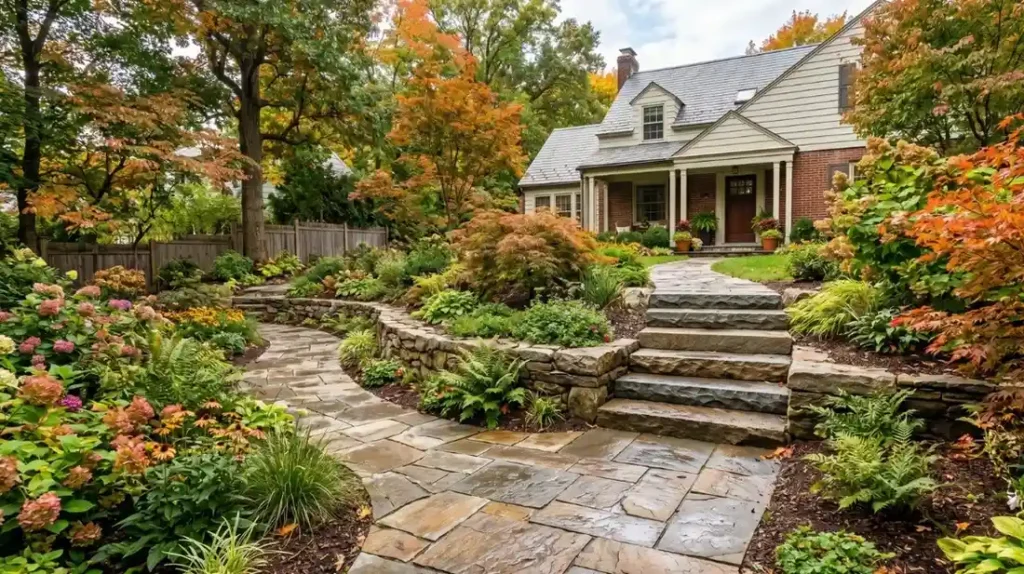
With the basic design of a stone walkway or garden steps complete, the design possibilities open up. Natural stone is now being used by homeowners in Albany, NY more than just for its practical purpose; it’s becoming a focal point for the overall design.
The stone path layered landscape design is one of the most common approaches, which incorporates a variety of different levels of planting areas. For instance, the areas between the stepping stones can feature low-growing ground cover and tall shrubs, with flowers framing the outer edges of the garden. This gives a natural, soft finish that integrates the greenery into the hardscape.
The mixed-material walkway, which features a natural stone surface and a sprinkling of gravel, mulch, or even wood accents, is another popular notion. It is a great style for a large yard, as it provides texture and contrast but does not overpower the space or make it look man-made.
In the modern walkway design, lighting also plays a significant part. Even if subtle LED lights are placed along stone paths or even built into garden steps, they can be so beneficial as they help to make the night more visible and enhance the beauty of the space. Natural stone reflects warm light to make outdoor areas welcoming and inviting after sundown.
Creating Natural Flow in Your Landscape
A properly designed stone walkway should appear to be a part of the yard. Many landscape designers pay more attention to creating flow and movement, rather than making straight lines, that follows the contours of the site.
Natural stone paths with curves are particularly effective in creating this approach. They lead visitors through the garden step-by-step, in a gentle manner, showing different parts of the garden along the way. This kind of design can even make small yards feel spacious and interesting.
Also, strategic use of elevation changes. Rather than sloping down, the designers make garden steps to ride the hill. This not only helps to maintain the character of the landscape but will also minimise the impact of construction and erosion.
Improving Drainage and Preventing Water Issues
One of the most critical considerations for any stone walkway installation is proper drainage. If it doesn’t, water will accumulate between stones and cause stones to shift, sink, or grow weeds.
A typical base system installed by professional contractors in Albany will have a layer of compacted gravel and a layer of leveling sand. This enables water to flow away from the stones and still hold them in place.
There are other drainage solutions as well:
- Slight slope grading away from structures
- Permeable joint materials between stones
- Drain channels in areas with heavy runoff
With good drainage, stone walkways Albany, NY, homeowners can stay stable year-round and help to keep them working.
Durability in Harsh Weather Conditions
Albany has all the elements of seasonal weather extremes, from freezing winters to heavy rain and humid summers. Natural stone is especially suitable for this type of application, as it expands and contracts without causing much damage.
But the quality of installation has a significant impact on durability. Inappropriate bases or inappropriate spacing between stones can cause movement during freeze-thaw cycles.
High-quality installation ensures:
- Resistance to cracking and shifting
- Stability during frost heave
- Long-term surface integrity
- Reduced maintenance costs
If properly designed and installed, stone walks will last for many years without maintenance.
Enhancing Outdoor Functionality with Stone Paths
Stone walks provide more than just aesthetics; they create a better experience in the outdoors. The placement of a path can link various sections of the yard, adding to the usability and pleasure of the area.
For example:
- A walkway from the driveway to the backyard creates smooth access
- Garden paths guide visitors through flower beds and seating areas
- Steps connect patios to higher lawn levels
- Side paths improve access to sheds or outdoor kitchens
This practical design not only looks good, but is also easy to use every day.
Blending Stone with Modern Landscaping Styles
Although natural stone is typically used in more traditional or rustic settings, it looks great in contemporary designs. The secret lies in picking the correct shape, color, and design of the stone.
Designers tend to opt for:
- Large, rectangular stone slabs
- Clean, minimal spacing between stones
- Neutral color tones like gray or beige
- Linear pathway designs
Rustic gardens, however, can employ irregular flagstone that is spaced and curves as needed. Depending on the overall home design, both of these types of styles can be highly effective.
Long-Term Maintenance and Care Strategies
Stone walkways require little maintenance, but with regular care, they will remain aesthetically pleasing and safe for use over the years.
Some of the long-term care strategies are:
- Annual inspection of stone stability
- Re-leveling any shifted stones
- Removing moss buildup in shaded areas
- Refreshing joint sand every few years
- Trimming plants that overgrow walkway edges
These easy steps will help maintain both the function and appearance without extensive repairs.
Increasing Property Value Through Stone Landscaping
Natural stone paths and garden steps are a great asset that can be used to enhance the curb appeal and the value of your property. Well-designed landscaping is often seen as a sign of a well-maintained home and is something that buyers appreciate.
Stone walkways provide benefits through:
- Enhancing first impressions
- Creating usable outdoor space
- Reducing future maintenance concerns
- Improving overall landscape design quality
These figures can make a significant impact in competitive real estate markets.
Sustainability Benefits of Natural Stone
Natural stone is also an eco-friendly landscaping option. It is a durable material that doesn’t need to be replaced often; therefore, less waste over time.
Sustainability advantages include:
- Minimal manufacturing processing compared to synthetic materials
- A long lifespan reduces material waste
- Compatibility with natural drainage systems
- Ability to integrate with native plant landscaping
Stone is a perfect material for homeowners who value eco-friendly designs.
Final Thoughts
Stone walkways and steps bring together durability, natural beauty, and long-term functionality. For homeowners seeking stone walkways Albany, NY, natural stone offers a timeless solution that enhances both lifestyle and property value.
Whether for its design versatility, durability against the elements, sustainability, or ease of upkeep, stone paths are among the top landscaping value investments around. They are a wonderful asset, when professionally installed and well planned, to make a normal yard a beautiful, beautiful space that will be enjoyed for generations.
FAQs
1. How long do stone walkways last in Albany, NY?
Properly installed stone walkways can last 30 to 50 years or more. Their durability depends on the quality of materials, base preparation, drainage, and ongoing maintenance in harsh weather conditions.
2. What is the best stone for garden steps?
Bluestone and granite are among the best choices for garden steps due to their strength, slip resistance, and ability to withstand freeze-thaw cycles common in New York climates.
3. Are natural stone paths slippery in winter?
Natural stone can become slippery if not properly textured, but most stones, like bluestone, offer good grip. Adding proper drainage and avoiding algae buildup helps improve winter safety.
4. How much do stone walkways cost in Albany, NY?
Costs vary depending on stone type, design complexity, and labor. Natural stone walkways are generally more expensive than concrete but offer greater durability and long-term value.
5. Do stone walkways require a lot of maintenance?
No, they are low maintenance. Occasional sweeping, weed removal, and joint sand replacement are usually enough to keep stone paths in good condition.
6. Can stone walkways be installed on slopes?
Yes, stone walkways and steps are ideal for sloped yards. Garden steps are specifically designed to create safe and stable transitions between different elevations.
7. What causes stones to shift over time?
Poor base preparation, drainage issues, and freeze-thaw cycles can cause shifting. Proper installation with a compacted gravel base prevents most movement problems.
8. Can I combine stone walkways with other materials?
Yes, stone can be combined with gravel, mulch, brick, or wood to create unique and visually appealing landscape designs that match different outdoor styles.
9. Are stone walkways eco-friendly?
Yes, natural stone is environmentally friendly because it is durable, long-lasting, and requires minimal processing compared to manufactured paving materials.
10. Do stone walkways increase home value?
Yes, professionally designed stone walkways significantly improve curb appeal and can increase property value by enhancing both aesthetics and functionality of outdoor spaces.


