
The guide explains about Fire Pit Safety Tips Every Homeowner Should Know Before Installation. A fire pit in the backyard can make a huge difference in any yard. This provides a cozy area for family and friends to gather, adds beauty to your landscape, and allows your yard to be enjoyed later in the day when the temperature drops. But it’s important for homeowners to be aware of some key safety tips that come before enjoying the comfort and ambiance of a fire pit.
Fire pit safety is particularly important for homeowners considering a fire pit in their own backyard because of seasonal winds, dry conditions at some times of the year, and thick residential areas. An improper or unsafe setup can result in accidents, damage to the property, and fire hazards in no time.
This guide will cover all aspects of installation and usage of the product, from placement to materials, maintenance, and responsible operation.
Understanding Fire Pit Risks
Fire pits are fun, but they have an open fire. If no precautionary measures are taken, risks may consist of:
- Uncontrolled fire spread
- Burns and injuries
- Damage to patio or deck
- Smoke inhalation
- Property fire hazards
- Wind-driven fire sparks
By staying safe outdoors regarding fire, many of these risks and opportunities for safe enjoyment can be minimized.
Choose the Right Location for Your Fire Pit
One of the most critical safety decisions is placement.
Safe distance requirements
Fire pits are to be used no closer than:
- 10–20 feet away from homes
- Away from fences and sheds
- Clear of trees and overhanging branches
Stay out of hazardous areas like:
- In some cases, wood decks are not covered to protect them.
- Dry grass or mulch areas
- Closed areas or areas with insufficient ventilation
The selection of the appropriate site decreases the risk of fire spread and allows for better ventilation.
Follow Local Laws and Regulations
Please refer to local rules and fire codes before installing fire pits in your backyard.
Regulations may include:
- The kinds of fire pits (wood-burning or gas) that are permitted.
- Permit requirements
- In the event of a fire, the Town will enforce fire restrictions during dry seasons.
- Size and placement rules
There are many areas in New York where the burn seasons are heavily regulated, particularly high fire risk seasons.
Choose the Right Fire Pit Type
There are varying degrees of safety among the different types of fire pits.
Wood-Burning Fire Pits
Pros:
- Traditional experience
- Natural ambiance
Cons:
- More smoke
- Higher spark risk
- Requires more supervision
Gas Fire Pits
Pros:
- Cleaner burning
- Easier control
- Lower spark risk
Cons:
- Requires a gas connection
- Higher installation cost
In the home setting, gas fire pits are sometimes seen as being safer.
Use Safe Construction Materials
The materials you use can make a huge difference in the safety of your fire pit.
Recommended materials include:
- Stone
- Brick
- Concrete
- Metal fire bowls
Avoid:
- Flammable surfaces
- Poor-quality thin metals
- DIY structures without heat resistance
Good materials assist in holding heat in and minimise risk to structures.
Install a Proper Fire Barrier
Barriers are necessary to help prevent accidental spread.
Consider:
- Gravel base around the fire pit
- Heat-resistant pavers
- Fireproof mats under portable units
This provides a certain safety zone, which reduces the risk of fire contacting other surfaces.
Maintain Safe Clearance Around the Fire Pit
Keep the area around clear at all times.
Remove:
- Dry leaves
- Paper or debris
- Outdoor furniture is placed too close
- Flammable decorations
A clearly defined perimeter makes it easier to avoid accidental ignition.
Never Leave a Fire Unattended
One of the most important fire pit safety rules is supervision.
Always ensure:
- An adult is present at all times
- Fire is monitored 100% of the time.
- Children and pets are supervised
A small, unobserved fire can burn rapidly.
Keep Fire Safety Equipment Nearby
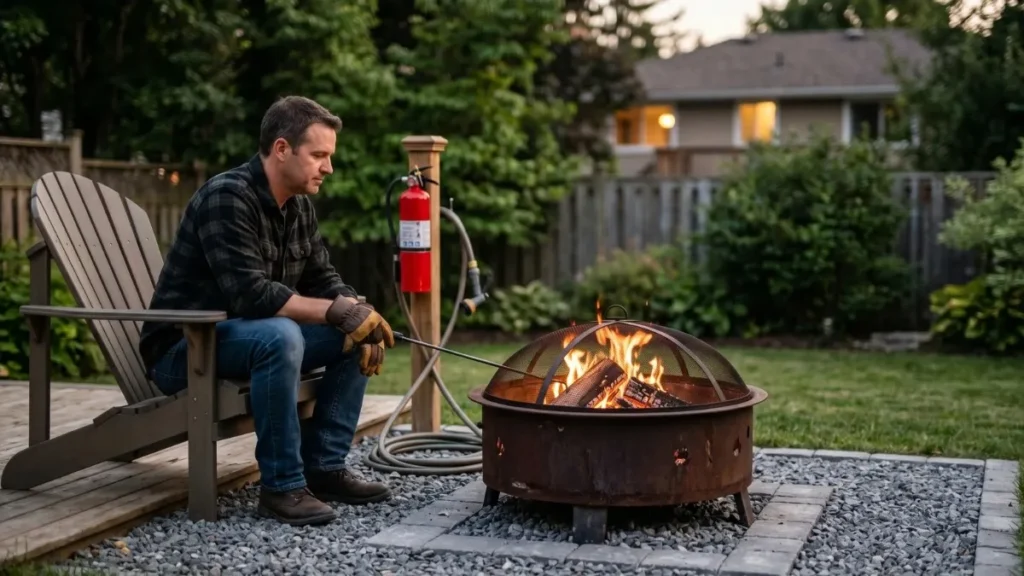
All homeowners should have emergency tools on hand.
Essential items include:
- Fire extinguisher (specially rated for outdoor fires)
- Garden hose
- Bucket of sand
- Water source
Having fire control tools readily at hand can help avoid turning small fires into large fire emergencies.
Control Wind Conditions Before Lighting a Fire
Outdoor fire safety risk factors include wind.
Avoid using fire pits when:
- Wind speeds are high
- Gusty weather is in the area
- Fire risk is higher during dry seasons.
Sparks can fly a long way from the fire pit area.
Use Proper Fuel Materials
Fuel type influences fire behaviour and safety.
Safe options:
- Seasoned hardwood
- The Wood for Firewood Made for Burning.
- Approved fire logs
Avoid:
- Treat or paint wood.
- Plastic materials
- Trash or household waste.
Bad fuels give off harmful gases and pose a fire risk.
Keep Children and Pets at a Safe Distance
Fire pits are always restricted areas!
Safety guidelines:
- Draw a line and stick to it
- Teach children how to stay safe around fire.
- Keep pets away from fire.
Use a safety barrier or seating to help maintain distance.
Be Careful with Seating Arrangement
The fire pit should be surrounded by seating in a safe location.
Tips include:
- Avoid being within 3-5 feet of fire.
- Use non-flammable furniture if possible:
- Keep the area well ventilated
Good spacing for comfort and safety.
Extinguish Fire Properly After Use
Don’t allow embers to smolder.
Steps to safely extinguish:
- If possible, let fire burn down naturally.
- Slowly pour water over embers
- Stir ashes to allow complete cooling.
- Ensure that no heat is left on when leaving the premises
The process of extinguishing fires improperly may result in a re-ignition.
Read More— Fire Pits for Albany, NY Homes: Gas vs Wood & Installation Costs
Regular Maintenance and Inspection
Firepits need continuous maintenance.
Check regularly for:
- Cracks in the structure
- Characterized by rust on metal parts
- The loose stones or bricks will be removed and disposed of.
- Gas line leaks (for gas fire pits)
Good fire pits will last longer and be safer to use.
Seasonal Considerations in New York
Fire safety conditions can drastically change in New York.
Winter
- Fire hazards could be concealed in the snow
- Ice can impact stability.
Summer
- Dry weather makes a fire more likely.
- The overall increase in wind activity in certain regions
Spring/Fall
- Pollen and leaves are a fire hazard.
Make adjustments to usage depending on seasonal safety conditions.
Safe Fire Pit Usage Best Practices
To ensure long-term fire pit safety, always:
- Avoid making large fires.
- Add wood gradually
- Don’t overfill the pit.
- Monitor flame height
- Always have water available
The use of responsibility is the best way to avoid accidents.
Create a Dedicated Fire Pit Zone
The best long-term approach is to create a well-defined fire pit zone vs. a haphazard backyard feature.
The following items make up a good fire pit area:
- An area that is not flammable, such as stone, concrete, or gravel
- Clearly marked boundary with landscaping or pavers.
- Seating is controlled in a circular configuration
- An area open and free from plants, fences, and buildings.
This separation will avoid inadvertent proximity of combustible materials to the fire. It also helps reinforce the concept that the fire pit is a safe area to be, rather than an open backyard feature.
Invest in Wind Protection Features
Wind is one of the most underestimated risks in outdoor fire safety NY environments. Even moderate gusts can push flames outward or carry sparks beyond the fire pit area.
Homeowners can control the risks from wind by installing:
- Wind guards (for gas fire pits)
- Partially filled stone walls or fire pit enclosures.
- Honeysuckle, rock, and other landscaping barriers, at a safe distance.
- Semi-enclosed patio structures
But it is important to note that it is not safe to completely cover a wood-burning fire pit, as it needs good ventilation in order to burn properly.
If the wind becomes too unpredictable or unsafe, always end the use of the fire pit.
Understand Safe Fire Height and Size Limits
One of the most frequent errors that homeowners make is making the fire too big for their fire pit.
Fire safety guidelines are:
- Flames should remain below knee to waist height
- Fire should never spread outside the edge of the pit
- Don’t stack logs too high or loosely
- Maintain consistent, but controlled air flow.
The larger, uncontrolled fires can create safety hazards such as sparks, heat damage to surrounding materials, and make it more difficult to extinguish the fire in a timely fashion if necessary.
Smaller, controlled fires are safer and can be more fun for an extended time.
Use Proper Lighting and Ignition Methods
The beginning of a fire has a significant impact on safety.
Safe ignition methods include:
- Long fireplace matches
- Long-reach lighters
- Natural fire starters
- Fire starters approved by the commercial industry
Avoid using:
- Gasoline
- Excessive use of lighter fluid.
- Accelerants or chemicals not intended for fire pits
Ignition techniques can cause unanticipated explosions and fire sparks.
It is always better to ignite a fire in backyard fire pits slowly and carefully than to light it rapidly or forcefully.
Maintain a Safe Seating Culture
Fire pit safety goes beyond structure – it’s also about behavior.
Clear rules for sitting make an accident less likely:
- Do not lean over flames
- Avoid standing directly over the fire pit
- Keep hair and loose clothing secured
- Maintain a respectful distance at all times
These practices will help keep everyone safer and minimize the chance of accidental contact with flames or hot surfaces.
Protect Fire Pit Surfaces from Long-Term Damage
Without adequate protection, over time, heat exposure can cause stress to adjacent surfaces.
To prevent damage:
- Lay pavers or stone bases that are heat-resistant
- Do not use a wood or metal exterior fire pit without padding
- Install Heat Shields if positioned in proximity to structures.
- Take a look for cracks or stains around the material.
This not only makes your fire pit safer to use, but also helps prolong the life of your outdoor area.
Store Fire Pit Accessories Safely
A large number of fire-related accidents occur when accessories are not stored properly.
Keep items such as:
- Firewood
- Lighters and matches
- Fire starters
- Gas canisters (for gas fire pits)
stored in:
- Dry, ventilated areas
- Fire-resistant storage containers, if possible
- Locations away from direct heat sources
Proper storage ensures that the material is in good condition and is not accidentally set on fire.
Establish Emergency Procedures
While they may be able to plan for many emergencies, homeowners should always be ready for the unexpected.
Every household using backyard fire pits should know:
- The students will learn how to extinguish the fire quickly.
- Where fire extinguishers are found
- How to turn off gas supply (if applicable)
- Emergency contact procedures
It is also important to practise the basic fire response procedures, particularly if there are children or guests around regularly.
Perform Seasonal Deep Cleaning
Fire pits need to be cleaned more thoroughly a few times per year, particularly prior to busy season.
In addition to seasonal cleaning, the following should be taken into account:
- Removing ash buildup
- To inspect for cracks or rust
- Lubricating and servicing gasoline pumps (if applicable)
- Draining and water accumulation checkup.
- Clearing surrounding debris
Moisture can cause degradation of structural materials over time, and ash buildup can impede airflow and impact fire performance.
Monitor Long-Term Structural Stability
Even the best constructed fire pit will subtly warp or decay over the years.
Watch for:
- Loose stones or bricks
- Uneven surfaces
- Rust or corrosion on metal fire bowls
- Cracks caused by repeated heating and cooling
By identifying any issues early, structural failure can be avoided, and it becomes a significant safety concern if left unaddressed.
Encourage Responsible Social Use
Fire pits can be used at social gatherings, adding to the potential danger if not properly maintained.
Encourage guests to:
- Don’t throw foreign objects into the fire
- Avoid adding too many coals to the fire pit area
- Respect safety boundaries
- Follow instructions from the homeowner
Communication is vital for everyone to have a safe and enjoyable experience.
Final Thoughts
Backyard fire pits can be a great addition to improve the outdoor living experience; however, safety should be the number one concern. By implementing the proper fire pit safety protocols, you can keep your outdoor area both enjoyable and comfortable, as well as safe for you and others.
From choosing the right location and materials to managing wind conditions and maintaining proper supervision, every step plays an important role in preventing accidents. Practicing responsible outdoor fire safety NY habits allows homeowners to enjoy warm, relaxing evenings without unnecessary risks.
Through careful planning and education on safety, you can enjoy a fire pit each year and keep it a safe one.
Frequently Asked Questions (FAQs)
1. How far should a fire pit be from my house?
A fire pit should generally be placed at least 10–20 feet away from your home, garage, fences, and other structures to reduce fire risk and allow safe airflow.
2. What is the safest type of fire pit?
Gas fire pits are often considered the safest because they produce fewer sparks, offer better flame control, and reduce the risk of accidental flare-ups.
3. Can I use a fire pit on a wooden deck?
Only if the deck is properly protected with heat-resistant barriers and the fire pit is specifically designed for deck use. Otherwise, it is not recommended.
4. When should I avoid using my fire pit?
Avoid using your fire pit during high winds, dry weather conditions, burn bans, or when local fire safety alerts are active in your area.
5. How do I properly extinguish a fire pit?
Allow flames to reduce, then pour water slowly over embers, stir ashes, and ensure everything is completely cool before leaving the area.
6. Can children safely be around a fire pit?
Children should always be supervised and kept at a safe distance. Clear boundaries should be established to prevent accidental contact with flames or hot surfaces.
7. What should I never burn in a fire pit?
Avoid burning plastic, treated wood, trash, painted materials, or anything that produces toxic fumes or excessive sparks.
8. How often should I clean my fire pit?
Light cleaning should be done after each use, while deeper cleaning and inspections should be performed at least a few times per year.
9. Do fire pits need maintenance?
Yes. Regular maintenance ensures structural safety, prevents rust or cracks, and keeps the fire pit functioning properly over time.
10. What is the biggest fire pit safety mistake homeowners make?
The most common mistake is leaving a fire unattended, which significantly increases the risk of accidents, property damage, and uncontrolled fire spread.
Read More—👉🏻👉🏼👉🏽👉🏾👉🏿Fire Pits for Albany NY


