
How Strategic Snow Plowing Route Planning Improves Winter Storm Management in Albany, NY is an important topic for commercial property owners and facility managers preparing for challenging winter conditions. Heavy snow, freezing temperatures, and quickly changing weather are all factors that can make it challenging to keep commercial properties safe and accessible in Albany, NY. If snow piles up on parking lots, loading ramps, building entryways, and streets, businesses must have a greater amount of plowing to effectively manage the snow. A planned snow plowing route plan allows coordination of equipment, prioritization of critical areas, unnecessary delays to be minimized, and provides access during a winter storm. Instead of viewing each snowfall as a separate issue, businesses can plan for snowfall, taking into account their property layouts, traffic flow, service needs, and fluctuating weather patterns.
1. Understanding the Role of Route Planning in Commercial Snow Removal
Unlike traditional snow removal services, commercial snow removal covers more than simply relocating snow from one place to another. There are several different areas within large properties that need attention, such as parking areas, access roads, pedestrian walkways, delivery entrances, emergency routes and service areas. If there is no route plan in place, there is a possibility of snowplough personnel wasting time travelling between sections or doing work for which they have already been paid.
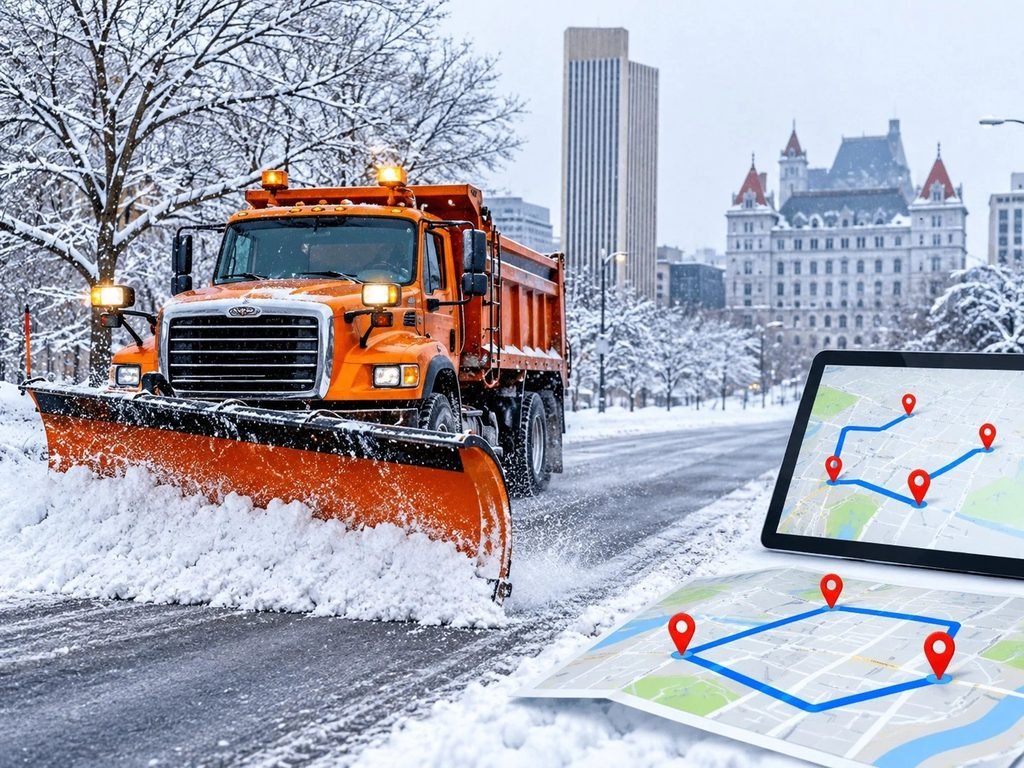
The snow plowing route planning is the sequence in which various areas of properties are to be serviced. It determines the starting point of equipment, sections of the property that need immediate attention and how crews are to move the property without introducing unnecessary obstructions.
For example, a business shopping center could have multiple parking lots, many entry points, and delivery access points. Vehicles can still be stuck in a plowed area after much of the job is done if plowing starts in a location that is not a part of the property’s primary traffic path. A strategic route will overcome this by taking into account the use of the property by people and vehicles.
A solid plan will typically contain the following components:
- Overall plan for the whole business premises.
- Designated routes for plowing equipment.
- Different access areas given priority levels.
- Appropriate temporary snow storage sites.
- Assignments of equipment and operators.
- Advance warning procedures forstorm-related changes in conditions.
This information enables the commercial property owner to keep a regular snow removal process rather than making the decision at the last minute.
2. Why Albany’s Winter Conditions Require Strategic Planning
Winter weather can cause difficult situations for commercial properties in Albany. Roads and parking areas can be impacted throughout the winter season by snowfall, freezing temperatures, icy conditions and varying storm intensities.
The property can be managed well during light snow but can be problematic when heavier snow falls. Snow can close the road lanes in a flash, cover parking cues, block walkways and block building entrances.
Commercial Snow Plowing Albany NY services must take these changing conditions into consideration. A route that is suitable during a brief snowy event might need modification during a long snowstorm.
Several local winter challenges make preparation important:
- Changing snowfall intensity: Snow may accumulate gradually or become heavier within a short period. Routes should allow crews to revisit important sections when necessary.
- Freezing temperatures: Snow left on paved surfaces can become compacted and more difficult to remove. Plowing schedules should consider temperature changes and the possibility of ice formation.
- Busy commercial traffic: Shopping centers, office buildings, medical facilities, and industrial properties may continue operating during winter weather. Snow removal must account for vehicle and pedestrian movement.
- Limited visibility: Heavy snowfall and nighttime conditions can make equipment operation more difficult. Route planning should include safe movement and visibility considerations.
- Restricted property access: Parked vehicles, delivery trucks, and temporary obstructions can interfere with planned routes.
Understanding these challenges assists property managers in creating a snowstorm preparedness plan that takes into account the reality of Albany’s operating environment.
3. How Property Layout Influences Snow Plowing Routes
Each of the commercial properties has a unique physical configuration. A parking lot for a small office might not suit a large shopping centre or industrial complex. So, the first step to creating an efficient snow plowing route is to understand the layout of the property.
The key traffic routes, entry/exit points, parking areas, pedestrian movement areas, loading docks and emergency access should be identified on the property.
For example, an industrial site can have long access roads leading to multiple loading areas. Customer parking, employee parking and delivery vehicles might need to be separated at a shopping centre. A consistent access to the main entrance and accessible parking spaces for an office complex may be required.
The following should be taken into account for a property layout assessment:
| Property feature | Route planning consideration |
| Main entrances | Maintain clear access for incoming vehicles |
| Parking sections | Establish an organized plowing sequence |
| Internal roads | Preserve safe vehicle movement |
| Loading docks | Maintain delivery and service access |
| Pedestrian walkways | Coordinate snow clearing with vehicle operations |
| Emergency access | Keep designated routes unobstructed |
| Snow storage areas | Prevent snow piles from restricting traffic |
Identification of these areas before winter facilitates snow removal contractors to be aware of potential problems before equipment is brought in.
It also enables crews to know where to place snow without creating new issues on the property.
4. Identifying High-Priority Areas Before a Snowstorm
The different parts of a commercial property do not all have the same functions. There are areas which must be serviced immediately because they are critical to the operation of the business and others which can be serviced at a later time.
Prioritizing should be done in advance of snowfall within a strategic snow management plan.
The following areas are of special interest in most commercial property cases:
Primary entrances and exits
These areas regulate access to and from customers, employees, visitors and service vehicles. They can be kept easily accessible to avoid traffic jams and the possibility of cars becoming stuck.
Emergency access routes
Access to emergency vehicles should be kept clear during winter weather conditions. These routes need to be identified and made part of the highest priority service category.
Accessible parking spaces
Cautious design of accessible parking and access routes is required. Access to sidewalks and building entrances should not be obstructed or snow pushed into these areas.
Zones for loading and unloading
Accessible loading areas are needed for businesses that are delivering goods on a regular basis. Snow accumulations around these locations can disrupt deliveries and impact daily activities.
Main pedestrian entrances
The building entrance, sidewalks and walkways that connect to the building should be addressed due to frequent use by employees and visitors.
A priority-based route plan provides operators with clear guidance on where to start and which parts of the route need to be revisited as snow falls.
This can be helpful for large commercial buildings where it will not be possible to clear the entire area at once.
5. Improving Equipment Distribution Across Commercial Properties
Commercial snow management is greatly influenced by equipment availability. Different machines might be needed depending on the property size, layout, how the snow accumulates on the property and accessibility needs.
For example, large plow trucks can work well for open roadways and parking lots, whereas smaller equipment might be more effective in areas where access is limited and narrow.
In this way, strategic route planning enables us to identify the optimal location for each machine.
A commercial snow removal company can allocate equipment in the following way:
| Equipment | Suitable application |
| Snow plow trucks | Main roads and large parking areas |
| Skid-steer loaders | Compact parking sections and snow relocation |
| Compact tractors | Smaller access roads and selected property areas |
| Snow blowers | Restricted spaces and areas requiring controlled snow removal |
| Hand-operated equipment | Building entrances and narrow pedestrian areas |
The goal of equipment distribution is to eliminate wasted motion and to not let one piece of equipment interfere with another.
For example, a big truck that is assigned to a small entrance may slow down the process. A smaller machine would be able to do the same job more efficiently at the same time; larger equipment would be able to open areas more efficiently.
The use of equipment should also consider the operator experience, property restrictions, and maneuver room.
6. How Route Planning Reduces Service Delays
With a major snowstorm, delays can impact the entire snow removal process. Routes may be poorly organized, resulting in equipment travelling repeatedly over the same areas and other important areas being missed.
These issues can prove to be time-consuming and challenging to keep access to the property consistent.
A planned route helps minimize delays by establishing a logical sequence of equipment movement.
Let’s imagine there’s a business property with three parking spaces, two entries and an internal drive. If there is no specific path, operators can quickly clear the first parking area, cross the unguarded road and come back in the future to finish off the adjacent parking areas.
A more effective way is to plan work in relation to related blocks.
This may involve:
- Clearing the main entrance and establishing safe access.
- Opening the internal road connecting the property.
- Servicing the primary parking sections.
- Clearing loading and service areas.
- Completing secondary parking spaces.
- Returning to priority areas for additional passes.
The order should be based on the condition of the properties and needs of the operation.
A planned sequence minimises unnecessary equipment movement and allows supervisors to easily track completed and outstanding work.
This can also benefit the property managers by ensuring that any service is coordinated more efficiently, as they know what has already been addressed.
7. Managing Snow During Long-Lasting Winter Storms
When snow accumulates for a few hours or several days, one of the most difficult aspects of snow removal in Albany is managing properties.
In extended snow precipitation, it is possible that one plowing may not be enough. Equipment may clear an area right after a snowfall, and then it can fall again, requiring repeat service.
A strategy should then differentiate between initial clearing, maintenance passes and final clean-up.
Initial clearing
The first operation concentrates on providing access to key areas of property. Its main entrances, internal roads and significant pedestrian links are given attention based on their priority.
Maintenance passes
Crews return to the designated routes when snow continues to fall to prevent an excessive amount from building up. These visits will be scheduled according to how heavy the snow is, how active the homes are, and the contract.
Final cleanup
Once the storm has subsided or abated, operators can finalize area clearing, open up narrow lanes of public travel, clear snow buildup when needed, and work on areas that were previously inaccessible.
This gradual approach enables companies to not be affected by a single operation when snowfall has caused a lot of limitations.
It also provides a better practical tool for contractors to use in equipment and manpower control during a prolonged storm.
8. Coordinating Snow Plowing with De-Icing Operations
Snow removal and ice management are closely related but are completely different operations. Plowing activities will clear snow accumulations and de-icing will help with slippery conditions.
Both activities should be taken into consideration when creating a route plan to avoid unneeded delays and surface safety issues.
For example, de-icing materials can be applied before plowing is finished, leading to pushing some material away with snow. Application of materials following mechanical clearing may be more suitable, depending on conditions and treatments applied.
In a coordinated operation, the following can be included:
- Inspecting surfaces before snowfall.
- Identifying areas prone to ice formation.
- Clearing accumulated snow from priority routes.
- Applying suitable de-icing materials when needed.
- Monitoring entrances, ramps, and shaded areas.
- Rechecking treated surfaces as weather conditions change.
Various parts of the property may need varying methods of treatment.
All pedestrian walkways, loading zones, parking lots and vehicle entries need to be evaluated separately. Product selection and application rates should be based on manufacturer’s guidelines and take into account pavement conditions, temperatures, environment and local ordinances.
Snow plowing and de-icing are in fact two different services, but in a good commercial snow management plan, they are coordinated.
9. Preparing a Commercial Snow Plowing Plan Before Winter
Effective snowstorm preparation Albany businesses can rely on begins before the first major snowfall.
The pressure of organizing equipment, establishing routes, and determining property requirements can be added at the last minute in the winter weather.
A pre-season assessment provides contractors and property managers with time to consider issues.
The following steps are involved in the practical preparation process:
Step 1: Inspect the property
Make a house-hunting circuit around the entire property and note down the entrances, parking areas, loading zones, pedestrian walkways, drainage and possible obstacles.
Step 2: Create a property-specific route map
Indicate main equipment routes, secondary clearing areas, limited areas, and approved snow storage areas.
Step 3: Establish service priorities
Identify critical systems that should be serviced first and those that can be serviced later during the operation.
Step 4: Confirm equipment requirements
Choose the machines depending on the size of the property, surface conditions, space, and demands of its use.
Step 5: Discuss service expectations
Decide on communication protocols, weather tracking, alerts, inspection roles and documentation requirements.
Step 6: Review emergency procedures
Define the actions to take when entrances become blocked, equipment malfunctions or routes become unsafe due to conditions.
Step 7: Reassess throughout the season
Review route plan following significant storms and adjust where conditions change on the property or operational needs.
This preparation process enables the business to embrace the winter season with a system, rather than making all decisions in the heat of the storm.
10. Measuring the Effectiveness of a Snow Management Strategy
A snow plowing route plan should be periodically reviewed to see if the plan is working.
After large snowfalls, a property inspection may be able to identify issues that were not apparent when the snow was still on the ground.
There are a number of indicators that can be used to assess commercial property performance.
| Performance indicator | What it helps evaluate |
| Route completion time | Whether planned routes are practical |
| Equipment travel time | Whether unnecessary movement is occurring |
| Entrance accessibility | Whether essential access points remain usable |
| Parking availability | Whether snow storage is reducing usable spaces |
| Repeat service requirements | Whether clearing frequency is appropriate |
| Ice-related concerns | Whether de-icing coordination needs improvement |
| Customer and employee feedback | Whether property access meets daily needs |
For example, one entrance is getting clogged over and over again when snow is falling; the path may have to be adjusted.
Likewise, the length of time that equipment is required to travel between remote property areas may be an opportunity to enhance the efficiency of operations by adjusting machine assignments.
Actual weather conditions should be taken into account for performance reviews. and not every storm should be judged by the same standards.
A successful snow management program is one that can be measured, enhanced, and adjusted during the winter.
Conclusion
With strategic route planning being a key component of effective commercial snow management in Albany, NY, it is essential to plan accordingly. The winter needs for commercial properties vary according to the size, layout, traffic flow and daily operations. In the absence of a plan, snow removal workers may experience unnecessary delays, inefficient machine travel and challenges clearing access roads.
A property-specific route plan is used to arrange equipment assignments, prioritize the clearing efforts, plan de-icing activities and determine appropriate snow storage areas. These preparations, along with effective communication, weather monitoring, and periodic performance reviews, can make winter operations more manageable.
When hiring a commercial snow plowing Albany NY company, it is crucial to look for one that has a grasp of route planning for each property. For any commercial facility, a good snow management plan will keep access open, provide the necessary support for daily operations, and better enable you to be responsive to the Albany area if a winter storm strikes.
Frequently Asked Questions
1. Why is route planning important for commercial snow plowing in Albany?
Route planning organizes equipment movement, establishes clearing priorities, reduces unnecessary travel, and helps commercial properties maintain access during winter storms.
2. How often should commercial snow plowing routes be reviewed?
Routes should be reviewed before each winter season and reassessed after major storms, property changes, or repeated operational difficulties.
3. What areas should receive priority during commercial snow removal?
Main entrances, emergency access routes, accessible parking spaces, loading zones, internal roads, and frequently used pedestrian entrances generally require priority attention.
4. Can route planning reduce commercial snow removal costs?
Efficient routes can reduce unnecessary equipment travel and improve labor allocation, potentially lowering operating costs depending on property conditions and service requirements.
5. How does property size affect snow plowing route planning?
Larger properties may require multiple equipment assignments, separate clearing zones, additional snow storage capacity, and coordinated routes to maintain accessibility.
6. What equipment is commonly used for commercial snow plowing?
Snow plow trucks, skid-steer loaders, compact tractors, snow blowers, and hand-operated equipment may be used depending on property layout and snow accumulation.
7. How should contractors manage routes during continuous snowfall?
Contractors can use repeated maintenance passes, prioritizing essential access areas while adjusting equipment schedules according to snowfall intensity and property requirements.
8. Why is snow storage planning important for commercial properties?
Proper snow storage prevents piles from blocking parking spaces, drainage systems, emergency routes, pedestrian access, and vehicle visibility.
9. How does GPS technology help commercial snow management?
GPS tracking helps supervisors monitor equipment locations, review route activity, coordinate operators, and identify potential service delays.
10. When should businesses prepare their Albany snow removal plans?
Businesses should prepare before winter begins, allowing enough time to inspect properties, establish routes, confirm equipment, and coordinate expectations with contractors.


