
The blog below tells about Concrete vs Pavers: Which Is Best for Driveways and Walkways. One of the biggest decisions to make in a landscaping project is the driveway or walkway material. When it comes to making outdoor improvements, homeowners all across New York often run into a dilemma of concrete vs pavers due to the advantages they present. It is all about the choice depending on budget, design, maintenance, and the climate of your area.
Driveways and walkways are more than a vehicle path. They add to color appeal, property value, keep your home safe, and make your home look nice. As New York experiences all sorts of weather changes, whether it’s freezing winter, rain, or too much heat during the summer, choosing the best driveway materials NY homeowners can rely on is a must.
This guide discusses the concrete versus pavers and compares their durability, maintenance, price, style, and performance to help you decide which is right for your property.
Understanding Concrete Driveways and Walkways
One of the most popular materials for use in residential driveways and walkways is concrete. It is a combination of cement, sand, gravel, and water that forms a strong and durable surface.
Concrete can be poured in different shapes and can be completely finished in a number of different ways, offering versatility to homeowners.
Common Concrete Options
- Standard gray concrete
- Stamped concrete
- Colored concrete
- Exposed aggregate concrete
- Brushed finish concrete
Concrete is one of the most commonly used types of driveway materials used by homeowners in NY because it is a cost-effective material and is very strong.
Understanding Paver Driveways and Walkways
Pavers are single paving stones that can be constructed from concrete, brick, or natural stone. They are added in sections over a compacted base, making a fantastic and lasting surface.
Pavers come in different sizes:
- Colors
- Shapes
- Sizes
- Textures
- Patterns
This adaptability makes them a desired choice for bespoke walkway design jobs.
Concrete vs Pavers: Initial Installation Cost
For many homeowners, cost is one of the initial factors in their considerations.
Concrete Costs
Compared to concrete, the initial cost of steel is usually higher.
Benefits include:
- Lower material expenses
- Faster installation
- Reduced labor requirements
- Ideal for larger areas because it is economical.
Concrete has a lower cost of the initial investment for budget-conscious homeowners.
Paver Costs
Pavers typically require:
- More materials
- Greater labor
- Longer installation times
- Additional base preparation
This means that pavers tend to be more expensive up front.
Over time, however, the difference may diminish as a result of long-term maintenance and repair expenses.
Durability Comparison
Durability is a key factor in a city like New York with its harsh climate.
Concrete Durability
Concrete is strong and will stand up to heavy vehicle traffic.
But as time goes on, it may suffer from:
- Cracking
- Surface scaling
- Freeze-thaw damage
- Settlement issues
It is well known that large concrete slabs expand and contract with temperature.
Paver Durability
Pavers may offer more flexibility when it comes to concrete vs pavers.
Individual pavers can:
- Shift slightly without cracking
- Handle freeze-thaw cycles better
- Resist structural damage
- Support heavy loads effectively
This provides pavers with the flexibility that makes them especially appropriate for New York’s climate.
Performance During New York Winters
When choosing driveway materials NY homeowners can trust, it is crucial to consider the conditions of winter.
Concrete in Winter
Concrete can be affected by:
- Freeze-thaw cycles
- Salt damage
- Surface deterioration
- Expansion cracks
These risks can be minimized by good sealing.
Pavers in Winter
The advantages of pavers during snowfall are:
- Individual units move independently
- Water drains more effectively
- Cracking is less common
- Repairs are easier if damage occurs
In very cold climates, pavers can be a more suitable choice than concrete.
Appearance and Design Flexibility
The aesthetic part is a very important factor in deciding what to do when renovating an outdoor space.
Concrete Appearance
There is actually more than a few realize with regard to the many design options that modern concrete provides.
Available styles include:
- Stamped stone patterns
- Decorative textures
- Colored finishes
- Custom borders
Although concrete is a beautiful material, it also has some drawbacks in design.
Paver Appearance
Pavers are great for versatility in design.
Some popular walkway design options are:
- Herringbone patterns
- Basketweave layouts
- Circular designs
- Contrasting borders
- Multi-color combinations
Pavers offer a more attractive look, which makes them a popular choice for homeowners looking for a distinctive outdoor design.
Maintenance Requirements
All outdoor surfaces need maintenance.
Concrete Maintenance
Typical concrete maintenance work consists of:
- Periodic sealing
- Crack repairs
- Cleaning
- Stain removal
Concrete surfaces can sometimes be stained by oil stains or de-icing chemicals.
Paver Maintenance
Paver maintenance involves:
- Occasional joint sand replacement
- Weed prevention
- Cleaning
- Individual stone replacement when necessary
Since the pavers can be replaced one by one, repairs will not be as visible.
Repair Considerations
Repair is important when surfaces age.
Repairing Concrete
Concrete repairs can be challenging because:
- Patchwork may not coincide with the existing colour.
- Large cracks can grow outwards.
- Whole sections may need to be replaced.
It’s common to see visible repair lines.
Repairing Pavers
A big plus to the concrete vs pavers discussion is repair flexibility.
Each paver can be easily taken out and replaced without disturbing adjacent areas.
This allows for:
- Faster repairs
- Better visual consistency
- Reduce the cost of long-term maintenance
Drainage Performance
Good drainage of driveways and walkways is essential.
Concrete Drainage
Traditional concrete surfaces are mostly impermeable and don’t allow any water to penetrate.
Water should be directed towards:
- Drains
- Gutters
- Slopes
Inadequate drainage may lead to puddling and erosion.
Paver Drainage
A number of paver systems provide better drainage.
Benefits include:
- Reduced standing water
- Better runoff management
- Less erosion
- Improved stormwater control
Permeable pavers are becoming more prevalent in landscape designs that focus on the environment.
Property Value and Curb Appeal
Enhancing properties by making outdoor improvements is a way to boost property value.
Concrete’s Impact
An installed concrete driveway will give you:
- Clean appearance
- Improved functionality
- Enhanced curb appeal
Concrete enhancements can enhance the resale value.
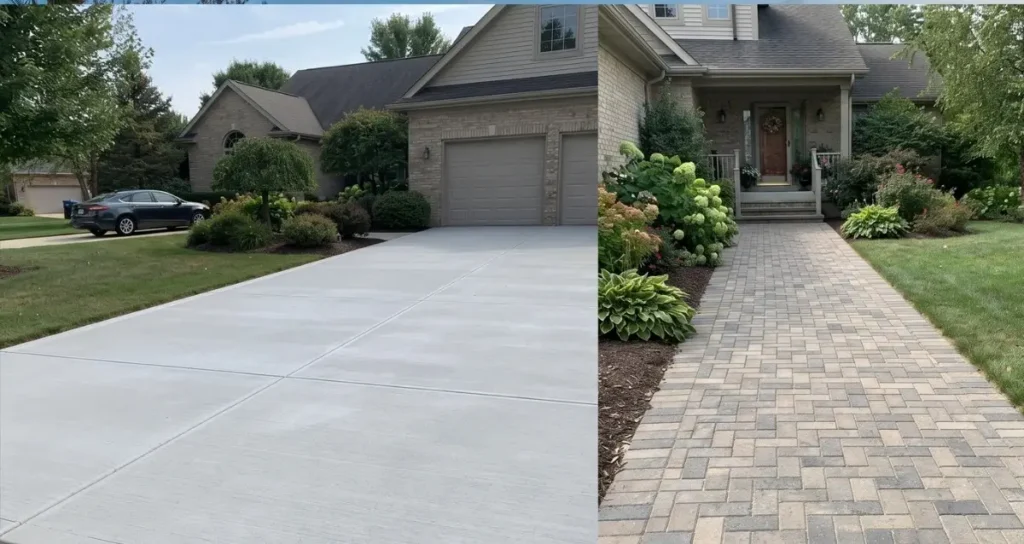
Pavers Impact
A more prestigious look can be achieved with pavers.
Paver installations are considered high-end landscaping options, as they provide:
- Luxury aesthetics
- Custom design
- Superior visual interest
First impressions count with pavers.
Longevity Comparison
Lifespan is another important factor.
Concrete Lifespan
The life of a concrete surface is usually:
- 25 to 30 years
Many factors can impact lifespan include:
- Installation quality
- Weather exposure
- Maintenance practices
Paver Lifespan
High-quality paver installations last:
- 30 to 50 years or longer
They’re designed in a modular way, which adds to their longevity.
Environmental Considerations
Homeowners nowadays are concerned about sustainability.
Concrete Environmental Factors
The production of concrete consumes a lot of energy and raw materials.
However:
- A long life span means less frequent replacement
- Recycled materials can be used
Paver Environmental Factors
Some pavers provide environmental benefits.
Permeable pavers:
- Improve groundwater recharge
- Reduce runoff
- Promote sustainable drainage practices
These advantages are becoming more and more desirable for landscaping today.
Best Applications for Concrete
Concrete is suitable for:
Large Driveways
Cost-effective for large areas.
Simple Walkways
Suitable for simple designs.
Budget-Friendly Projects
Offers great value in lower installation costs.
Modern Designs
Smooth finishes go well with modern architecture.
Best Applications for Pavers
Pavers excel in:
Decorative Walkways
Improve the look and style.
Luxury Homes
Provide upscale aesthetics.
High-End Landscaping
Complete elaborate outdoor designs.
Areas with Freeze-Thaw Conditions
Provide better flexibility and durability.
Common Mistakes Homeowners Make
Homeowners may not always consider all of the factors when they are comparing concrete to pavers.
Choosing Based Only on Cost
Although initial savings can be achieved, this can result in greater long-term costs.
Ignoring Drainage
Shorter surface life can be caused by poor drainage.
Hiring Inexperienced Installers
The quality of installation is very important for performance.
Overlooking Maintenance Needs
All materials need care and maintenance on an ongoing basis.
Careful planning can help to maximize long-term satisfaction.
How Climate Impacts Material Selection
The climate of New York is challenging.
Homeowners must consider:
- Snow accumulation
- Ice formation
- Freeze-thaw cycles
- Heavy rainfall
- Summer heat
The environmental factors can play a role in whether concrete or pavers will have a better long-term performance.
Concrete vs Pavers: Side-by-Side Comparison
| Feature | Concrete | Pavers |
| Initial Cost | Lower | Higher |
| Design Options | Moderate | Extensive |
| Durability | Strong | Excellent |
| Winter Performance | Good | Excellent |
| Repairs | More difficult | Easier |
| Drainage | Limited | Better |
| Maintenance | Moderate | Moderate |
| Lifespan | 25–30 years | 30–50+ years |
| Curb Appeal | Good | Premium |
| Property Value Impact | Positive | High |
Which Option Is Right for Your Home?
It depends on what is important to you.
If you wish, select concrete:
- Lower upfront costs
- Simple installation
- Clean, modern appearance
- Large-area affordability
Select pavers if desired!
- Premium curb appeal
- Greater design flexibility
- Easier repairs
- Advantageous in extreme weather conditions
- Long-term durability
When installed properly, both materials can yield great results.
Long-Term Repair Costs and Maintenance Value
Another critical consideration in choosing between concrete and pavers is repair expenses over time. The repair of concrete can be erratic. Cracks are filled temporarily but when there is big structural damage, a section of the whole structure must be cut and replaced. Color mismatches can be apparent even after repair work, which can dampen a home’s curb appeal.
Pavers offer a more sustainable repair solution that is more cost-effective. When a section of the pavement becomes damaged through settlement, tree damage, or accidental damage, parts of the pavement can be removed and replaced without disturbing the surrounding pavement. This ensures a faster, more efficient, and less conspicuous maintenance process. This can make a huge difference in overall ownership costs over a 20–30 year period.
Installation Quality and Its Impact on Performance
Concrete or pavers, quality equals durability, and the quality of installation plays a big part in that.
If the concrete is not properly installed, it can crack early, have uneven surfaces, and cause drainage problems. After these issues arise, they are hard and costly to fix.
Likewise, if the base layer is not compacted, pavers may shift or settle over time if they are not installed correctly. But, with professional installation, pavers are typically better forgiving and less prone to succumbing over time.
Good base preparation, grading, and drainage planning are required for both materials. A good surface, with a good foundation, can last for decades as expected.
Environmental and Drainage Benefits
Today, people are more aware of the environmental impact and water management of their homes. Here, again, there are clear differences between concrete and pavers.
Conventional concrete surfaces are impervious, and they repel water. This can help discourage pooling on the surface, but may result in runoff problems outside of the pool. During heavy rainfall, this can lead to increased stress on drainage infrastructure.
Pavers, particularly permeable pavers, allow water to enter the joints or specially-designed surfaces. This will help to reduce runoff, encourage groundwater recharge, and prevent puddling on driveways and walkways. This is a significant benefit to homeowners who care about the environment when choosing walkway design options.
Design Longevity and Style Flexibility
Another factor to take into account is the length of time your design will be aesthetically pleasing. The fashion of the outdoors is constantly evolving, and homeowners may desire surfaces that remain contemporary for many years.
Once in place, concrete is not very flexible. The decoration in stamping and coloring can be added to the appearance; however, the decoration is fixed once it is created. If you need to change the appearance later, you will need to resurface or replace it.
Pavers offer much greater design options. Each homeowner is able to combine colors, alter the patterns, or even change parts to update their outdoor space. The versatility of paver driveways and walkways will make it easy for them to stay fashionable as fashion changes.
Final Thoughts
It really depends on budget, style, maintenance, and long-term objectives when it comes to concrete vs pavers. Both are still in use today as driveway materials that NY homeowners use to enhance their driveways for both function and beauty.
Concrete is also affordable, strong, and has a clean look to it, making it an excellent material to use for many home projects. Pavers, however, offer unequalled design flexibility, ease of repairs, excellent drainage, and durability in the tough New York climate.
From creating a new driveway to upgrading an entryway to a home to designing a walkway system, it’s important to know what materials work best and which ones don’t. With the help of a professional contractor and by keeping the specific requirements of your property in mind, you can achieve a driveway or walkway that will offer beauty, durability, and value for years to come.
Frequently Asked Questions (FAQs)
1. What is the main difference between concrete vs pavers?
Concrete is a single solid slab, while pavers are individual interlocking stones. Pavers offer more flexibility, design options, and easier repairs compared to concrete surfaces.
2. Which is more durable in New York weather conditions?
Pavers generally perform better in New York due to freeze-thaw cycles. Their flexible structure reduces cracking, while concrete is more likely to develop surface cracks over time.
3. Are pavers more expensive than concrete?
Yes, pavers typically have a higher upfront installation cost. However, they may offer better long-term value due to lower repair costs and longer lifespan.
4. Which option requires less maintenance?
Concrete requires less routine maintenance, but repairs can be more difficult. Pavers need occasional joint sanding and cleaning but are easier to repair individually.
5. Do pavers last longer than concrete?
In most cases, yes. Properly installed pavers can last 30–50 years or more, while concrete usually lasts around 25–30 years, depending on conditions.
6. Which is better for driveway materials NY homeowners to choose?
For durability and weather resistance, pavers are often preferred. For affordability and simplicity, concrete remains a strong and practical option.
7. Can concrete crack easily in cold climates?
Yes. Freeze-thaw cycles in colder climates like New York can cause concrete to expand and contract, leading to cracks over time.
8. Are pavers good for walkway design projects?
Yes. Pavers are highly popular for walkway design because they offer customizable patterns, colors, textures, and a premium aesthetic appeal.
9. Can damaged concrete be repaired easily?
Concrete repairs can be difficult and may leave visible patches. Larger damage often requires full section replacement, unlike pavers, which allow individual replacement.
10. Which option adds more property value?
Both add value, but pavers often provide higher curb appeal and premium aesthetics, which can increase overall property attractiveness and resale value.


