
When planning an outdoor upgrade, many homeowners get stuck on one key question: hardscaping vs landscaping: what’s actually better for my property? The truth is, both play an essential role in creating a functional, beautiful, and valuable outdoor space. The best results usually come from combining the two in the right balance.
Hardscaping vs. Landscaping is a concept that can be helpful when designing, redecorating, or creating new outdoor spaces, particularly where outdoor design NY is concerned, with weather being a factor.
This guide explains the pros and cons of both, how they work, how to select a mix for the t project, maintenance, and more.
What Is Landscaping?
Landscaping is the green parts of your yard. It is focused on those features that are natural and change over time.
Common Landscaping Elements:
- Grass and lawns
- Trees and shrubs
- Flower beds
- Gardens
- Areas of soil and mulch
- Irrigation systems
Color, softness, and natural beauty are what landscaping provides to your yard. It helps to set a peaceful tone and enhance the ambiance of your home.
Benefits of Landscaping
Landscaping has many long-term benefits:
1. Natural Beauty
The presence of plants, flowers, and greenery adds to the overall aesthetic, making the space look appealing and adding to the curb appeal.
2. Environmental Benefits
Healthy landscapes help to clean up the air, cool down the climate, and nourish ecosystems.
3. Property Value Increase
Proper landscaping can add substantial value to the home.
4. Cooling Effect
The trees and plants offer shade and help cool outdoor temperatures during the summer months.
5. Soil Protection
Grass and plants help to prevent erosion and provide soil stability.
While landscaping is crucial for any yard, it does need regular upkeep to ensure that it looks its best, including watering, trimming, fertilizing, and seasonal maintenance.
What Is Hardscaping?
Hardscaping is made up of the non-living elements of outdoor design. It gives shape, structure, and purpose to your lawn.
Common Hardscaping Features:
- Patios
- Walkways and pathways
- Retaining walls
- Driveways
- Stone steps
- Fire pits
- Outdoor kitchens
- Decorative stonework
This is where hardscaping comes into play in many new yard enhancement projects, particularly in places such as New York, where durability is important.
Benefits of Hardscaping
1. Low Maintenance
Compared to plants, hardscape features do not need watering, pruning, or seasonal maintenance.
2. Year-Round Usability
Patios, walkways, and outdoor structures can be utilized in all seasons.
3. Durability
Materials such as stone, concrete, and pavers are designed to stand up to the elements.
4. Functionality
Hardscapes are the process that converts open yards into usable living areas.
5. Erosion Control
Slopes may be controlled and soil erosion prevented through the use of retaining walls and grading.
Homeowners looking for structure, durability, and low-maintenance outdoor spaces will find hardscaping to be ideal.
Hardscaping vs Landscaping: What is the Difference?
Knowing the difference will help you to determine what your home requires.
| Feature | Landscaping | Hardscaping |
| Nature | Living elements | Non-living structures |
| Maintenance | High (watering, trimming) | Low maintenance |
| Purpose | Beauty and environment | Function and structure |
| Lifespan | Seasonal and changing | Long-lasting |
| Cost Type | Ongoing maintenance costs | Higher upfront investment |
Both play a crucial role, but in different ways, in outdoor design NY projects.
How Hardscaping and Landscaping Work Together
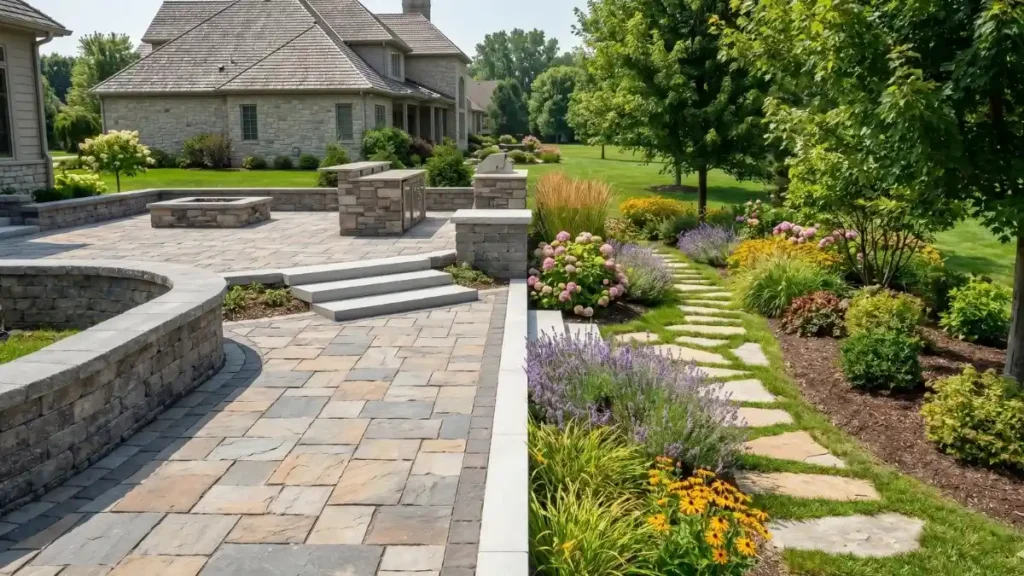
The best outdoor areas are not all about landscaping or hardscaping, but a combination of both.
The following are examples of “balanced” designs:
- A stone patio (hardscaping)
- Flower beds (landscape) surrounding it.
- A walkway that goes through the garden areas
- Shaded areas under trees for seating purposes
This combination creates:
- Functionality
- Comfort
- Beauty
- Long-term durability
Any professional outdoor design NY plan will always incorporate both of these elements strategically.
Cost Comparison
Landscaping Costs:
- Lawn installation: moderate
- Seasonal maintenance: Ongoing expenses
- Plant replacement: recurring cost
Hardscaping Costs:
- Higher upfront investment
- Reduce maintenance expenses in the long term
- The materials used are durable and can last for decades.
Although the initial cost of landscaping may appear to be less expensive, it is often a long-term expense. Hardscaping is more expensive initially, but it will save you money over time.
Maintenance Differences
Landscaping Maintenance:
- Regular mowing
- Watering and irrigation
- Fertilization
- Pest control
- Seasonal cleanup
Hardscaping Maintenance:
- Occasional cleaning
- Sealing stone or pavers
- Minor repairs over time
If you want a home that requires minimal upkeep, then perhaps hardscaping is a better option.
Selecting the right balance of your property
When it comes to hardscaping versus landscaping, it will depend on your objectives.
Select More Landscaping If You Want:
- Natural beauty
- Garden space
- Green surroundings
- Eco-friendly design
Select More Hardscaping If You Want:
- Outdoor entertainment areas
- Low-maintenance yard
- Durable surfaces
- Functional living space
Best Option:
A combination of both makes the most appealing and useful yard improvement.
Outdoor Design Trends in NY
One of the key elements in modern outdoor design trends in NY is the combination of comfort and durability.
Popular trends include:
- Stone patios with seating areas
- fire pits surrounded by greenery.
- Mixed material walkways
- Low-maintenance native plants
- Outdoor kitchens and eating areas
- LED landscape lighting
The trends indicate a clear change towards using outdoor spaces as functional year-round living environments.
These are some of the common mistakes that homeowners make
When designing outdoor areas, there are some common mistakes that many homeowners tend to make:
1. Ignoring Drainage
Water pools and water damage occur when poor planning is done.
2. Overusing Hardscape
Excessive stone can give a yard a lifeless and cold appearance.
3. Poor Plant Selection
High maintenance when using plants that are not suited NY climate.
4. No Long-Term Plan
The cost of the redesign will be incurred later if short-term thinking occurs.
Final Planning Tips for a Successful Outdoor Project
Before starting any yard improvement project, one of the most important steps is setting a realistic plan and budget. Many homeowners begin with excitement but underestimate the complexity of combining hardscaping vs landscaping elements. A clear plan helps avoid delays, extra costs, and design mistakes.
The first step is to determine what you really want to do with your outdoor space. For some homeowners, it is more about entertaining guests on patios, fire pits, and seating areas, while others have more of a passion for gardens, greenery, and natural beauty. Knowing what you need helps to achieve a balance between hardscape and landscape features.
Next, consider your property layout, drainage patterns, sunlight exposure, and soil quality all play a major role in determining what designs will work best. For example, sloped yards may require retaining walls and proper grading before any planting or lawn installation can begin. Without this step, even the best outdoor design NY ideas can fail over time.
Also, take the long view into account. A well-designed outdoor space should be pleasing to the eye the moment it’s installed, but also be easily maintained over the years to come. Low-maintenance hardscaping elements and proper landscaping will help to minimize the amount of work required while keeping the space looking attractive.
Finally, it is important to have the help of experienced professionals. A well-trained designer knows how to combine both hardscaping and landscaping elements successfully, so that your project looks beautiful and is structurally sound. This knowledge can help you maximize returns on your investment and prevent unnecessary mistakes.
If you plan it out, your outdoor area can be a harmonious, efficient, and aesthetically beautiful extension of your home.
Final Thoughts
Hardscaping vs landscaping isn’t a matter of choosing one or the other; it’s about finding the right mix for your property.
Landscaping adds life, beauty, and natural appeal while hardscaping adds structure, durability, and functionality. When combined, they can design outdoor spaces that are both aesthetically pleasing and functional.
If you’re looking for long-term improvements in your yard, particularly in a state like New York where the weather is constantly changing, then it’s best to combine both elements through smart outdoor design NY strategies.
The most important thing about a good outdoor area is that it will look great and be functional and useful for years to come, and will make you comfortable as well.
FAQs
1. What is the main difference between hardscaping and landscaping?
Hardscaping includes non-living structures like patios and walkways, while landscaping involves living elements such as grass, plants, and trees that enhance natural beauty, softness, and environmental balance in outdoor spaces.
2. Which is more expensive, hardscaping or landscaping?
Hardscaping usually costs more upfront due to materials and installation, while landscaping has ongoing maintenance costs. Long-term, hardscaping can be more cost-effective because it requires less regular upkeep.
3. Can I combine hardscaping and landscaping in one project?
Yes, combining both creates balanced outdoor spaces. Hardscaping adds structure and usability, while landscaping provides natural beauty. Together, they create functional, visually appealing, and comfortable outdoor environments.
4. Which requires more maintenance, hardscaping or landscaping?
Landscaping requires more maintenance, such as watering, mowing, and pruning. Hardscaping requires minimal upkeep, mainly occasional cleaning, sealing, and minor repairs, depending on material quality and weather exposure.
5. What is included in hardscaping services?
Hardscaping services include patios, walkways, retaining walls, driveways, stone steps, fire pits, and outdoor kitchens. These features improve the functionality, structure, durability, and usability of outdoor living spaces.
6. What are the benefits of landscaping?
Landscaping improves curb appeal, increases property value, enhances air quality, provides shade, reduces erosion, and creates a relaxing natural environment that enhances overall outdoor living experience and comfort.
7. Is hardscaping good for small yards?
Yes, hardscaping is excellent for small yards. It maximizes usable space by adding patios, walkways, and seating areas, making compact outdoor areas more functional, organized, and visually appealing.
8. How long does hardscaping last?
High-quality hardscaping can last 20–50 years or more, depending on materials and installation quality. Proper drainage, maintenance, and weather conditions also play an important role in durability.
9. Do I need a professional for outdoor design?
Hiring a professional ensures proper planning, drainage, and material selection. Experts create balanced outdoor design NY projects that combine hardscaping and landscaping efficiently for long-term performance and beauty.
10. Which is better for property value, hardscaping or landscaping?
Both increase property value. Landscaping improves curb appeal and aesthetics, while hardscaping adds functional living space. A combination of both provides the highest return on investment for homeowners.


