
Parking Lot Snow Removal Albany NY: 10 Problems Caused by Poor Snow Clearing highlights an issue that every commercial property owner should consider before winter weather arrives. A parking lot may look like a simple outdoor space, but during heavy snow and freezing conditions, poor maintenance can quickly affect customers, employees, deliveries, parking capacity, and daily business operations.
Proper snow removal for businesses in Albany starts with more than just shoveling snow to the curb of a parking lot. Successful parking lot snow removal involves planning snow storage, maintaining parking lot access, controlling ice, and protecting walkways from ice during a storm and changing conditions.
Problems can grow into significant ones if snow is not removed or managed in time and/or at an incorrect level. Packed snow may form into ice, snow piles may obscure the view, parking areas may fill up, and water may accumulate in drainage areas.
Therefore, snow removal is an important aspect of winter property management and is best done by professional commercial parking lot snow removal companies.
Quick Overview: 10 Problems Caused by Poor Snow Clearing
| Problem | Possible Impact | Better Snow Management Approach |
| Slippery surfaces | Increased slip-and-fall risk | Timely plowing and appropriate ice management |
| Reduced parking spaces | Less customer and employee parking | Planned snow storage or removal |
| Blocked entrances | Difficult property access | Prioritize entrances and exits |
| Poor visibility | Harder for drivers to see traffic | Keep snow piles away from sightlines |
| Hidden markings | Confusing traffic and parking patterns | Consistent clearing of driving lanes |
| Drainage problems | Standing water and refreezing | Keep drains and runoff paths accessible |
| Delivery disruption | Delayed deliveries and loading | Prioritize loading areas |
| Vehicle difficulties | Cars may become stuck or lose traction | Clear driving lanes and parking areas |
| Pavement stress | Greater risk of surface deterioration | Avoid poor plowing practices and manage water |
| Business disruption | Reduced accessibility and customer inconvenience | Use a planned winter maintenance strategy |
Why Parking Lot Snow Removal Matters for Albany Businesses
Winter weather conditions can impact customer behavior at a commercial property.
When the weather is fine, some people may not think about the condition of a parking lot. However, in a snowstorm, the parking area can be one of the first things that the customer might see.
Can they enter easily?
Can they see where to drive?
Are parking spaces available?
Can they safely reach the building entrance?
These real-life questions illustrate the reasons that parking lot snow removal Albany NY should not be considered merely an appearance-based service.
The amount of service needed for commercial properties can vary from one level to another, depending upon operating hours, traffic volume, parking lot size, pedestrian volumes, and snowfall.
The needs of a retail store that opens at 6 a.m. will be different from those of an office building that is open mostly during business hours.
Pre-storm preparation will help ensure these differences are taken into account.
1. Slippery Parking Lots Increase Safety Risks
The formation of slippery surfaces is one of the most serious snow removal issues.
As vehicles continue to drive over snow, it can compact. The partially melted snow then refreezes, thanks to the temperatures.
The end product is hard-packed snow or ice that is much harder to handle than fresh snow or ice.
Drivers may lose traction when turning, stopping or maneuvering in the parking lot. Slippery spots between vehicles and moving toward the building are also potential hazards for pedestrians.
Properly plowing parking lots at the right time can lessen the amount of snow that gets compacted.
Depending on weather and surface conditions, ice management might also be required.
High traffic areas, such as entrances, pedestrian walkways, ramps and crosswalks, should be especially focused on.
2. Snow Piles Can Reduce Available Parking Spaces
Where will all the snow go?
Before plowing starts this should be answered.
When snow is continually deposited to parking areas, a business or commercial property may begin to lose a substantial amount of parking spaces.
One or two blocked spaces may not cause major disruption. However, following a few storms, big snowbanks can take up whole rows or sections.
This is a challenge for companies with already scarce parking.
Customers may have difficulty in securing space. Staff can use customer spaces and cars can start parking in spaces that aren’t originally meant to be used for parking.
During the winter months, a commercial parking lot snow removal plan should be developed to determine appropriate snow storage zones.
If the piles of snow get too big, it may be necessary to move the snow or have it hauled away instead of just letting valuable parking space be lost.
3. Poor Clearing Can Block Entrances and Exits
To ensure the proper functioning of a parking lot, it must have clearly accessible entries and exits.
These areas may be reduced or filled in due to poor snow clearing.
This can cause issues, especially if the snow is compacted and driven towards commercial driveway entrances by municipal road plows.
Snow accumulation can make it difficult to move vehicles onto or off of the property, and a lack of space may make it difficult to approach the road safely.
The entries should thus be considered as areas of special concern in the snow management plan.
During a snowstorm, contractors and property managers should think about which snow sources on the property and surrounding roads may impact access.
A driveway that was open at 6:00am may need to be attended to again following the passing of road ploughs.
4. Large Snow Piles Can Reduce Driver Visibility
Snow piles are more than just a space problem.
They may also impact visibility.
Suppose a driver is trying to exit a parking lot in the presence of a tall stack of snow near the parking lot driveway. Sight may be impaired for the driver as they approach vehicles, cyclists or pedestrians.
Similar problems can occur inside large parking lots.
Near intersections or corners, snow may accumulate to the point of making it very difficult to see between the vehicles in different lanes.
The height and location of snow piles, therefore, should be taken into consideration in good parking lot snow clearing.
Just selecting the nearest patch of snow to push is not necessarily the best option.
Traffic movement, pedestrian access, visibility, drainage and future snow accumulation
should be considered when choosing the storage area.
5. Snow Can Hide Parking and Traffic Markings
The markings are crucial to the functioning of parking lots.
Lines indicate parking spaces and arrows, crosswalks, fire lanes, accessible spaces, loading zones and other markings assist with driver understanding of how the property is utilized.
Many of these visual guides can be covered with heavy snow.
The problem could be exacerbated by poor plowing which results in extensive accumulations of compacted snow on driving and parking surfaces.
Drivers can start to develop their own parking.
Cars may be parked too close to each other, outside of parking space areas, or blocking traffic.
No snow-clearing technique can ensure that parking lot pavement markings can be seen during all phases of any active snowstorm, but regular plowing of parking lots in
Albany can help restore the normal pavement markings faster.
6. Blocked Drainage Can Create Refreezing Problems
Once precipitation ceases, snow management does not come to an end.
All snow has to go somewhere.
As temperatures rise during the day, snowbanks can start to melt. When parking lots become flooded with water due to drains or runoff paths being clogged, parts of the lot may become wet.
That water could freeze again in cooler weather.
This forms a circle:
Snow accumulation → melting → standing water → freezing → ice
Icy patches can therefore form in a parking lot that appeared clear during the afternoon.
Drainage is a concern when planning snow storage.
Driving large quantities of snow over drains or into areas where meltwater will flow across high-traffic pedestrian areas can cause further maintenance issues.
Property managers and contractors should have an understanding of the location of water flow throughout a property when planning parking lot snow removal Albany NY.
Snow Storage Area Comparison
| Snow Storage Location | Potential Advantage | Potential Problem |
| Far edge of parking lot | Keeps main traffic lanes open | Can consume parking spaces |
| Landscaped perimeter | May preserve parking capacity | Can damage landscaping if poorly managed |
| Near driveway | Convenient for plowing | May reduce visibility |
| Near drainage area | Snowmelt has nearby drainage | Piles may block drains |
| Off-site hauling | Preserves usable property space | Usually requires additional equipment and cost |
Some locations are more suitable than others for the storage of most properties. The most convenient option should be based on the site layout.
7. Poor Snow Clearing Can Disrupt Deliveries
Many business properties require constant supplies.
Food is required for restaurants. The product is delivered to the retail outlet. Offices receive supplies. Trucks may be coming and going in and out of warehouses all day long.
Deliveries may be delayed due to loading areas being covered with snow or access routes being too small.
Bigger delivery vehicles also require more space to maneuver around than do passenger cars.
A route that seems adequately cleared for a small vehicle may not provide sufficient space for a delivery truck.
When making their snow plan, businesses should locate loading docks and delivery routes.
These could be areas that should be given preference over general parking areas if deliveries normally start early in the morning.
Whenever possible, good commercial parking lot snow removal should be done keeping in mind the actual operational needs of the property and not the square foot.
8. Vehicles Can Become Stuck or Difficult to Move
Even if snow is not very deep, poorly cleared parking can cause problems.
Vehicles can be impacted by loose snow, compacted tracks, uneven piles, and icy areas.
Smaller vehicles or vehicles with a lower clearance may be more affected than trucks or SUVs.
A frequent issue is around parked vehicles.
When a parking lot is plowed with a lot of cars in, snow can build up around the cars. Later on, when drivers try to leave, they might be trapped by compacted snow.
One way to minimize this issue is to have employees make arrangements for parking together during storms.
Staff may be asked to park in one area whilst a different area is emptied, or vehicles may be moved as much as possible.
When it comes to commercial properties, it is important to have a plan in place to handle occupied parking spaces and not have to deal with random parking.
9. Poor Snow Management Can Contribute to Pavement Problems
Roads are tough in the winter.
Water can get into the small cracks and freeze, expanding them and causing deterioration to the surface over time when it freezes and thaws.
Inadequate snow management can contribute to the issue.
Repetitive runoff of water across damaged pavement can be increased by snow piles located in these areas.
Other features that are covered in snow, such as curb breaks, wheel stops, raised surfaces, landscaping edges, or others, can also be impacted by improper plowing practices.
Businesses should be aware in advance of potential challenges that the plow operator may miss.
Markers may be helpful around curbs, islands, drains, hydrants, utility areas and other noteworthy features.
The maintenance of parking lots and snow management should go hand in hand.
When there are major pavement problems, repair before winter to make maintenance easier when snow falls.
10. Poor Snow Clearing Can Disrupt Business Operations
At the end of the day, each of the above issues can be one big problem: business disruption.
If the customer sees a property with a bad parking lot, they may not bother to go in.
Employees may be late if there is no parking.
This may take longer for delivery.
Parking spaces could be reduced.
Pedestrian paths can get cluttered.
You may then have to have emergency snow work that could have been minimized with better planning if the property manager had known this.
That’s the reason why parking lot snow removal Albany NY is an operating priority for commercial properties.
The snow management plan should detail those areas that must be kept open, where snow will be stored, when additional snow removal may be needed, and how conditions will be monitored after a storm.
Poor Snow Clearing vs. Planned Snow Management
| Poor Snow Clearing | Planned Snow Management |
| Snow pushed wherever space is available | Snow storage areas identified beforehand |
| Service begins only after major accumulation | Trigger conditions established in advance |
| Entrances treated like any other area | Entrances and exits prioritized |
| Snow repeatedly occupies parking spaces | Snow piles monitored and relocated when necessary |
| Drainage overlooked | Meltwater and drainage considered |
| Loading areas cleared late | Business-critical areas prioritized |
| Little coordination with parked vehicles | Vehicle movement planned when practical |
| Ice addressed only after complaints | Surface conditions monitored |
| No post-storm inspection | Refreezing and remaining problem areas reviewed |
Commercial Parking Lot Snow Removal vs. Basic Plowing
Although the terms are sometimes used interchangeably, comprehensive snow management can involve more than operating a plow truck.
| Service | Main Purpose |
| Snow plowing | Push accumulated snow away from driving and parking areas |
| Snow relocation | Move existing piles to another part of the property |
| Snow hauling | Load and transport excess snow away from the site |
| De-icing | Address icy surface conditions |
| Anti-icing | Apply appropriate treatment before certain freezing conditions |
| Sidewalk clearing | Maintain pedestrian routes |
| Post-storm inspection | Identify remaining snow, ice or refreezing concerns |
Depending on the size of a small property, a few of these services may be needed, and on the size of a large property the plan may be more detailed.
Final Thoughts
Poor snow clearing can create much bigger problems than an untidy parking lot. Slippery surfaces, reduced parking capacity, blocked entrances, poor visibility, hidden traffic markings, drainage problems, delivery disruption, vehicle difficulties, pavement stress, and interrupted business operations can all result from inadequate winter maintenance.
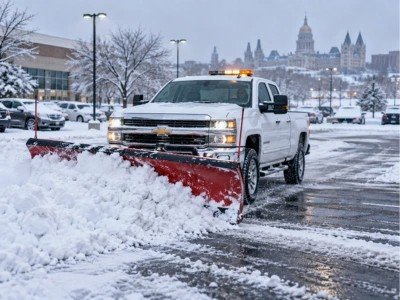
Effective parking lot snow removal Albany NY requires planning as well as plowing.
Businesses should think about where snow will go, which areas must be cleared first, how customers and employees will move through the property, and what will happen when snow begins melting and refreezing.
Reliable parking lot snow clearing can help maintain access and preserve usable space throughout the winter. For larger properties, a comprehensive commercial parking lot snow removal plan may also include snow relocation, hauling, sidewalk clearing, ice management, and post-storm monitoring.
By identifying potential snow removal problems before winter begins and developing a clear Albany parking lot plowing strategy, property owners and managers can be better prepared for the challenges that come with the next snowfall.
Frequently Asked Questions
1. Can snow removal services work around a business that operates 24 hours?
Yes. Snow contractors can develop a service plan for properties that never fully close, such as hotels, healthcare facilities, convenience stores, and certain industrial sites. Clearing may be completed in sections so part of the parking area remains available while crews work.
2. How should businesses handle shopping cart areas during snow removal?
Shopping cart corrals should be considered when planning parking lot snow clearing because they can make plowing around parking rows more difficult. Keeping carts properly stored and discussing corral locations with the contractor can help crews clear surrounding areas more effectively.
3. Can a snow removal contractor clear parking garages as well as outdoor lots?
Some contractors have equipment suitable for parking garages, but businesses should confirm this before hiring them. Garages can have height restrictions, tighter turning areas, ramps, and different surface conditions that may require smaller or specialized equipment.
4. How is snow handled around electric vehicle charging stations?
EV charging spaces require careful snow management so drivers can access both the parking space and charging equipment. Snow should not be piled against chargers, cables, signs, or electrical equipment. Businesses with charging stations should identify these areas when discussing their commercial parking lot snow removal plan.
5. Should security cameras be considered when deciding where to pile snow?
Yes. Large snow piles can potentially obstruct the view of low-mounted cameras or important surveillance areas. Property managers should identify security equipment and important camera sightlines before deciding on snow placement locations.
6. How can businesses prepare parking lots for snow removal during special events?
Businesses expecting events, holiday traffic, or unusually high visitor numbers should communicate schedules to their snow contractor in advance. This allows the contractor to understand when maximum parking capacity and clear access will be particularly important.
7. Can snow plowing affect speed bumps in a commercial parking lot?
Yes. Speed bumps and other raised pavement features can be difficult to see when covered by snow. Their locations should be identified before winter and clearly communicated to the contractor to reduce the chance of equipment striking them during Albany parking lot plowing.
8. What should businesses do with temporary signs before a snowstorm?
Portable advertising signs, traffic cones, temporary barriers, and other movable objects should be secured or removed when practical before plowing begins. Objects hidden beneath snow can interfere with equipment and make complete clearing more difficult.
9. Does the shape of a parking lot affect how snow is removed?
Yes. Irregular parking lots, narrow lanes, dead ends, landscaped islands, and tight corners can require a different approach from large open lots. Contractors may need to use different equipment or clearing patterns depending on the property’s layout.
10. Should neighboring businesses coordinate parking lot snow removal?
It can be helpful when commercial properties share entrances, access roads, or connected parking areas. Coordinating responsibilities can reduce confusion about which areas each property or contractor is expected to maintain and help prevent snow from one property being pushed into another.


