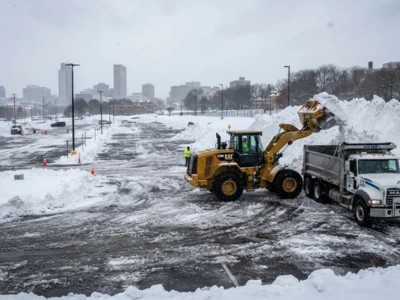
Parking Lot Snow Removal Albany NY: When Is Snow Relocation Necessary? Involves more than just clearing snow and pushing it toward the edge of a property. After a heavy snowfall, commercial property owners and managers need to determine where the accumulated snow can be stored safely and when it should be moved to another location. A parking lot may have enough space to handle snow piles after one storm, but several storms in a row can quickly reduce available parking, narrow driving lanes, and limit usable space.
It’s at this time that snow relocation starts playing an important role in winter property management. Transfers to other areas of the property or removal of the snow entirely can be beneficial for businesses to have usable parking areas, access lanes, sidewalks, loading areas, and emergency routes.
Albany businesses will factor in several considerations when determining whether or not they will choose to clear snow from their parking lots: how much snow falls, how much space they have to store it, drainage, visibility, pedestrian traffic, property layout, and how soon the parking lot needs to return to normal operations.
What Is Snow Relocation?
Snow relocation involves the relocation of the snow that has accumulated at a certain location on a property to a different location where the snow will not interfere with normal activity.
A contractor could choose to shovel the snow toward a snow storage site, rather than shoveling it in front of parking spots or driveways.
This may include:
- Pushing snow to a remote section of the property
- Moving snow away from entrances
- Clearing areas around loading zones
- Relocating snow away from drainage points
- Moving piles that obstruct visibility
- Loading snow into trucks
- Hauling snow to an approved off-site location
This will depend on how much snow and space you have.
Why Snow Relocation Becomes Necessary
Relocation may not be necessary if a single snowstorm doesn’t cause enough accumulation. If the parking lot has ample space, temporary piles can be placed in the parking lot.
The problem is compounded by the occurrence of several storms that are near each other.
As new storms come by, the snow continues to accumulate. As long as the piles are not moved, the property’s usable space is slowly reduced.
In commercial buildings, this can lead to many operational issues:
- Fewer available parking spaces
- Narrower driving lanes
- Blocked pedestrian routes
- Reduced visibility
- Restricted loading areas
- Snow-covered drainage areas
- Large piles near entrances
- Limited room for additional snow
If space for the storage of other materials is running out, relocation might be required.
Snow Relocation vs. Snow Plowing
Two services closely related to snow plowing are snow plowing and snow relocation.
Snow plowing is typically done to remove snow from roadways and shove it over to a specific area on the property.
Snow relocation involves moving accumulated snow away from areas where it has already been piled.
A contractor can clear a parking lot after a storm and push the snow to the edge of the property, for instance. When another storm comes along before the first pile melts, there might not be enough space around the perimeter.
The contractor can then move the existing pile to a different location.
When there is no appropriate room for storing snow, commercial snow hauling may be an alternative.
| Service | Main Purpose | Where Snow Goes | When It Is Used |
| Snow Plowing | Clear newly fallen snow | Usually pushed to an available area on the property | After snowfall |
| Snow Relocation | Move existing snow piles | Another suitable location on the property | When piles interfere with operations |
| Snow Hauling | Remove snow from the property | Transported to an approved off-site location | When there is little or no storage space |
When Is Snow Relocation Necessary?
No one depth of snow is a clear indicator that snow relocation is necessary.
Property owners need instead to consider how snow accumulation is impacting on the property.
Several conditions can indicate that relocation is becoming necessary.
| Situation | What Happens | Is Snow Relocation Needed? |
| Plenty of open storage space | Snow can be stored safely on-site | Usually not immediately |
| Parking spaces are blocked | Available parking decreases | Yes |
| Driving lanes become narrow | Vehicles have less room to move | Yes |
| Snow piles block visibility | Drivers and pedestrians may have reduced visibility | Yes |
| Drainage areas are blocked | Melting snow may cause water buildup | Yes |
| No room for additional snowfall | Existing storage areas are full | Relocation or hauling may be needed |
| More storms are expected | Snow piles may continue growing | Consider early relocation |
1. Parking Spaces Are Being Lost
The most obvious indicator is the decreasing parking provision.
Snow piles could be blocking spaces that are normally used by customers and/or employees. If additional snow is forecasted, extending the size of those piles may exacerbate the problem.
When car parking is a vital component of a business, it can be a major operational consideration.
Moving snow puts new space into your lot, but it doesn’t need to be removed all the way from the beginning.
2. Driving Lanes Are Becoming Narrow
Drive lanes may narrow over time due to snow piles.
This can be hazardous for traffic to clear each other in areas of heavy commercial traffic.
Large vehicles such as:
- Delivery trucks
- Box trucks
- Buses
- Emergency vehicles
- Service vehicles
may require more maneuvering space.
When snow starts to build up and interfere with regular vehicle traffic, snow removal will restore available space.
3. Snow Piles Are Blocking Visibility
Snow accumulations can block visibility at large snow piles near intersections, entrances, pedestrian crossings, and exits.
Drivers may have difficulty seeing:
- Pedestrians
- Other vehicles
- Stop signs
- Traffic markings
- Approaching vehicles
- Vehicles leaving parking spaces
Moving a stockpile can enhance sight lines and minimize any obstruction. This is especially vital where vehicles and people pass through busy commercial buildings.
4. Snow Is Blocking Drainage Areas
Snow should not just be shoved into all the low places.
When determining where snow will stay, drainage should be taken into account.
Water is formed as snowmelt occurs as the temperature increases. Melting snow may add to pooling or refreezing if piles are located close to blocked drains or where water is not able to drain off properly.
The property manager should thus determine where the meltwater will be stored before they allocate a snow storage space.
5. There Is No More Room for Additional Snow
At some point, a property may be using all of its current snow storage facilities.
When several storms come in close succession, this is often the case.
For example:
Storm 1 → Snow is pushed to the perimeter
Storm 2 → Existing piles become larger
Storm 3 → Parking and lanes become restricted
Additional snowfall → Little usable storage space remains
This is when it might be impractical to just push new snow onto existing snow piles.
Relocation or hauling might be required to provide more capacity.
What Is Commercial Snow Hauling?
Commercial snow hauling refers to the process of loading snow that has built up on the property and then hauling the snow away.
This is different from simply moving snow across the parking lot.
Contractors can use loaders, skid steers, snow blowers or other equipment to load snow into trucks. The trucks then take the snow to a suitable off-site location.
Snow hauling can be of great benefit when:
- The property has limited storage space
- Parking capacity must be preserved
- Snow piles are becoming too large
- Drive lanes are becoming restricted
- The property has repeated snowfall
- There is no suitable on-site storage area
This generally is a more comprehensive service than regular plowing, and may need to be hired as a separate service and charged its own price.
When Should Snow Be Hauled Away Instead of Relocated?
Moving snow does not necessarily involve the removal of snow.
Snow may be shifted to another appropriate storage facility, if one is available.
A large commercial building may, for instance, have a section of the back property that isn’t being used and where snow can be safely stored.
But perhaps this isn’t an option for a smaller home.
Snow hauling might be more appropriate when:
- The entire property is heavily used
- Parking demand is high
- There are no safe storage areas
- Snow piles are affecting visibility
- The property must remain highly accessible
- More storms are expected
- Existing piles are taking up valuable operating space
The decision should be made according to the layout and the requirements of operation of the property, not on a one-size-fits-all principle.
How Property Size Affects Snow Relocation
The amount of snow that can accumulate on a property may depend on the size of the property.
The space available in a large commercial building could be significant, whereas the space available in a retail parking lot could be very small beyond the parking and driving areas.
Consider two examples.
Large Commercial Property
A large office complex could have:
- Large parking areas
- Multiple access roads
- Open land
- Dedicated loading areas
Snow can be moved to a distance without operations being seriously impacted.
Small Retail Property
An alternative shopping center might be:
- Limited parking
- High customer turnover
- Narrow access lanes
- Little unused land
In this case, moving the snow around the property could be a temporary fix.
Depending on weather conditions, snow hauling may need to be done at some point.
Snow Relocation for Busy Retail Properties
Heavy Traffic by vehicles and walkers can occur throughout the day in retail businesses.
Snow accumulation will also create snow piles that may limit space for customers and impact traffic.
Peak operating hours may need to be taken into account with snow management for these properties.
A contractor will have to establish:
- Where snow can be stored temporarily
- Which areas need to remain open
- Which entrances are busiest
- Where pedestrian traffic is concentrated
- How delivery vehicles access the property
- Whether piles affect visibility
By planning, snow storage can be avoided to cause no disruption to daily operations.
Snow Relocation Around Loading Areas
Special attention needs to be paid to commercial loading zones.
Delivery trucks need sufficient space to enter, maneuver, load, and unload. Snow accumulation around loading docks can reduce this space.
When snow is continually pushed into a loading area, the snow pile can hinder deliveries.
Removing snow from these areas may help to keep these routes accessible for commercial vehicles.
This can be particularly relevant for:
- Grocery stores
- Restaurants
- Warehouses
- Medical facilities
- Hotels
- Retail centers
- Manufacturing businesses
Snow Piles Can Become a Visibility Problem
The problem of space is not the only problem with the large snow piles.
They can also influence the driver’s perception of the property.
A pile located close to an exit of a parking lot, for instance, might make it more difficult for a driver to see traffic coming down from another road.
Likewise, a stack close to a pedestrian crossing can block pedestrians from crossing the road.
Property managers may want to take into account that what matters is visibility when picking where snow may be stored.
The convenience of a location for equipment may not be the best long-term location for safekeeping.
Snow Relocation and Pedestrian Areas
It’s essential to consider sidewalks, crosswalks, pedestrian pathways, entranceways, and ramps when looking at snow management.
Clearing snow from a parking lot to a pedestrian route can be a problem as well as a solution.
Snow may also be pushed toward areas that need to remain accessible.
When planning snow storage for commercial properties, pedestrian areas that require a snow-free condition should therefore be identified.
What About Snow Near Building Entrances?
Snow buildup around building doors and entryways can present a few problems.
They may:
- Reduce walking space
- Block doors
- Restrict visibility
- Create melting and refreezing concerns
- Interfere with accessibility routes
- Make deliveries more difficult
Snow should be stored where it will not obstruct entrance and exit activities.
Relocation may be necessary if the property is small, to ensure access.
Parking Lot Snow Management After Multiple Storms
Parking lot snow management becomes increasingly important when storms occur close together.
Not every storm event is unique and should be treated as such by a property manager.
Rather, they need to take into account the total snow that has already been deposited on the site.
An example of this is a home that can move to another site after two storms. With a few more storms, however, existing piles could be too large.
This implies that the snow management plan may be modified throughout the season.
How Weather Conditions Affect the Decision
Weather can also factor into snow relocation decisions.
Existing piles may start to melt if the temperature increases greatly following a storm. If that’s the case, it may not be necessary to move all the piles.
Conversely, if temperatures stay cold and there’s still snow on the ground, snow piles may persist for a longer duration.
Property managers should thus give thought to:
- Current snow depth
- Existing pile size
- Expected additional snowfall
- Temperature
- Freeze-thaw cycles
- Available storage space
- Property usage
The decision needs to be made according to the overall winter conditions and not one measurement of snow.
Why Timing Matters
Plans for snow relocation are more likely to be successful when in place before piles grow very large.
As snow accumulations grow larger, larger equipment and more labor may be needed to move the snow.
Sometimes early moving can stop a snow build-up in ever more difficult areas.
Planning can also help in coordinating equipment and minimizing interruptions to business operations for commercial properties.
Equipment Used for Snow Relocation
Equipment may be different for different properties.
Contractors will need to use some combination of the following:
- Front-end loaders
- Skid steers
- Snow pushers
- Snow blowers
- Dump trucks
- Wheel loaders
- Plow trucks
The type of equipment that is needed is based on the type and amount of snow, property layout, pile size, and whether the snow is being moved on-site or hauled away.
For large piles, equipment that would not normally be used for regular parking lot plowing might be necessary.
How Snow Relocation Can Support Business Operations
A commercial building should still operate properly in the winter months.
Snow moving can help maintain:
- Parking capacity
- Traffic flow
- Delivery access
- Pedestrian routes
- Building entrances
- Visibility
- Emergency access
This is not to say that all properties should be relocated with snow every time it blows in.
The service will be used instead when accumulated snow starts to affect the normal service.
Snow Relocation and Emergency Access
Consideration is to be given to emergency access areas.
Fire lanes, emergency entrances, and other designated access routes should not become blocked by snow storage.
If snow accumulations start to close these ways, relocations may be required.
Property managers should become familiar with the areas that require access and ensure that the snow removal contractor is aware of this prior to snow removal operations.
How Much Does Snow Relocation Cost?
The price for moving snow depends on the property and how much work is needed.
Factors can include:
- Total snow volume
- Number and size of snow piles
- Distance snow must be moved
- Equipment required
- Labor
- Number of trucks
- Hauling distance
- Property accessibility
- Frequency of service
On-site relocation may be cheaper than the removal of snow as there is no transportation involved.
However, the actual cost should be determined based on the property and scope of work.
What Should Be Included in a Snow Removal Plan?
A commercial winter plan can help determine where snow should be collected ahead of the first big storm.
It may include:
- Primary snow storage areas
- Secondary storage areas
- Areas where snow should not be piled
- Emergency access routes
- Pedestrian routes
- Loading zones
- High-traffic areas
- Equipment access points
- Conditions that trigger relocation
- Conditions that require hauling
Making these choices ahead of a storm can help minimize confusion.
Questions to Ask a Snow Removal Contractor
As the winter season approaches, commercial property managers can ask:
Where Will Snow Be Stored?
The contractor should be familiar with the available storage space on the property.
When Will Snow Be Relocated?
Discuss the circumstances under which a person would move.
Is Snow Hauling Available?
For some properties, this may require off-site removal at some point, and it helps to determine if the contractor offers the service.
What Equipment Will Be Used?
Depending on the amount and size of the property and the amount of snow, some equipment may be more appropriate than others.
How Will Emergency Access Be Maintained?
Talk about fire lanes, emergency exits and other places that need to be accessible.
How Are Additional Snow Events Handled?
Ask how repeated storms affect the service plan and pricing.
When Should a Business Plan for Snow Relocation?
The best time to plan is before snow accumulation becomes a problem.
A business can review its property layout before winter and identify potential snow storage locations.
This enables the property manager and contractor to talk about:
- Where the first snow will be pushed
- Where later accumulation will go
- When relocation may be needed
- Whether hauling may eventually be required
Planning can make winter operations more organized.
Common Snow Relocation Mistakes
Some common snow problems can arise from improperly planned snow storage.
Piling Snow Too Close to Entrances
This can make access difficult and there may be problems with visibility.
Using Parking Spaces as Permanent Snow Storage
This could result in fewer parking spaces throughout the winter.
Blocking Drainage Areas
Snow heaps around drainage points may exacerbate water-management issues during snowmelt.
Ignoring Future Storms
After several storms, a storage area might not have enough capacity.
Waiting Until Piles Become Too Large
Moving large piles may involve more equipment and manpower.
Forgetting Pedestrian Routes
Snow should not be simply pushed from vehicle areas to walkways.
Final Thoughts
Snow relocation is an important part of Parking Lot Snow Removal Albany NY when accumulated snow begins taking up too much usable space or interfering with property operations. It can involve moving snow to another part of the property or, when on-site storage is no longer practical, arranging commercial snow hauling.
The decision depends on more than snowfall depth. Parking availability, traffic lanes, visibility, drainage, pedestrian access, loading zones, emergency routes, and expected future snowfall all matter.
For businesses, having a snow management plan before winter begins can make it easier to determine when normal plowing is enough and when additional relocation or hauling is required. By planning snow storage locations and identifying relocation triggers in advance, property managers can better maintain usable commercial spaces throughout the winter season.
Frequently Asked Questions
1. Can snow be relocated to another part of the same parking lot?
Yes, if the location provides sufficient space and does not interfere with parking, traffic, drainage, visibility, pedestrian access, or emergency routes.
2. How do I know when a snow pile has become too large?
There is no universal pile size. A pile may become problematic when it reduces visibility, blocks access, occupies needed parking, or leaves insufficient space for future snowfall.
3. Can snow be stored near a parking lot entrance?
It may be possible in some properties, but the location should not obstruct vehicle visibility, pedestrian movement, drainage, or access.
4. Is snow hauling the same as snow relocation?
Not exactly. Relocation can involve moving snow elsewhere on the property, while hauling involves loading snow and transporting it away from the property.
5. Can snow relocation be planned before winter?
Yes. Property managers can identify potential storage areas and discuss relocation or hauling procedures with their contractor before major snowfall begins.
6. Does every commercial parking lot need snow hauling?
No. Some properties have enough space to store accumulated snow on-site throughout the winter.
7. Can snow piles damage landscaping?
Large or repeatedly placed snow piles can affect landscaped areas, especially when snow contains salt, debris, or other materials. Storage locations should therefore be selected carefully.
8. Why should snow piles be moved away from drainage areas?
As snow melts, water needs a clear path to drain. Poorly placed piles can contribute to blocked drainage and water accumulation.
9. Should snow relocation be included in a seasonal snow contract?
It can be. Businesses should discuss whether relocation and hauling are included, separately priced, or triggered by specific conditions.
10. Can snow relocation reduce lost parking spaces?
Yes. Moving accumulated snow away from parking areas can restore space that would otherwise remain occupied by snow piles.