
The blog tells about Retaining Walls Albany, NY: Prevent Soil Erosion & Improve Landscape Design. One of the most important investments a homeowner can make in the process of enhancing their outdoor space in Albany, NY, is retaining walls. The region has a hilly topography, heavy rains (seasonal), snowmelt, and freezes or thaws, so soil erosion, drainage, and uneven surface are usually problems in properties. Planting professionally designed retaining walls Albany, NY residents will be confident in can make difficult yards secure, useful, and attractive.
Besides safeguarding the property, erosion control walls complement landscaping, development of usable outdoor living spaces, and improve long-term property value. This guide will answer all the questions about retaining walls, such as benefits, building materials, design, and maintenance.
Why Retaining Walls Are Important in Albany, NY
The climate in Albany poses special landscaping problems. The presence of snow, spring thaw, and heavy rain may lead to the movement of soil, flooding, and slope instability. These conditions can result in property damage without appropriate support.
Retaining walls assist by:
- Stabilizing sloped terrain
- Preventing soil erosion
- Improving drainage
- Creating level outdoor spaces
- Protecting foundations and structures
In most properties, retaining walls are not just decorations but necessities.
Understanding Soil Erosion and Its Impact
Soil erosion is the loss of soil by wind, rain, or melting snow. In the long run, erosion may destroy landscaping and structural integrity.
Symptoms of Soil Erosion
- Bare patches in the yard
- Exposed tree roots
- Post-rain mud.
- Sinking or rough ground.
- Water is accumulating around the foundations.
Erosion control walls offer a permanent solution as they retain soil and redirect water channels.
How Retaining Walls Prevent Soil Erosion
Retaining walls are structural barriers that hold the soil together and stop soil movement.
Key Functions of Erosion Control Walls
- Stabilize soil on the hillside.
- Slow water runoff
- Minimize the saturated soil pressure.
- Avert landslides and washouts.
- Improve overall drainage
Retaining walls with proper engineering are very effective in minimizing the risks of erosion.
Enhancing Landscape Design With Retaining Walls
Retaining walls do not just serve a purpose; they also enhance beauty.
Design Benefits
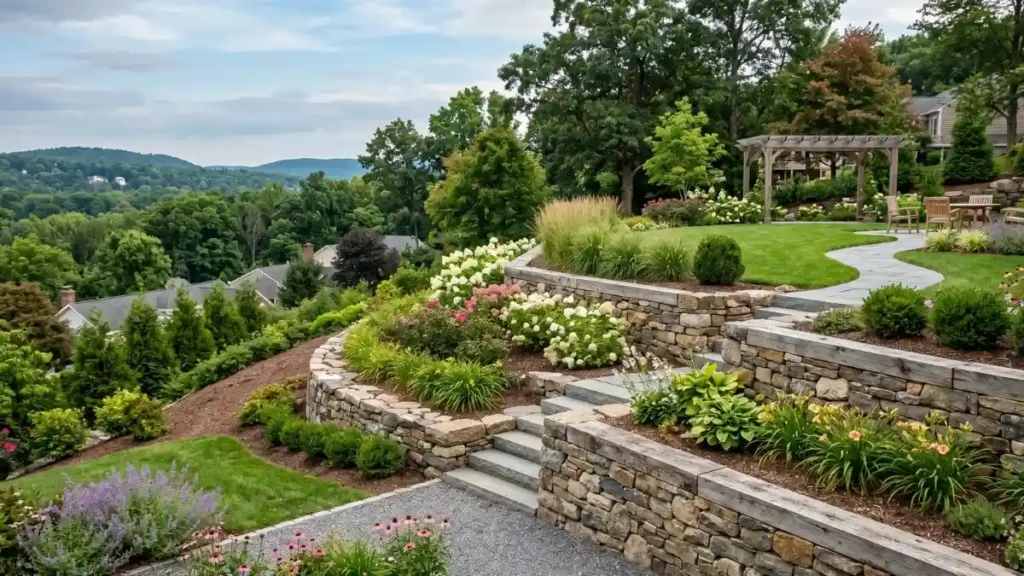
- Create terraced gardens
- Create dimension and depth.
- Define outdoor living spaces.
- Increase curb appeal
- Complement architectural style
Stone walls are commonly used as structural and ornamental features in modern landscaping.
Types of Retaining Walls
The selection of the appropriate form of retaining wall will be based on property design, soil type, and appearance aspirations.
Gravity Retaining Walls
These are based on their weight to retain soil and are best suited to small slopes.
Cantilever Retaining Walls
Constructed using reinforced concrete in higher walls and greater weight.
Segmental Retaining Walls
These walls are durable and attractive since they are made of interlocking blocks.
Anchored Retaining Walls
Applied to steep slopes that need further reinforcement.
Professional assessment guarantees the correct wall type for a particular property.
Popular Materials for Stone Walls
The choice of the material influences the durability, look, and maintenance requirements.
Natural Stone
- Timeless aesthetic
- Highly durable
- Blends with landscape
Concrete Blocks
- Cost-effective
- Versatile designs
- Strong structural support
Brick
- Classic appearance
- Applicable to decorative walls.
Timber
- Natural look
- Most suitable for smaller walls.
Stone walls are still popular because of their durability and attractiveness.
Drainage Solutions and Retaining Walls
Drainage plays a vital role in the performance of retaining walls. A wall with pressure and structural failure due to water accumulation at the back of the wall.
Drainage Features Include
- Gravel backfill
- Drain pipes
- Weep holes
- Proper grading
Good drainage prolongs the life of the walls and eliminates the need of expensive repairs.
Terracing: Creating Usable Outdoor Spaces
Sloping yards may restrict the use. The retaining walls enable the homeowners to have a few flat surfaces for different activities.
Terraced Landscape Ideas
- Garden beds
- Outdoor seating areas
- Fire pits
- Play areas
- Walkways and patios
Terracing is the conversion of wasteful slopes to useful outdoor living areas.
Winter Durability in Albany’s Climate
Walls that are not constructed properly may be destroyed in freeze-thaw. The use of professional installation makes the walls withstand harsh weather.
Winter-Proof Design Features
- Deep foundations
- Flexible materials
- Proper drainage
- Reinforced structures
Permanent retaining walls work throughout the year.
Boosting Property Value
Retaining walls enhance property value by enhancing safety and appearance.
Real Estate Benefits
- Enhanced curb appeal
- Improved landscaping functionality
- Reduced erosion risks
- Better drainage
- More outdoor living area.
Retaining walls are quite frequently regarded as a significant upgrade to the property by buyers.
Retaining Walls for Safety and Structural Protection
Retaining walls safeguard buildings by managing the water flow and soil erosion.
Most Beneficial Areas.
- Driveways
- Foundations
- Walkways
- Pools
- Patios
Long term damage is avoided by structural protection.
Planning and Design Considerations
Professional planning guarantees the successful retaining wall projects.
Important Factors
- Soil composition
- Heights and lengths of the walls.
- Drainage needs
- Local building codes
- Aesthetic preferences
Adequate planning averts challenges down the line.
Maintenance Tips for Long-Lasting Walls
Regular maintenance can keep the retaining walls lasting for decades.
Maintenance Checklist
- Inspect drainage systems
- Remove debris buildup
- Check cracks/bulging.
- Maintain surrounding landscaping
Preventive care extends the lifespan of the wall.
Environmental Benefits of Retaining Walls
Retaining walls are a part of a sustainable landscape.
Eco-friendly advantages:
- Reduced soil loss
- Improve stormwater management
- Support plant growth
- Prevent runoff pollution
They aid in ecosystem protection and the beautification of landscapes.
Choosing Professional Installation
Professional installation makes retaining walls safe, durable, and innovative in accordance with local regulations.
Advantages of hiring experts
- Accurate engineering
- Proper drainage planning
- High-quality materials
- Long-term durability
- Building codes compliance
Special installation makes it less risky and guarantees long-term outcomes.
Why Retaining Walls Are Essential for Albany Properties
Homeowners in Albany are prone to erosion due to the climate and topography. It is quite wet, snowy, freezes and thaws, and has seasons of storms. In the long-term these conditions can lead to soil movement, weakening of slopes, and deterioration of landscaping. One of the surest methods of ensuring that your property is not affected by this is by installing erosion control walls.
Soil erosion will result in:
- Foundation instability
- Drainage problems
- Landscape damages
- Poor or dangerous lawns
- Wasting of good topsoil
A retaining wall constructed by a professional provides a defensive barrier that makes the soil stable, and water moves safely out of your house.
How Retaining Walls Improve Landscape Design
In addition to its functionality, retaining walls are significant to the aesthetics of the landscape. Stone walls have been developed to look like part of the outdoor setting and provide beauty and organization.
Homeowners usually find that retaining walls open up landscaping opportunities that they never imagined.
Design benefits include:
1. Designing Multi-level outdoor areas
Sloping yards may seem restrictive, and retaining walls will enable you to separate your yard into various levels of use. Gardens, patios, seating areas, or outdoor kitchens can be done on these terraces.
2. Enhancing visual Appeal
Retaining walls have an ancient look due to stone textures, natural colors, and custom layouts. They outline garden beds, emphasize walkways, and provide architectural appeal to the premises.
3. Increasing outdoor functionality
Flat grounds that are achieved through the retaining walls are safe and practical grounds where family activities can be done, with guests entertained or outdoor features installed.
4. Defining Landscape zones
Separation retaining walls may be used to divide lawns and gardens, patios and walkways, decorative landscapes and functional areas. This assists in the making of an orderly and refined yard layout.
Popular Retaining Wall Materials in Albany
The selection of the appropriate materials is very important for durability and appearance. Several materials are notable in their performance in the local weather conditions in the Albany, NY, projects of retaining walls.
Natural Stone
The use of natural stone walls has been one of the most popular due to their strength and eternal beauty. They are weather-resistant, and they blend well into the landscape.
Concrete Blocks
Concrete blocks that are engineered are very strong and can be designed. They are suitable for bigger erosion control walls and projects that need reinforced support.
Brick retaining walls
Brick walls are traditional and classic, and suit smaller ornamental retaining wall projects.
Timber walls
Pressure-treated timber walls have a rustic look and can be used on small garden walls or decorative walls, but they will need more maintenance in the long run.
The Importance of Proper Drainage in Retaining Walls
One of the most crucial elements of a retaining wall system is drainage. In the event of a lack of proper drainage, water may accumulate behind the wall, leading to cracks, bulging, or even structural collapse.
Drainage solutions installed by professional installers include:
- Backfilling with gravel to enhance water flow
- Perforated drainage pipes
- Moisture release weep holes
- Correct grading to push off water
These characteristics see to it that your erosion control walls are sound and sturdy for several decades.
Retaining Walls and Property Value
Retaining walls are not only a great financial choice, but also a solution to landscape issues.
Households that have professionally designed landscaping tend to have higher property value and curb appeal.
Buyers are attracted to homes with:
- Functional outdoor spaces
- Strong erosion protection
- Beautiful landscaping features
- Low-maintenance yard designs
Properly built stone walls are an indication of quality, stability, and careful maintenance of the property.
Seasonal Maintenance Tips for Retaining Walls
Even though retaining walls are constructed to be durable, frequent maintenance guarantees their long-term performance.
Inspect Annually
Inspect cracks, bulges, or drainage problems every spring/fall
Clear Drainage paths
Eliminate leaves, debris, and soil that may clog drainage systems
Fix small problems at the earliest
The small cracks or movable stones need to be patched fast to avoid bigger structural issues.
Protect during winter
Freeze-thaw cycles may stress the walls, and it is necessary to ensure that there is proper drainage and that it is checked annually.
Combining Retaining Walls With Other Landscape Features
Smaller outdoor projects are frequently supported by retaining walls. Most Albany homeowners will use retaining walls with:
- Stone patios
- Outdoor fire pits
- Walkways and steps
- Raised garden beds
- Outdoor lighting
Incorporating retaining walls Albany, NY projects, and other hardscape features into a unified and highly functional outdoor space can be achieved.
Final Thoughts
Retaining walls are one of the most valuable additions you can make to your outdoor space. They prevent soil erosion, improve drainage, enhance landscaping, and increase property value. Whether you need large erosion control walls or decorative stone walls, a professionally designed retaining wall system provides lasting protection and beauty.
Retaining walls are the best combination of functionality, durability, and classic design for Albany homeowners seeking to landscape their homes.
FAQs
1. What are retaining walls used for?
Retaining walls hold back soil on sloped land, preventing erosion and creating level spaces. They improve drainage, increase usable yard space, and enhance landscaping design while protecting foundations and outdoor structures from soil movement.
2. How long do retaining walls last?
Well-built retaining walls can last 30–100 years depending on materials, installation quality, and maintenance. Stone and concrete walls typically last the longest when proper drainage and reinforcement are included during construction.
3. Do retaining walls require permits?
Many municipalities require permits for walls over a certain height, often around 3–4 feet. Always check local building codes before construction to ensure compliance and avoid costly legal or structural issues later.
4. What materials are best for retaining walls?
Natural stone, concrete blocks, brick, and treated timber are common materials. Stone and concrete are the most durable and ideal for long-term erosion control, especially in climates with heavy rain and freeze-thaw cycles.
5. How do retaining walls prevent soil erosion?
They create a barrier that stabilizes soil and controls water flow. Proper drainage systems reduce water pressure behind the wall, preventing landslides, washouts, and soil displacement during storms and heavy rainfall.
6. How tall can a retaining wall be?
Walls can vary from small garden walls under 2 feet to engineered structures over 10 feet tall. Taller walls usually require professional design and reinforcement to ensure structural safety and long-term durability.
7. Are retaining walls expensive?
Costs vary based on size, material, and site conditions. While the upfront investment can be significant, retaining walls save money long-term by preventing erosion damage, foundation issues, and costly landscape repairs.
8. Do retaining walls need drainage systems?
Yes. Drainage is essential to prevent water buildup behind the wall. Gravel backfill, drainage pipes, and weep holes help relieve pressure and ensure the wall remains stable and functional for decades.
9. Can retaining walls increase property value?
Yes. Retaining walls improve curb appeal, create usable outdoor space, and prevent landscape damage. Buyers often view them as valuable upgrades that enhance both functionality and long-term property stability.
10. How long does installation take?
Small retaining walls may take a few days, while larger or complex projects can take one to three weeks. Timeline depends on design complexity, site preparation, and weather conditions.
11. What maintenance do retaining walls need?
Annual inspections, clearing drainage systems, and repairing small cracks or shifting stones help maintain structural integrity. Regular maintenance prevents small issues from turning into expensive structural repairs.
12. Can retaining walls be decorative?
Yes. Retaining walls are often designed as landscape features. They can include seating areas, lighting, steps, or garden beds, combining structural support with aesthetic appeal and outdoor living enhancements.
13. What causes retaining walls to fail?
Common causes include poor drainage, improper installation, weak foundation preparation, and excessive pressure from water or soil. Professional construction significantly reduces the risk of failure.
14. Can retaining walls fix drainage problems?
Yes. Properly designed walls redirect water flow and prevent pooling near foundations. Integrated drainage systems protect homes from flooding, water damage, and soil erosion.
15. When is the best time to build a retaining wall?
Spring through early fall is ideal due to stable weather and workable soil conditions. However, experienced contractors can build year-round depending on project scope and site conditions.


