
The blog tells about the Step-by-Step Hydroseeding Process for Fast Lawn Growth in New York. It may seem like a challenge to make a lawn a green, lush lawn, especially in areas where the weather is unpredictable and the soil is different. It is the reason why hydroseeding is one of the most popular techniques for establishing a lawn very quickly and effectively. Hydroseeding is becoming a popular and affordable way for homeowners and property managers in New York.
This guide will cover the entire procedure of hydroseeding, its effectiveness, and how it will assist in giving you a lush lawn in a short period of time, as opposed to the conventional ways.
What is hydroseeding?
Hydroseeding is a lawn seeding technique that uses a specialized slurry mixture sprayed over soil to promote rapid grass growth. The slurry typically contains:
- Grass seed
- Water
- Mulch
- Fertilizer
- Soil stabilizers
- Tackifiers (binding agents)
Such a mixture forms the ideal situation where seeds can germinate fast and are safeguarded against erosion, extreme weather, and birds.
Hydroseeding lies between the old-fashioned hand seeding and sodding. It is quicker to grow than seeding and much cheaper than sod.
Why Hydroseeding Works So Well in New York
The climate of New York is characterized by cold winters, hot summers, and rainy seasons that are unpredictable. The traditional seeding may be challenging under these conditions. Hydroseeding can be used to overcome these problems, and this is done through the formation of a protective coating of moisture that aids in high germination.
Benefits include:
- Faster germination times
- Stronger root development
- Even seed distribution
- Reduces erosion
- Saving of costs over sod
Due to these benefits, hydroseeding has gained popularity as a means of residential lawns, business landscapes, parks, and the landscape of new construction.
Step 1: Site Evaluation and Planning
The hydroseeding process starts with a comprehensive site evaluation.
Professional evaluation:
- Soil quality
- Drainage conditions
- Sunlight exposure
- Slope and erosion risks:
- Existing vegetation
This is done to ensure that the right seed mix is picked. In New York, popular grasses are:
- Kentucky bluegrass
- Perennial ryegrass
- Fine fescue
The right blend is critical to achieve long-term lawn success.
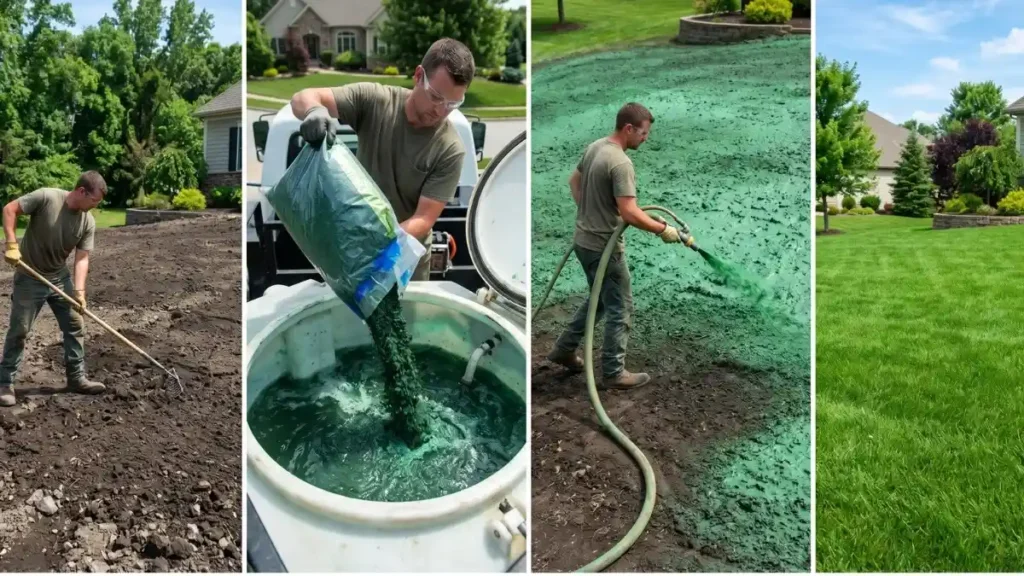
Step 2: Soil Preparation
One of the most vital procedure to successful hydroseeding is proper soil preparation.
Clearing the area
The website should be swept out of:
- Rocks
- Weeds
- Debris
- Old grass
- Construction waste
The slurry is in direct contact with soil on a clean surface, enhancing germination.
Grading and Leveling
Grading provides adequate drainage of water and eliminates stagnation. The soil is molded to form a smooth, even surface by professionals.
Soil Loosening
The soil is loosened using:
- Rototillers
- Rakes
- Aeration equipment
Loosely soiled soil enables the roots to easily penetrate and absorb nutrients effectively.
Step 3: Soil Testing and Amendment
Healthy soil equals healthy grass. Professionals tend to test the pH of soil and nutrient content before hydroseeding.
If necessary, they add:
- Lime to reduce acidity
- Compost to improve organic matter
- Fertilizers to enhance nutrients
Even soil provides the seeds with the most favorable opportunity to be robust and fast-growing.
Step 4: Preparing the Hydroseed Slurry
The hydroseeding mix is made in a special tank. The slurry is mixed properly to ensure that it is distributed evenly and that it performs well.
The slurry consists of components.
Grass Seed
Chosen due to climate, sun exposure and use of lawns.
Mulch:
The paper fibers or wood are usually used. Mulch contains water and shields seeds.
Fertilizer:
Provides nutrients needed for early growth
Tackifier:
Helps the mixture stick to the soil and resist erosion.
Water:
Creates the liquid base that allows the mixture to be sprayed evenly.
This customized mixture is key to hydroseeding’s success.
Step 5: Spraying the Hydroseed Mixture
After the slurry is prepared, high-pressure hoses are used to spray the prepared soil with a uniform layer of the slurry.
The application creates a green, moist blanket that:
- Protects seeds
- Retains moisture
- Prevents erosion
- Ensures uniform coverage
This is a quick, efficient step. Hydroseeding can be done on large areas within a few hours.
Step 6: Initial Watering Schedule
Watering is essential to hydroseeding.
First two weeks
The soil has to be kept constantly wet to aid germination.
Typical watering schedule:
- Light sprinkling 2-3 times a day
- No excessive watering or puddles
- Do not make the surface wet
The largest aspect of early success is proper watering.
Step 7: Germination and Early Growth
Among the largest merits of hydroseeding, there is rapid germination.
Typical timeline:
- 5-7 days: Early sprouting starts
- 2-3 weeks: The lawn is covered with grass
- 4-6 weeks: Thickening of the lawn is observed.
The weather and the type of seed may affect the rate of growth, although hydroseeding always provides faster results than conventional seeding.
Step 8: First Mowing
Before the first mow, the grass should be approximately 3-4 inches long.
Mowing tips:
- Use sharp mower blades
- Avoid cutting more than one-third of the grass height
- Mow in dry grass
The first thing to do is to mow early to promote thicker growth and stronger roots.
Step 9: Fertilization and Ongoing Care
Once the lawn is established, fertilization will help in its growth.
Typical schedule:
- First fertilizer: 4-6 weeks of seeding
- Follow-up fertilization: once every 6-8 weeks in the growing season.
Ongoing care includes:
- Regular watering
- Weed control
- Seasonal fertilization
Properly maintained, a hydro-seeded lawn is thick and resilient.
Hydroseeding vs Traditional Seeding
| Feature | Hydroseeding | Traditional Seeding |
| Germination Speed | Fast | Slow |
| Coverage | Even | Uneven |
| Erosion Protection | High | Low |
| Moisture Retention | Excellent | Limited |
| Cost | Moderate | Low |
| Results | High Success Rate | Variable |
Hydroseeding provides more consistent and reliable results.
Hydroseeding vs Sod Installation
| Feature | Hydroseeding | Sod |
| Cost | Lower | Higher |
| Installation Speed | Fast | Instant |
| Root Development | Strong | Moderate |
| Long-Term Durability | Excellent | Good |
Hydroseeding delivers professional results at a more affordable price.
Best Time for Hydroseeding in New York
Ideal seasons:
- Early spring
- Early fall
These seasons provide:
- Moderate temperatures
- Consistent rainfall
- Optimal growing conditions
Hydroseeding is not recommended when it is very hot or freezing.
Common Mistakes to Avoid
- Underwatering or overwatering
- Walking on the lawn too soon
- Mowing early
- Ignoring the fertilization schedule
- Making an incorrect seed mix
These are the mistakes to be avoided that guarantee the successful growth of the lawn.
How Long Does Hydroseeding Last?
A hydroseeded lawn can be long-lived with proper care. Deeply rooted and well-covered, it is strong, sturdy, and can withstand the weather and pedestrian traffic.
How Weather Conditions Affect Hydroseeding Success
The weather is significant in the speed at which your hydroseeded lawn will grow. Although hydroseeding has been developed to be effective under different conditions, knowledge of the effect of temperature and rainfall on growth can be used to assist property owners in making realistic expectations.
Temperature Impact
Grasses that are popular in cooler climates, such as those in the north, do well at temperatures 60-75°F (15–24°C). Hydroseeding done under these conditions results in quicker germination and stronger growth of roots. Very hot weather may cause the slurry to dry out too fast, and germination is slowed down by freezing temperatures.
Moisture balance and rainfall
The light rain is good since it will keep the mulch layer wet. Nevertheless, heavy rains within a short period of time after hydroseeding may wipe off some of the mixture before it can attach to the soil. This explains why practitioners tend to keep track of weather projections when planning projects.
Hydroseeding for Sloped and Erosion-Prone Areas
Hydroseeding works particularly well with hilly and sloped areas. The conventional seeding process is not effective in such terrains since the seeds may be washed away before they sprout.
The mulch and tackifier of hydroseeding assist the mixture to stick to the soil, forming a protective shield that stabilizes the slopes. Hydroseeding is ideal in:
- New construction sites
- Drainage areas
- Roadside landscapes
- Retention ponds
- Large commercial properties
Hydroseeding prevents early erosion, thus safeguarding the lawn and the landscape around the lawn.
Custom Seed Blends for Different Lawn Needs
Customization is one of the largest benefits of hydroseeding. Dissimilar lawns possess diverse necessities, and experts customize seed mixtures to suit the manner in which the territory will be utilized.
High-Traffic Lawns
Areas where children play, or pets run, require durable grass varieties that recover quickly from wear.
Shaded Lawns
Large trees or buildings require grass cover that can tolerate shade and have very low sunlight requirements.
Decorative Lawns
Color, texture, and homogeneity are more likely to be prioritized in front yards and commercial properties.
Hydroseeding provides improved long-term performance compared to generic seed applications by adjusting the seed mix.
Environmental Benefits of Hydroseeding
Hydroseeding is not only effective, but it is also environmentally friendly. Most current hydroseeding blends contain biodegradable mulch and environmentally friendly fertilisers.
Environmental advantages include:
- Reduced soil erosion
- Less water use than sod
- Minimal waste
- Improved soil health
- Better stormwater absorption
A healthy lawn also enhances the quality of air, cools the environment around structures as well as sustaining the local ecosystem.
Cost Savings Over Time
Even though initially, hydroseeding is more expensive than traditional hand seeding, it can be more cost-efficient in the long-term.
Germinating fast and exhibiting greater success rates will make reseeding, patch repair, and the use of a lot of maintenance unnecessary.
Savings in the long run are achieved by:
- Fewer weed problems
- Stronger root systems
- Reduced irrigation needs
- Reduced repair and replacement.
This renders hydroseeding an intelligent investment for both homeowners and commercial property owners.
Signs Your Hydroseeded Lawn Is Thriving
In a few weeks after application, you are likely to begin to see positive growth signs:
- Even a green coverage on the lawn.
- Thickening of grass blades gradually.
- Less visible soil areas.
- Greater opposition to pedestrian traffic.
The lawn is supposed to be complete, thick, and healthy at the end of the first growing season.
Long-Term Lawn Maintenance Tips
To maintain your hydroseeded lawn in the best shape possible over the years:
- Water thoroughly, but less often after establishment.
- Till the soil once a year to enhance its health.
- Fertilize seasonally
- Oversow areas that are thin where necessary.
- Control weeds early
Hydro-seeded lawns get stronger and more resilient with proper care and maintenance each year.
Why Hydroseeding Is the Future of Lawn Seeding NY
When homeowners begin researching lawn seeding NY, they quickly discover that traditional hand seeding can be slow and unpredictable. Uneven growth, seed loss from rain, and patchy coverage are common problems. Hydroseeding solves these issues by creating an ideal germination environment that dramatically improves success rates.
In contrast to the traditional lawn seeding NY techniques, which assume hand-spreading of the seed, hydroseeding applies a mixture of seed that is well mixed and adheres to the soil, keeping it moist. This coating of the plants allows the seeds to grow quicker and have stronger root systems even in the harsh conditions, such as those in New York.
Hydroseeding is being preferred by property owners throughout the state as it provides:
- Increased and quicker germination.
- Less bird loss of seeds and soil erosion.
- Even the grass cover on extensive spaces.
- Reduce the maintenance expenses in the long term.
Due to these benefits, hydroseeding has been one of the most reliable methods in modern lawn seeding NY projects.
Hydroseeding vs Traditional Lawn Seeding NY Methods
Conventional ways of lawn seeding NY still are effective, but more time, energy, and patience are needed. Hydroseeding improves the overall process by integrating the seed dispersal, fertilization, and soil covering into a unified process.
Key differences include:
Traditional Seeding
- Seeds may be washed away in rain.
- Germination takes longer
- Uneven distribution is prevalent.
- Requires frequent reseeding
Hydroseeding
- Seeds are covered with mulch.
- Quick germination and growth.
- Even coverage of the lawn.
- Higher success rate
Hydroseeding, which is the enhanced form of lawn seeding NY is recommended to those property owners who want quicker results and reliability.
Hydroseeding as a Modern Grass Installation Solution
When individuals consider grass installation, the initial process that crosses their mind is sod. Sod gives immediate greenery, but it is much pricier and needs proper installation in order to avoid long term problems.
Hydroseeding presents an effective alternative to installing grass, balancing cost, speed, and durability.
The advantages of hydroseeding in the installation of grass.
1. Stronger Root Development
Sod lawns are planted on soil and have to take root downwards. Hydroseeded grass develops directly on the ground on the first day forming deeper and stronger roots.
2. Better Soil Adaptation
Hydroseeding also enables grass to adjust to your soil environment, thereby making the lawn more resistant to weather conditions and pedestrian traffic.
3. Cost-Effective Large Area Coverage
In large properties, parks and commercial landscapes, hydroseeding offers the professional installation of grass at a fraction of the cost of sod installation.
4. Customizable Grass Blends
Hydroseeding enables professionals to select types of grass depending on:
- Sun exposure
- Soil type
- Lawn usage
- Climate conditions
This personalization makes hydroseeding one of the most versatile grass installation solutions currently.
Who Benefits Most From Professional Lawn Seeding NY Services?
Hydroseeding is applicable in most of the properties and landscaping projects. The services of Professional lawn seeding NY are normally applied to:
- New home construction projects.
- Commercial landscaping developments
- Backyard renovations
- Large residential properties
- Athletic fields and parks.
- Erosion control projects
Hydroseeding is a quick and effective method of establishing a lawn whether on bare soil or on a damaged area.
Long-Term Value of Professional Grass Installation
Professional grass installation through hydroseeding offers value that extends beyond the look when investing in it. A healthy lawn will help in:
- Increased property value
- Improved outdoor usability
- Reduced soil erosion
- Improved drainage and water uptake.
- Reduced summer temperatures outside.
Since hydroseeded lawns have deep roots, they do not need as much watering and maintenance in the long-run than poorly established lawns.
Why Professional Lawn Seeding NY Services Matter
Although hydroseeding technology is highly effective, the success of a project depends on proper planning and execution. Professional lawn seeding NY providers understand:
- Regional climate conditions
- Soil composition variations
- Ideal seed blends for New York lawns
- Proper watering and maintenance schedules
Hiring experienced professionals ensures your grass installation project delivers long-lasting results.
Final Thoughts
One of the most effective and less expensive methods of having a beautiful lawn within the shortest time is through hydroseeding. With a proven step-by-step procedure, which includes soil preparation and continual care, property owners can have lush, green results in a fraction of the time it would have taken under traditional seeding.
Hydroseeding provides the ideal combination of rapidity, price-effectiveness, and success to homeowners and enterprises aiming to have a quicker turf.
FAQs
1. What is hydroseeding?
Hydroseeding is a lawn installation method where grass seed, mulch, fertilizer, and water are mixed into a slurry and sprayed over soil to promote fast germination and even grass growth.
2. How long does hydroseeding take to grow?
Grass typically begins sprouting within 5–7 days, becomes visible in 2–3 weeks, and reaches full lawn thickness within 6–8 weeks when properly watered and maintained.
3. Is hydroseeding better than traditional seeding?
Yes, hydroseeding provides more even coverage, faster germination, and better moisture retention compared to traditional hand seeding, leading to higher success rates and healthier lawns.
4. Is hydroseeding cheaper than sod?
Hydroseeding is significantly more affordable than sod installation while still delivering professional-looking results. It offers a great balance between cost, speed, and long-term lawn durability.
5. What is the best time to hydroseed in New York?
Early spring and early fall are ideal because temperatures are moderate and rainfall is more consistent, creating optimal conditions for seed germination and root development.
6. How often should I water after hydroseeding?
Water lightly 2–3 times per day for the first two weeks to keep the soil consistently moist. After germination, reduce frequency and switch to deeper watering sessions.
7. Can hydroseeding be done on slopes?
Yes, hydroseeding works very well on slopes because the mulch and tackifier help the mixture stick to the soil and prevent erosion during early growth stages.
8. How soon can I walk on a hydroseeded lawn?
Avoid foot traffic for at least 4–6 weeks. Walking too early can damage delicate seedlings and create uneven growth or bare patches.
9. When should I mow my hydroseeded lawn?
Mow when the grass reaches about 3–4 inches tall. Use sharp blades and avoid cutting more than one-third of the grass height at a time.
10. Will weeds grow with hydroseeding?
Some weeds may appear naturally, but proper fertilization, mowing, and lawn care help grass outcompete weeds as the lawn thickens and matures.
11. How long does a hydroseeded lawn last?
With proper care, watering, fertilizing, and mowing, a hydroseeded lawn can remain healthy and durable for decades.
12. Can hydroseeding be customized for shade?
Yes, professionals use shade-tolerant seed blends designed to grow in areas with limited sunlight, ensuring consistent coverage across the entire yard.
13. Does rain affect hydroseeding?
Light rain is helpful, but heavy rain immediately after application can wash away the mixture. Professionals usually monitor weather forecasts before scheduling projects.
14. Is hydroseeding environmentally friendly?
Yes, hydroseeding reduces soil erosion, improves water retention, and often uses biodegradable mulch and eco-friendly fertilizers to support sustainable landscaping practices.
15. How soon will my lawn look fully established?
Most hydroseeded lawns appear thick and full within two months, and they continue strengthening over the first growing season with proper maintenance and care.


