
This blog tells about Yard Drainage Solutions Every Homeowner Should Install Before the Rainy Season. Without good drainage, it is easy to see how a healthy lawn can become a muddy, waterlogged landscape when the rain comes pouring down. Not only does it affect grass and plants, but standing water can also impact your home’s foundation, cause erosion, draw in mosquitoes, and cause costly repairs. When organizing your property for the rainy season, one of the best ways to prevent these issues is to prepare it well in advance.
Installing reliable drainage systems NY homeowners trust is an investment in both the beauty and functionality of your outdoor space. Effective rainwater management helps direct excess water away from your home while preserving your landscaping and preventing long-term structural damage. Whether you have a small residential yard or a large property, choosing the right yard flooding fix can significantly improve drainage and protect your investment.
This guide explains the causes of poor yard drainage, the best options for drainage, yard maintenance tips, and what can be done to prepare the landscape for heavy rains before they occur.
Why Proper Yard Drainage Matters
A good drainage system will help to keep the rainwater off your property and will regulate the flow of rainwater over your landscape. Without adequate drainage, water can accumulate around your home, causing numerous issues.
Here are some of the advantages of having top-notch drainage systems NY:
- Preventing standing water
- Protecting home foundations
- Reducing soil erosion
- Preserving landscaping
- Preventing basement flooding
- Improving lawn health
- Minimizing mosquito breeding
- Increasing property value
Proper rainwater management helps to maintain an appealing and useful lawn all year round.
Signs Your Yard Needs Better Drainage
Often, the problems with drainage start slowly and then develop into a problem.
Look out for these warning signs:
- Standing water due to rain
- Water-stained soil for days after rain.
- Pooling water near your foundation.
- Soil erosion
- Dead or yellow grass
- Mold or mildew around the home
- Basement moisture
- Cracked sidewalks as a result of soil movement.
If you’re experiencing these issues, it’s time to consider a yard flooding repair.
Common Causes of Poor Yard Drainage
When understanding why the drainage issues are occurring, you can determine the best solution.
Compacted Soil
When soil is compacted, it will not absorb rainwater, leading to runoff and pooling.
Improper Yard Grading
An inclined yard will run towards instead of away from the house.
Clogged Gutters
Overflowing gutters lead to too much water pooling around the foundation of your home.
Heavy Clay Soil
Clay soil is slow-draining and not very efficient at absorbing rainwater.
Inadequate Drainage Systems
Older homes may not have new drainage systems, which are designed to accommodate the rainy conditions that are common in the modern day.
Best Drainage Systems NY Homeowners Should Consider
1. French Drains
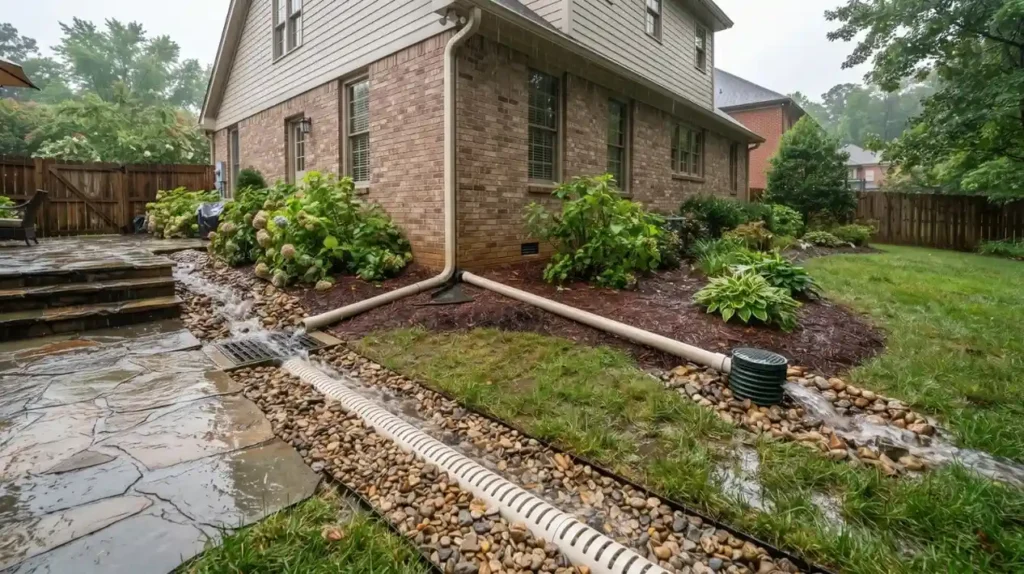
French drains are one of the most popular drainage systems NY homeowners install.
A French drain is made up of:
- A gravel-filled trench
- Perforated drainage pipe
- Filter fabric
- Proper grading
It harvests the groundwater and channels it out of your house.
Benefits include:
- Reduces standing water
- Protects foundations
- Works well in a clay soil
- Long-lasting performance
2. Surface Drains
Rainwater is not allowed to pool but is run off onto surface drains.
These systems are suitable for:
- Patios
- Driveways
- Walkways
- Low-lying lawn areas
After heavy rains, the excess water is rapidly removed by surface drainage.
3. Channel Drains
For hardscape areas where water tends to accumulate, channel drains are a great choice.
Common mounting locations are:
- Garage entrances
- Sidewalks
- Pool decks
- Outdoor kitchens
They enhance rainwater management and avoid slippery surfaces.
4. Dry Wells
Dry wells are used to catch the surplus water and store it in the ground; it filters gently into the soil around the dry well.
Advantages include:
- Reduces runoff
- Supports groundwater recharge
- Hidden underground installation
- Minimal visual impact
5. Catch Basins
Catch basins are used to catch debris and to funnel stormwater into a below-ground system.
Benefits:
- Prevents clogs
- Reduces flooding
- Improves drainage efficiency
Regular cleaning will provide optimum performance.
6. Downspout Extensions
Simple extensions to your downspout can direct rainwater further away from your home’s foundation.
They are an inexpensive yard flooding fix that will stop water from collecting around exterior walls.
Rainwater Management Strategies
Rainwater management is more than just installing drains. Using several techniques is sometimes more effective.
Improve Yard Grading
Good grading is away from structures and not towards.
Most professionals say a slope that gently slopes for several feet away from the foundation of the home.
Install Rain Gardens
Rain gardens employ plants that can tolerate water to naturally absorb excess water.
Benefits include:
- Improved drainage
- Attractive landscaping
- Reduced runoff
- Environmental sustainability
Use Permeable Pavers
Unlike traditional concrete, permeable pavers let the rainwater flow through the surface into the ground below.
This will minimize runoff and promote groundwater recharge.
Add Mulch to Garden Beds
Organic mulch absorbs the rain and reduces soil erosion.
It also helps to increase soil fertility and water-holding capacity.
Choosing the Right Yard Flooding Fix
There are no universal solutions for drainage issues.
Homeowners should consider:
- Yard size
- Soil type
- Slope
- Rainfall levels
- Existing landscaping
- Budget
The professionals who work in landscape construction can provide you with the solutions that are fit for your property based on your home’s particular conditions.
Foundation Protection
One of the main functions of drainage systems NY is to safeguard the foundations of homes.
Excessive water around the foundation can cause:
- Cracks
- Structural movement
- Basement leaks
- Mold growth
- Costly repairs
Raising the water away from the home greatly decreases these dangers.
Seasonal Drainage Maintenance
All drainage systems need to be cared for from time to time, even the best ones.
Recommended tasks include:
- Cleaning gutters
- Cleaning up the drains of debris.
- Inspecting downspouts
- Checking catch basins
- Trimming vegetation
- Inspecting grading
Regular maintenance makes it easy to manage rainwater problems every year.
Benefits of Professional Installation
While some of the drainage improvements can be done by yourself, there are a few advantages to hiring a professional to install them.
Professionals provide:
- Proper grading analysis
- Drainage design
- High-quality materials
- Long-term durability
- Code compliance
- Efficient installation
Having the drainage systems NY installed correctly will ensure the most efficient use of them.
Eco-Friendly Drainage Solutions
It is noted that sustainable landscaping is still becoming more popular.
There are some sustainable alternatives for drainage:
- Rain gardens
- Permeable pavers
- Native plants
- Rain barrels
- Bioswales
These solutions will enhance rainwater management and minimize the environmental footprint.
Cost Factors
Costs for a drainage project vary with:
- Yard size
- Soil conditions
- Drainage type
- Excavation requirements
- Material selection
- Labor
Having several estimates gives homeowners the chance to compare the options before they start installation.
Common Drainage Mistakes
Be sure to avoid these common errors:
- Ignoring standing water
- Installing drains without proper grading
- Using undersized pipes
- Neglecting maintenance
- Blocking drainage paths
- Directing water toward neighboring properties
Good planning means that problems are avoided in the future.
Long-Term Value
Quality drainage systems NY will produce results that will last for many years, such as:
- Reduced maintenance costs
- Improved landscaping
- Healthier lawns
- Increased property value
- Foundation protection
- Better outdoor usability
Investing in the drainage system today will prevent costly repairs in the future.
How to Choose the Right Drainage Solution for Your Property
Each yard is unique, so there is no “one size fits all” solution to drainage issues. The type of soil, landscape slope, property size, and how much rain you get in your area all affect the drainage systems that NY homeowners should consider installing. By taking time to consider these elements, you can choose a solution that offers long-term protection and reduces the need for future maintenance.
Evaluate Your Yard’s Slope
Water flow is greatly influenced by the natural slope of your yard. Ideally, the ground should slope away from the foundation of your home so that water isn’t trapped around the house. Re-grading the land may be required if water continues to run toward the house before adding more drainage systems.
Understand Your Soil Type
The speed at which water penetrates soil depends on the type of soil. Sandy soil absorbs water quickly, and clay soil absorbs water for a long time. Clay soil can be more problematic and necessitate more sophisticated rainwater management systems to alleviate standing water and sod saturated areas.
Consider the Size of Your Property
For small residential yards, it may be enough to do a simple project like installing downspout extensions or surface drains. For larger properties, however, a combination of drainage measures, such as underground piping, catch basins, swales, and rain gardens, can be beneficial. Multiple systems are integrated to enable effective water management throughout the landscape.
Plan for Future Weather Conditions
Weather patterns have become increasingly unpredictable in many parts of New York. Designing a drainage system that can handle heavy rainfall rather than average rainfall provides additional protection against flooding and erosion. Investing in durable drainage systems NY today can help homeowners avoid expensive repairs caused by future storms.
Benefits of Preventive Drainage Planning
Homeowners only start to tackle drainage when there’s a lot of damage. But it’s much cheaper to take the time to prevent foundation cracks, replace landscaping or flooded basements than it is to repair them.
Good water management can contribute to soil stability, avoiding erosion issues that may expose tree roots, damage flower beds, or compromise retaining walls. It also prevents outdoor elements like fences and walkways, driveways, and patios from weathering the water. Homeowners will save money on maintenance and use up their outdoor dollars more effectively by channeling water away from these buildings.
A properly drained landscape also plays a part in a healthy landscape. Excess water is removed efficiently, and the balance of moisture and oxygen obtained by the roots promotes the growth of grasses, shrubs, and trees. Removing standing water will remove mosquito breeding grounds and reduce the potential of mold, mildew, and foul odor.
Last, an effective yard flooding fix can help considerably boost the look and usability of your property. Homeowners can enjoy a cleaner, safer, and more functional outdoor space all year round, instead of having to contend with muddy lawns and waterlogged garden beds after each rainy day. Whether you intend to keep the home for a long time or sell it down the road, the investment in professional drainage solutions will benefit curb appeal, boost property value, and give you peace of mind throughout every rainy season.
Conclusion
One of the best things you can do for your home as a homeowner is to get ready for the rainy season. Proper drainage systems NY combined with a rainwater management plan, prevent expensive water damage to your lawn, landscaping, foundation, and other outdoor living areas.
Whether you choose French drains, catch basins, dry wells, rain gardens, or a combination of solutions, selecting the right yard flooding fix depends on your property’s unique drainage challenges. Working with experienced professionals ensures proper installation, long-term performance, and peace of mind during every rainy season.
Taking proactive measures now will lead to a healthier, safer and more beautiful yard and help you prevent issues that can be caused by excess rainwater in the yard.
Frequently Asked Questions (FAQs)
1. What are the best drainage systems NY homeowners should install?
Popular options include French drains, surface drains, channel drains, catch basins, dry wells, and downspout extensions, depending on your property’s drainage needs.
2. How can I tell if my yard has drainage problems?
Signs include standing water, muddy areas, soil erosion, basement moisture, dying grass, and water collecting near your home’s foundation.
3. What is the most effective yard flooding fix?
The best yard flooding fix depends on the cause of the problem. French drains, improved grading, and properly installed catch basins are among the most effective long-term solutions.
4. How does rainwater management protect my home?
Proper rainwater management directs excess water away from your home’s foundation, reducing the risk of flooding, erosion, structural damage, and mold growth.
5. Can drainage systems increase property value?
Yes. Well-designed drainage systems NY improve landscape health, protect structures, reduce maintenance, and enhance overall property appeal, making homes more attractive to buyers.
6. How often should drainage systems be maintained?
Homeowners should inspect and clean drainage systems at least twice a year, especially before and after the rainy season.
7. Are French drains suitable for all types of yards?
French drains work well in many situations, particularly for properties with standing water, poor soil drainage, or sloped landscapes. A professional assessment can determine if they are the best solution.
8. Can I install a drainage system myself?
Simple solutions like downspout extensions may be DIY-friendly, but larger drainage projects often require professional expertise to ensure proper grading and long-term performance.
9. What role do gutters play in yard drainage?
Clean gutters and properly positioned downspouts help move roof runoff away from your home, supporting overall rainwater management and reducing the risk of foundation damage.
10. When is the best time to install drainage systems?
The ideal time is before the rainy season begins. Installing drainage improvements early allows homeowners to address existing issues and protect their property before heavy rainfall occurs.


