
The blog explains about Common Drainage Problems in NY Yards & How to Fix Them. One of the most frequently occurring and aggravating problems homeowners experience throughout New York is poor drainage in the yard. Whether it’s during the rainy season or in winter when snow melts, too much water can transform a lovely lawn into a wet and unusable area. Yard drainage problems can also cause structural issues, build up pest populations, cause loss of grass over time, and harm foundations.
Recognizing the causes of water pooling and what to do about it is critical to a healthy landscape. This guide covers the most common drainage issues in NY yards and water pooling solutions and drainage repair techniques that homeowners can take to restore water flow.
Why Yard Drainage Problems Are So Common in New York
Climate is one of the key factors in drainage problems in New York. Homeowners experience:
- Heavy seasonal rainfall
- Snow accumulation and rapid melting
- Limited availability of mineral soil in many areas
- Compact soil during freeze-thaw cycles
- Landscaping with little natural runoff and dense suburban development
The conditions created by these conditions are conducive to water standing in the ground and saturated lawns.
1. Poor Soil Absorption
Compacted soil or soil that contains too much clay is a common yard drainage issues.
Why does it happen:
- Heavy foot traffic compresses the soil
- Construction activity disturbs the natural soil structure
- Clay soil naturally resists water absorption
Signs:
- After a rain, water accumulates on the surface.
- The lawn is soft or spongy
- Patches of yellow or dead grass
Solutions:
- Aerate the lawn to loosen the soil
- Add compost or sand to improve drainage
- Add soil amendments to make the soil more permeable
Long-term drainage performance can be greatly enhanced by regular aeration.
2. Improper Yard Grading
If your yard isn’t sloped properly, water will drain towards your home or pool up in the low areas.
Why it happens:
- Incorrect landscaping design
- Gradually filling in the soil as time passes
- Poor construction planning
Signs:
- Water flows toward the house foundation
- Puddles are created in certain areas of low relief
- Any leaks or dampness in the basement.
Drainage repair solutions:
- Gently sloping yard away from structures
- Application of topsoil in low areas.
- Installing swales to divert water flow
Adequate grading is among the best water pooling solutions on a long-term basis.
3. Clogged or Broken Gutters and Downspouts
Roof drainage systems are very important in yard drainage, but very few people pay much attention to them in the home.
Why it happens:
- Leaves and debris clog gutters,
- The downspouts dislodge or break off.
- Water flow is allowed to be close to the foundation.
Signs:
- Overflowing gutters during rain
- Pools of water around home boundaries
- Staining of exterior walls
Fixes:
- Routine clean-up of gutters (particularly fall time)
- Extend downspouts away from the foundation
- Have gutter guards fitted to keep gutters from clogging or overflowing.
A drainage improvement that is easy but very effective is redirecting roof runoff.
4. Surface Water Pooling in Low Spots
Water will settle in low spots in your yard after rain or snowmelt.
Why it happens:
- Uneven terrain
- Due to soil settling over time.
- Poor landscaping design
Signs:
- Persistent puddles after storms
- Muddy or soggy patches
- Mosquito activity in standing water
Water pooling solutions:
- Fill low areas with topsoil
- Install French drains
- Create dry creek beds for aesthetic drainage
- Use gravel-filled trenches for water redirection
These techniques allow for efficient water removal without water pooling.
5. Poor Subsurface Drainage
Water issues can also happen underground and are frequently not easily noticed.
Why it happens:
- The soil is dense clay, which does not allow water to filter through.
- The absence of underground drainage systems is a problem.
- Excessive groundwater in a few areas.
Signs:
- Low groundwater levels even during dry periods
- Regular care measures are not helping your plant to survive.
- Water bubbling up in certain areas
Drainage repair options:
- Place the subsurface drainage pipe
- Use perforated drain systems
- Include gravel under the soil surfaces
- To install French drain systems
The fix that is needed over the long term is often a subsurface solution.
6. Downhill Water Flow Toward the House
Water flows downhill and occasionally sloped properties will see water flow towards structures.
Why it happens:
- Natural landscape slope
- Improper grading during construction
- Erosion by soil over time
Signs:
- Basement leaks
- Foundation dampness
- Pooling water around walls
Fixes:
- Install swales or drainage channels
- Construct retaining walls that incorporate a drainage outlet.
- Detain the runoff water by underground piping
The most important thing to do is to keep water away from the house foundation.
7. Soil Erosion and Runoff Issues
But if water flow is excessive, it can wash away soil, leading to uneven soil and drainage issues.
Why it happens:
- Heavy rainfall
- Lack of vegetation
- Poor slope control
Signs:
- Exposed roots
- Washed-out soil patches
- Uneven lawn surfaces
Solutions:
- Use ground cover or grass to hold the soil in place.
- Install erosion control fabric on eroded soil
- Build retaining features
- Minimize the impact of runoff by using mulch
One of the most natural water pooling options is with the vegetation.
8. Improper Drainage Around Hardscapes
For patios, driveways, and walkways, if not designed correctly, they can impede natural water flow.
Why it happens:
- Water is bounced off concrete surfaces to the wrong places:
- The absence of a drainage system
- Installing new hardscape (such as settling or cracking)
Signs:
- Standing water by patios
- Slippery surfaces
- Any cracks in concrete or pavers
Drainage repair solutions:
- Put in channel drains around edges
- Use slope on hardscape areas
- Use permeable pavers for improvements in absorption.
Long-term structural damage will be avoided with proper hardscape drainage.
9. Tree Roots Blocking Drainage Flow
Tree roots tend to block underground drainage systems and soil flow.
Why it happens:
- Roots extend toward water.
- Root intrusion is drawn towards the drain pipes
- Mature trees change the structure of the soil.
Signs:
- Delayed drainage at certain localities
- Pipe blockages
- Abnormally high concentrations around trees
Fixes:
- Install root barriers
- Install drain pipes that are resistant to roots
- Move drainage systems clear of big trees
Preventing Future Yard Drainage Issues
One of the most effective ways to avoid expensive repairs is to do maintenance or preventive work.
Key prevention steps:
- Regular lawn aeration
- Seasonal gutter cleaning
- Proper landscape grading
- Routine drainage inspections
- Planting deep-rooted vegetation
Prevention is better than a cure.
When to Call a Professional
Some minor drain problems can be resolved by the homeowner, while others will need professional assistance:
- Drivers experience delays at toll booths due to long lines at the cashier.
- Flooding or foundation damage in the basement.
- Large-scale grading problems
- The system may have failed to install the system correctly or to give it proper maintenance.
A professional will evaluate the soil, water drainage, and structural issues to create a long-term resolution.
Advanced Drainage Solutions for Persistent Yard Water Problems
While simple fixes such as cleaning gutters or filling low spots can solve minor drainage concerns, some properties experience ongoing water management challenges that require more advanced solutions. Understanding these options can help homeowners address severe yard drainage issues before they cause costly property damage.
French Drains: A Popular Long-Term Solution
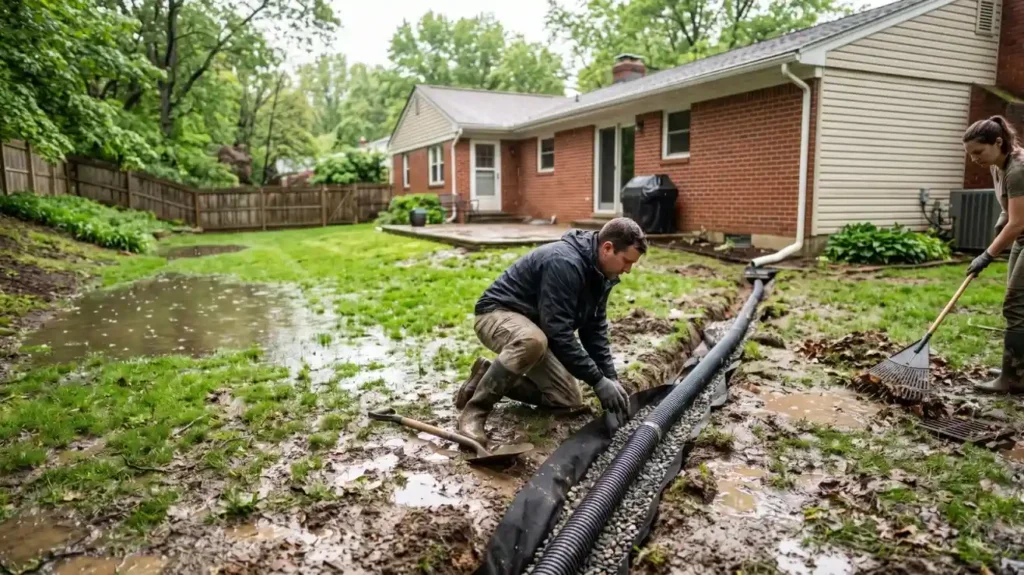
One of the best ways to deal with flooding in yards is to install a French drain. This type of system is comprised of a trench with a layer of gravel over it that has a perforated pipe running through it, which gathers and reroutes water away from problem areas.
The advantages of French drains are:
- Reducing standing water
- Protecting foundations
- Preventing soil erosion
- Improving lawn health
- Use of heavy rain response systems efficiently.
French drains are especially effective on homes that suffer from water accumulation post-storms or snow melts.
Dry Wells for Excess Runoff
A dry well is an underground structure used to catch and slowly release excess water into the surrounding soil.
Dry wells are commonly used on the homeowner’s property to control:
- Roof runoff
- Downspout discharge
- Surface water accumulation
- Landscape drainage overflow
Dry wells are particularly effective when used in conjunction with other water pooling solutions like French drains and swales.
Rain Gardens for eco-friendly drainages
A rain garden is a landscaped depression containing water-loving plants that will capture unwanted runoff.
Advantages include:
- Improved drainage
- Attractive landscaping
- Reduced erosion
- Enhanced biodiversity
- Lower stormwater runoff
Rain gardens offer a holistic solution to the problem of drainage, as well as an aesthetic solution for outdoor spaces.
Catch Basins and Channel Drains
Catch basins and channel drains can capture and concentrate water before it causes an issue for properties with expansive paved surfaces.
Such systems are often found in the vicinity of:
- Driveways
- Patios
- Walkways
- Parking areas
Conducting drainage channels properly can minimize standing water and damage to hardscape.
How Drainage Problems Affect Property Value
Homeowners often don’t know how a drainage problem can affect their home’s value.
Potential consequences include:
- Foundation settlement
- Basement moisture problems
- Landscape deterioration
- Mold growth
- Structural damage
When people look at a home for sale, they see whether there are drainage issues or not. Early drainage management can help to maintain both property value and curb appeal.
Fall and Spring Drainage Maintenance Tips
Seasons in New York are very different throughout the year, and seasonal maintenance is essential.
Spring
- Check for snow melt damage
- Clear drainage channels
- Check for erosion
Summer
- Monitor irrigation systems
- Address compacted soil
- Repair damaged landscaping
Fall
- Remove leaves from gutters
- Clean catch basins
- Inspect downspouts
Winter
- Monitor ice buildup
- Prevent drainage blockages
- Monitor ice dams to runoff
Regular seasonal inspections help prevent small problems from becoming expensive repairs.
Benefits of Professional Drainage Repair
Professional drainage contractors can offer customized solutions that take into account:
- Soil conditions
- Property slope
- Water flow patterns
- Local climate factors
They tend to be better at their job and will make more permanent repairs than you can do yourself, so that the repair will last longer. Professional drainage repair services can help homeowners avoid a host of water intrusion, landscape loss and foundation damage problems and save them a lot of money.
Final Thoughts
Problems with yard drainage can be more than a nuisance they can be a serious problem affecting your lawn and your home. From improper grading and clogged gutters to subsurface drainage failures, there are many potential causes of standing water in NY yards.
Fortunately, there are equally many water pooling solutions and drainage repair methods available, ranging from simple fixes like gutter extensions to advanced systems like French drains and yard regrading.
If you learn the root cause at an early stage, and then apply the correct solution, homeowners will be able to safeguard their property, enhance curb appeal, and keep their outside alive and healthy all year round.
Frequently Asked Questions (FAQs)
1. What causes most yard drainage issues in New York?
Most drainage problems result from poor grading, compacted soil, clogged gutters, heavy rainfall, snowmelt, and inadequate drainage systems that prevent water from flowing away properly.
2. How can I tell if my yard has a drainage problem?
Common signs include standing water, muddy areas, dead grass patches, soil erosion, basement moisture, mold growth, and water remaining on the lawn for days.
3. What is the best solution for water pooling in a yard?
The best solution depends on the cause. Common options include French drains, regrading, dry wells, catch basins, gutter extensions, and improved soil drainage.
4. Are French drains worth the investment?
Yes. French drains effectively redirect excess water away from problem areas, helping prevent foundation damage, standing water, erosion, and long-term landscaping issues.
5. Can poor drainage damage my home’s foundation?
Absolutely. Excess water around foundations can lead to cracks, settlement, basement leaks, structural movement, and expensive repairs if left unaddressed.
6. How much does professional drainage repair typically cost?
Costs vary depending on property size, drainage complexity, and required solutions. Minor repairs may be affordable, while extensive grading or drainage installations cost more.
7. Can I fix drainage issues myself?
Some minor issues, like gutter cleaning and soil aeration, can be handled by homeowners. However, significant grading or underground drainage projects often require professionals.
8. What is a rain garden, and how does it help drainage?
A rain garden is a landscaped area designed to collect and absorb runoff naturally. It improves drainage, reduces erosion, and enhances the appearance of outdoor spaces.
9. How often should drainage systems be inspected?
Most experts recommend inspecting drainage systems at least twice yearly and after major storms to identify blockages, erosion, or developing water management problems.
10. Does landscaping affect yard drainage?
Yes. Proper landscaping can improve drainage through grading, plant selection, ground cover installation, and strategic water management features that direct runoff effectively.


