
The blog tells about Why Professional Landscaping Design Matters for Long-Term Value. Homeowners tend to imagine home value enhancement when they’re considering having their kitchen remodeled, a new roof put on, or their bathroom remodeled. However, one of the most underutilized and best investment options is literally just outside the front door. Many interior home improvements can’t match the measurable, long-term benefits of a well-designed landscape.
Every day, at KD Landscaping, we meet homeowners who are amazed that the impact of a well-designed outdoor area on the property can not only improve the aesthetic appeal and ambiance, but also the property’s value as well. In this article, we’ll give you a few examples of the actual landscaping design benefits that will go beyond the curb appeal and then discuss just how property value landscaping is a long-term investment strategy and not simply a single cost.
The difference between Landscaping and Landscape Design
Prior to the benefits, it is important to have a discussion of an important distinction. In typical usage, “landscaping” implies maintenance activities, such as mowing, pruning, fall clean-up, and plantings of occasional shrubs. Design, however, is “landscape design,” and it is a deliberate, strategic process. It includes an evaluation of the property’s layout, soil and drainage conditions, sun exposure, and architecture, and developing a unified design that unites the whole outdoor environment.
This distinction is relevant since the two methods yield quite different results. A yard remains neat with the simple landscaping. A well-designed landscape can be more than just a pretty face; it’s an extension of your home, a space that’s both functional and beautiful, and a space that can increase the value of your property. It’s all about the difference between a group of plants and a cohesive outdoor space that lasts.
1. Professional Design Maximizes Property Value
First, let’s discuss the most important number for homeowners: return on investment. Many real estate and horticultural industry reports have been published over the years that demonstrate the value of landscaping and how much it can return as a resale value, and often the return is more than some interior renovation projects. When it comes to first impressions and first impressions matter, real estate professionals often say that one of the first things that matters is curb appeal, and mature, well-planned landscaping is one of the first things that affects curb appeal.
The essence of property value landscaping is not simply creating a nice yard for the existing occupant. It’s all about making an outdoor area that appraisers, real estate agents and buyers all agree is an asset. A well-groomed landscape gives buyers the confidence that the residence has been properly maintained in general, and instills a pleasant sense of welcome as soon as they walk through the front door.
A good landscape design, based on structure and proportion, and quality plant material, has an attractive, durable, age-proof quality that enhances with age as trees and shrubs grow.
2. Thoughtful Design Increases Curb Appeal Instantly
Curb appeal is a subjective and nebulous term; it can have a very tangible and measurable effect. Architects and interior designers use design elements such as balance, focal points, scale, and changing color in different seasons to create a pleasing composition, which is exactly what professional landscape designers do, but on a different scale.
A properly designed front yard will provide a clear “view” to the front door, highlight the best features of the house’s architecture, and provide an attractive first impression through plantings, hardscaping, and lighting. It is not just a guess; it is a well-thought-out decision based on the street, driveway, and close-up view of a property.
Those who hire a professional to design their home expect to reap the rewards almost instantly. A house that used to fit in with everyone suddenly looks to be a house that’s different on the right level.
3. Good Design Reduces Long-Term Maintenance Costs
A landscaping design benefits that is frequently overlooked is the amount of cash that can be saved over time through professional planning. Sometimes a homeowner will do their own landscaping or install landscaping in an improper manner, which can result in expensive issues later on: plants placed in the incorrect sun exposure that are unable to grow, irrigation systems that are not properly zoned and waste water, or hardscaping that is not graded for drainage and begins to crack.
A landscape professional considers these factors from the outset. They choose plants appropriate to the local climate and soil, arrange plants according to their water requirements (hydrozoning), and plan drainage and grading to prevent erosion and water damage.
It not only results in a landscape that consumes less water, requires less replacement, and requires fewer emergency repairs, but it’s also a significant savings over the years. This is a way to integrate professional design, not as a cost, but as a way to save on the much greater cost that can occur if it is a trial-and-error landscaping.
4. Landscape Design Extends Usable Outdoor Living Space
Today’s homeowners consider their yards an extension of the living room, a space for relaxing, entertaining, gardening, and enjoying nature. Professional design is an essential component to make that vision viable.
A good designer doesn’t just focus on plants; he/she considers movement and usage of the space. This might include:
- Established patio or sitting spaces out of sight and out of the sun
- Logical connection between various parts of the yard with pathways
- An outdoor kitchen, fire pit, or pergola is a part of the design.
- Illumination programmes to enhance the evening use of the space
- Privacy screening plants or fencing from neighbors or the street
These additions can enhance the everyday living experience of a property, but they’re also a key element to having a selling point. Today’s buyers are attracted to homes that have practical outdoor living spaces and a design that makes them feel like a natural extension of the home.
5. Professional Design better performs Environmental Performance
Sustainability has become a key element in homeowner satisfaction and property marketability. Creating a professional landscape design involves taking into account the use of environmentally responsible practices that will affect the property and its surroundings.
This includes:
- Native and drought-tolerant plantings that are less susceptible to pests and local weather conditions, and don’t require as much water.
- Good drainage system design, which minimises runoff and erosion of the property and neighbouring land
- Natural cooling by strategically placed trees to shade windows and outdoor living in summer to lower energy costs
- Soil health management practices that help maintain plant health over the long-term with minimal use of inputs such as fertilizer or pesticide
These environmental benefits directly lead to financial benefits. Professional design is very long-term, and, more and more, eco-friendly landscaping is a feature that prospective home buyers look for.
6. Design Provides Cohesion between Home and Landscape
The most obvious clue of amateur landscaping is when the landscaping fails to match the home’s architecture in style, scale, or materials, creating an unplanned overall look. Professional landscapers are instructed to blend structure and landscape with the appropriate materials, plant forms, and color schemes that go hand-in-hand with the structure of the home.
A contemporary house would look better with clean lines, well-defined plantings, and simple hardscaping elements, for instance, while a traditional colonial may feature more flowing plant beds and traditional materials such as brick or stone. This is a nod to the harmony of architecture; It’s not a giant leap, but it makes a big difference in terms of the finished look and value of the property.
7. Professional Landscaping Supports Faster, Stronger Sales
When homeowners are thinking about selling, they will find that a professional job of landscape design is a clear competitive edge. Strong outdoor photos and landscaping are an important part of getting a real estate listing to sell quickly, and to get more showings and interest. In many cases, it’s possible for a real estate listing to sell quickly and to get more showings and interest. In many cases, it’s possible for a real estate listing with a strong outdoor photo and outdoor landscaping to attract more interest, showings, and then sell it faster than a comparable property with a poor outdoor photo and landscaping.
This is where property value landscaping is a real marketing tool instead of an aesthetic enhancement. Good landscaping makes a property more appealing in listing photos, makes a good first impression when a buyer visits, and makes a property less stressful for buyers to make a property less stressful for buyer to make the property less stressful for buyers to make the property their own, just to name a few things that can help when it comes to negotiating a higher asking price.
8. Design Plans Adapt and Grow With the Property
A major advantage of professional design over piecemeal landscaping is that it’s built with the future in mind. Designers consider how trees and shrubs will grow over the next five, ten, and twenty years, spacing and selecting plants so the landscape matures into a cohesive, balanced environment rather than becoming overcrowded or outgrowing its space.
This innovative approach ensures that the investment will keep yielding results well after the initial installation. A good landscape design has the added benefit of becoming more valuable and more beautiful as it grows, rather than being a furniture piece or a coat of paint that lose their value over the years.
9. The costs of not following professional guidance
Homeowners are often drawn to making their own landscaping improvements, but they then encounter issues that increase the expense of their original undertaking. Common mistakes include:
- Planting trees is very close to foundations, driveways, and utility lines
- Selecting plants that are not hardy in the region.
- Lacking adequate drainage design, pooling water, or foundation problems caused by hardscaping.
- Placing seedlings in beds where they are too small to occupy the space they will occupy as adult plants
- Failure to comply with local or homeowner association regulations concerning fences, retaining walls, and other structures, such as outdoor kitchens.
A landscaping professional is able to help homeowners prevent these problems from the beginning, which can save a lot of time, expense, and frustration in the long run. Although it is not necessarily the first attribute that comes to mind when people are looking for landscaping design benefits, this is one of the most practical benefits.
10. A Professional Partner brings Value to the Long Term through Ongoing Care
Landscape design is not a one-time thing; it’s about a relationship with a team that understands the property over time. Having someone with experience working with landscaping companies means having someone who can tell you how to maintain your landscaping throughout the year, offer suggestions for changes as your landscaping grows, and tell you how to adapt your landscaping for your children, aging parents, or a move to a new home before you sell your house.
Final Thoughts
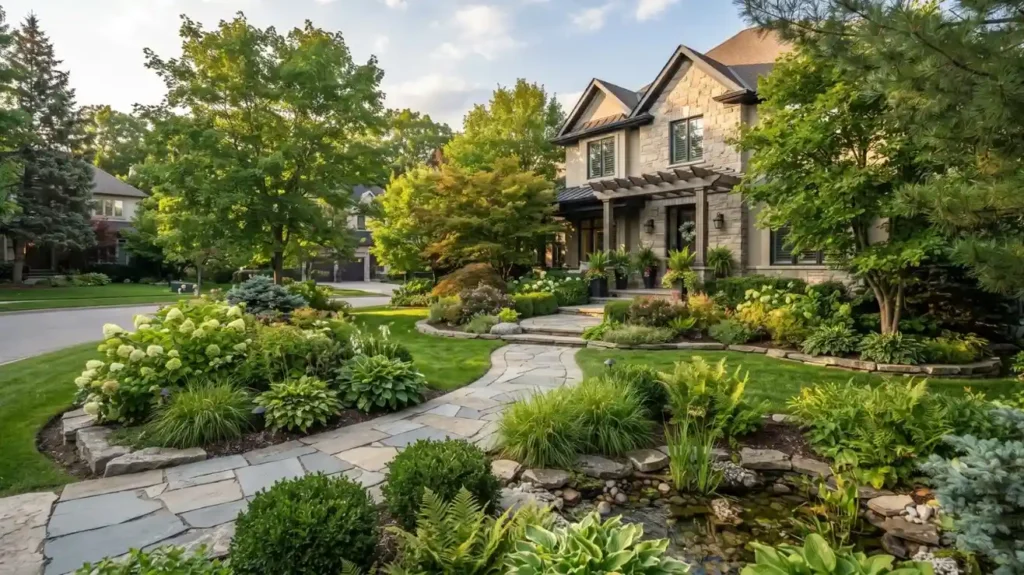
The proof is clearer, and it’s evident that professional landscape design is not just for high-end homes; it’s an investment that can pay off for any homeowner. From boosting curb appeal and reducing long-term maintenance costs to increasing resale value and improving environmental performance, the landscaping design benefits are both immediate and long-lasting.
If you’re looking to see what property value landscaping can do to your home, KD Landscaping can help. Our team will collaborate with you to create a design for the outdoor area that will be valuable to you now and in the years to come.
Ready to get started? Call KD Landscaping today to talk about how a professional design can change your property inside and out.
Frequently Asked Questions (FAQs)
1. How much value does professional landscaping add to a home?
The price of landscaping work can differ by market, the size of the home, and the extent of the work, but in general, the landscaping market returns a high percentage in real estate, and is often more effective than interior work of similar scope.
2. Is professional landscape design worth the cost compared to DIY?
In most cases, yes. From the outset, professional design takes into consideration soil type, drainage, the size of mature plants, and the long-term maintenance requirements to prevent a do-over for the homeowner. Initial design costs can often be compensated for by the savings in the long term on replacement plants, repairs, and wasted water.
3. What’s the difference between landscaping and landscape design?
Most often, landscaping is associated with regular maintenance activities such as mowing, trimming and planting. Landscape design is a strategic planning procedure that takes into account the design of the property layout, architecture and long-term development to form an integrated functional outdoor environment.
4. How long does it take for landscaping to increase property value?
Some benefits such as better curb appeal, are almost instant after they’re installed. Other value drivers like mature trees and established garden beds take several years to develop, as the landscape fills in and becomes mature.
5. What type of landscaping adds the most resale value?
Overall, a well-maintained front yard with good curb appeal, healthy lawns, garden beds that are well defined and mature (not overgrown) trees provides the highest return. Patios, functional lighting, and other amenities that enhance the outdoor living experience are also attractive to home buyers.
6. Does landscaping design help lower maintenance costs over time?
Yes. Professional designers choose plants that thrive in the local climate, arrange plants to use the same amount of water, and water properly, minimizing waste, plant loss, and frequent repairs or replacement.
7. How often should a landscape design be updated?
The time varies, but many homeowners review their landscaping design every 5 to 10 years or when they’re getting ready to sell their home, depending on the maturity of the plants, family needs and the latest fashion.
8. Is there any opportunity for landscaping design to increase energy efficiency?
Yes. Tree and shrub positioning can provide shade to windows and outdoor spaces during the summer months, lowering cooling expenses, and windbreaks can decrease heating expenses during the winter months.
9. What is the length of time for landscaping permits?
This will depend on the nature of the project and the local regulations. Though simple plantings generally do not need permits or approval from your HOA, more complex plantings, such as retaining walls, fences, decks, and outdoor kitchens, may require them. A professional
10. What’s the right landscaping company to hire for my property?
Seek out a company with a solid design portfolio, an understanding of your local climate and soil, detailed communication regarding the timeline and cost of projects, and a history of maintaining projects, but for continuous projects.


