
Water Feature Installation Services Albany NY and Nearby Areas can transform an ordinary yard into a more relaxing, visually interesting, and personalized outdoor environment. From natural-looking waterfalls and garden ponds to modern fountains and pond less systems, professionally designed water features can become a focal point that complements the surrounding landscape rather than looking like an afterthought.
Installing a water feature involves more than choosing an attractive design. Pre-construction factors to take into account are local climate, space available, drainage, and sunlight. Professional water feature installation services Albany NY can help property owners choose a design that complements the appearance of the landscape while meeting practical needs.
From a peaceful backyard retreat to a small decorative fountain or a larger custom fountain or waterfall, this guide will explain the various options, benefits, installation process, maintenance considerations, and the factors to consider when hiring a professional to install the water fountain in Albany and surrounding areas.
What Are Water Features and Why Are They Popular?
Water features are landscaping pieces that incorporate water in some form in the landscape design, whether still or flowing. These can be small decorative fountains, larger ponds, or multi-level waterfalls, which can be incorporated into gardens, patios, and other landscape areas.
The most common outdoor water features are:
- Garden ponds
- Pondless waterfalls
- Decorative fountains
- Bubbling rocks
- Streams
- Water walls
- Cascading waterfalls
- Small reflecting pools
Water features are popular for a number of reasons, one of which is that they add movement to a landscape. The flow of water creates changing visual and aural effects, whereas plants, patios, lawns, and hardscaping are relatively fixed over time.
The sound of running water can also create a more peaceful atmosphere and may help mask nearby traffic or other background noise. Water features may also link various areas of the landscape. For instance, a waterfall with some plants and rocks can provide a transition from a patio into a garden.
Today’s systems are very flexible. Water does not have to be a part of a landscape with a big yard. Compact fountains and pondless options may be suitable given limited space.
Popular Types of Water Features for Albany Properties
Choosing the right water feature starts with understanding the available options. Each design offers a different appearance, sound, maintenance level, and space requirement.
Garden Ponds
A traditional garden pond can create an open space of water that can be a prominent landscape element.
Ponds may incorporate:
- Natural stone
- Aquatic plants
- Waterfalls
- Streams
- Decorative lighting
- Fish, when the system is designed appropriately
Homeowners who love to garden and would like to have a living landscape feature that shifts with the seasons may find a pond to be a perfect fit. Design aspects to include depth, circulation, filtration, plant placement, and seasonal maintenance.
Pondless Waterfalls
A pondless waterfall creates moving water without a permanently exposed pond at the bottom. The water is generally channeled through the stones and into a hidden storage tank to be recirculated.
These types of systems can also give the waterfall visual and acoustic advantages with an alternate configuration from a standard pond. They especially catch the interest of homeowners who wish to have a focal point from moving water.
Decorative Fountains
There are numerous fountain designs, such as the following:
- Traditional tiered fountains
- Contemporary designs
- Wall fountains
- Urn fountains
- Bubbling features
- Freestanding garden fountains
A fountain can be very effective on a patio, entrance, courtyard, or in a garden.
Naturalistic Waterfalls
Natural-style waterfalls feature rock positioning, height variations, plants, and water movement to evoke the look of a natural stream. Well-designed locations are particularly important, as poorly placed stone can result in an artificial waterfall that seems out of place in a landscape.
Bubbling Rocks
A bubbling rock is a stone feature that has a flow of water either over or through it. These types of systems can offer gentle motion without the need for a great deal of space. They can be well suited in smaller gardens, entrance planting beds, or along patios.
Custom Waterfall Installation for Residential Landscapes
Professional waterfall installation Albany NY can create a feature around the shape, elevation, and style of the home. A custom waterfall can fit into the landscape as opposed to prefabricated decorative units.
The procedure usually begins with the identification of the starting site of the waterfall, as well as the location where the water will pool.
Installers may consider:
- Natural property slope
- Viewing angles
- Patio locations
- Windows
- Existing plants
- Walkways
- Drainage
- Electrical access
Creating a Natural Appearance
The most difficult aspect of a waterfall design is making the waterfall appear natural in the landscape. The choice of stone and placement of stone is important.
Naturalistic designs might incorporate varying rock shapes and dimensions, rather than strict symmetry. Plants may then soften the edge and lend some visual connection to the waterfall and the garden.
Controlling Water Sound
Waterfall sound can also be customized. Generally, water cascading more heavily onto hard surfaces will produce louder sounds, and water trickling gently over a stone will produce softer sounds.
Property owners should think about whether they would like the waterfall to be a very quiet background sound or a more prominent sensory element before installation.
Designing for the View
The waterfall should be placed where people can enjoy it.
The following is a list of possible locations for viewing:
- Patios
- Decks
- Outdoor seating
- Kitchen windows
- Living rooms
- Garden paths
A beautiful waterfall placed in a rarely used part of the yard may provide less everyday enjoyment than one visible from a patio, seating area, kitchen window, or other frequently used space.
Pondless Waterfalls vs. Traditional Ponds
Pond or pondless waterfall: it depends on what you desire in your landscape.
Traditional Pond
Visible standing water, such as a pond, may be included and can serve as the basis for aquatic landscaping.
It might be appropriate for property owners who wish to:
- A larger visual centerpiece
- Aquatic plants
- A pond ecosystem
- Fish where appropriate
- Still and moving water combined
Ponds will need continuous maintenance for water quality, debris, plants and seasonal changes.
Pondless Waterfall
A pondless waterfall focuses on moving water without creating a traditional open pond. Water flows into a hidden underground reservoir before being pumped back to the top of the waterfall.
Potential advantages include:
- No large open pond
- Flexible placement
- Strong waterfall sound
- Smaller designs available
- Different maintenance requirements from a traditional pond
However, this doesn’t mean that a pondless waterfall doesn’t require maintenance. Pumps, reservoirs, water levels, and debris still need to be addressed. Depending on the appearance, the space, budget, and maintenance, the right choice will vary.
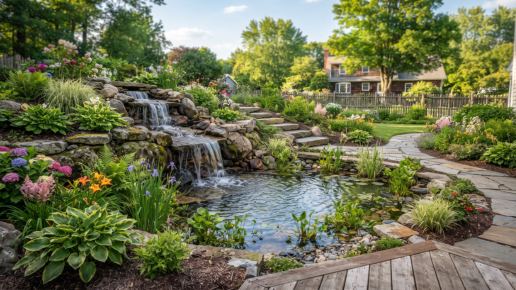
Fountain and Decorative Water Feature Installation
Professional fountain installation can provide an attractive option for homeowners who want water without constructing a full pond or large waterfall.
Fountains are particularly versatile as they can fit into many looks of landscape design.
A fountain can complement a traditional home, or a simple geometric water feature may work best in a contemporary landscape.
Choosing the Location
The aesthetic and functional aspects of fountain placement are both taken into account.
Possible locations include:
- Front entrances
- Courtyards
- Patios
- Garden beds
- Pool areas
- Walkways
- Outdoor seating spaces
There should be a clear view of the fountain, but it should not become an obstruction. Access to electricity and water will also be a factor for installers, depending on the system.
Scale Matters
One of the most frequent design errors is picking a fountain that is either too big or too small for the area.
Small elements can easily blend in with a large landscape, and large fountains can overwhelm a small courtyard.
Professional planning supports the correspondence between the scale of the feature and its environment.
Benefits of Adding a Water Feature to Your Landscape
Landscape water features can offer some practical and visual advantages if they’re designed professionally.
Creates a Landscape Focal Point
Water is a natural attention grabber. You can use a fountain, waterfall, or pond as a focal point to arrange other landscape elements around.
Adds Movement
Flowing water adds movement to an otherwise static landscape, making patios and gardens feel more dynamic and visually engaging.
Creates Relaxing Sound
Different water features create different sound levels. A gently bubbling fountain can provide subtle background sound, while a larger waterfall can create a more noticeable and immersive effect.
Supports Outdoor Living
Patios and seating areas can be more enjoyable through well-placed features.
A thoughtfully placed water feature can make outdoor spaces more inviting for:
- Reading
- Dining
- Relaxing
- Entertaining
- Spending time outdoors
Complements Landscaping
Water can be combined with:
- Stone
- Plants
- Mulch
- Lighting
- Patios
- Walkways
This allows the feature to be part of a comprehensive landscape plan.
Offers Design Flexibility
There’s no need for water features to be huge. A small garden may benefit from a compact bubbling rock or fountain, while larger landscapes can accommodate streams, ponds, or multi-level waterfalls.
Can Enhance Property Appeal
Some buyers may want landscaping to be more memorable and appealing if it is professionally designed. But don’t think that the mere presence of a water feature will boost home value by a definite percentage. Individuals’ choices and local markets differ.
Choosing the Right Water Feature for Your Property
The most attractive water feature you see online may not necessarily be the best choice for your property. Successful custom water features should be designed around the actual size, layout, style, and conditions of the property.
Consider Available Space
First, figure out what amount of space can realistically be committed for the feature.
For small properties, you might want to consider:
- Bubbling rocks
- Compact fountains
- Small pondless waterfalls
For larger landscapes:
- Garden ponds
- Streams
- Multi-level waterfalls
- Larger fountain installations
Do not make the feature so large as to decrease the usability of the yard.
Think About Maintenance
Determine the level of maintenance that you are willing to do before choosing a design. Plants require different care than a decorative fountain.
Discuss:
- Cleaning
- Water levels
- Pump maintenance
- Debris
- Algae management
- Winter preparation
- Spring startup
When you do the installation, you won’t run into any surprises if you know these requirements beforehand.
Consider Your Landscape Style
The water feature should be a part of the property. If you’re creating an informal landscape that incorporates stone and plants, a natural waterfall might be the right choice. A clean-line fountain might be more appropriate for contemporary architecture.
Think About Sound
If relaxation is the goal, consider where the sound of flowing water will be most noticeable. A feature placed near a patio or outdoor seating area can create a stronger sense of calm than one positioned farther from frequently used spaces.
Make a Realistic Budget
The installation cost will depend on:
- Feature size
- Excavation
- Materials
- Stone
- Pumps
- Filtration
- Electrical work
- Lighting
- Landscaping
- Site access
Request a detailed quote that clearly explains the materials, labor, equipment, landscaping, and other costs included in the project.
Water Feature Installation for Nearby Areas
Professional water feature services don’t just end at the city limits of Albany. Installation may also be available at nearby Capital Region communities as well, depending on the contractor’s service area.
Potential service locations can include areas such as:
- Colonie
- Guilderland
- Slingerlands
- Menands
- Cohoes
- Troy
- North Greenbush
- Voorheesville
- Bethlehem
- Schodack
- Latham
- Delmar
- Loudonville
- Watervliet
- Green Island
- East Greenbush
- Westmere
- Altamont
- Niskayuna
The conditions of properties can be quite different from one place to another. One house might have a flat suburban backyard, for instance, whereas the other home could have a natural slope that may be used for a waterfall.
Instead of duplicating the design throughout the project, contractors can customize the designs based on:
- Lot size
- Terrain
- Existing landscaping
- Architecture
- Soil and drainage conditions
- Outdoor living areas
Other water features that can enhance the aesthetics of buildings include decorative water elements found in courtyards, entrances, hospitality spaces, and other landscaped areas. Property owners should always check the service area before assuming it.
What to Expect During Professional Installation
Most professional water feature installation projects start with a consultation and site evaluation process, instead of going straight to excavation.
Step 1: Consultation
The installer talks about your objectives, style, budget, and maintenance expectations.
The use of photos or examples can aid in communication of appearance desired.
Step 2: Site Evaluation
The contractor evaluates:
- Available space
- Property slope
- Drainage
- Existing landscaping
- Access
- Utilities
- Viewing locations
Step 3: Design
The feature is designed in accordance with the site.
This can include designing the shape, elevation, location of stones, water flow and landscaping for custom projects.
Step 4: Site Preparation
Excavation and grading may be required, depending on the project.
Step 5: System Installation
Liners, reservoirs, pumps, plumbing, filters, and structural materials are installed per design.
Step 6: Stone and Landscape Integration
The feature can be integrated with the surrounding landscape by the use of rock, gravel, plants, and other materials.
Step 7: Testing
Before completion, the system should be tested to check water circulation, water flow, pump operation, and other functional issues.
Then the basic operation and maintenance can be explained to the property owner by the installer.
Maintenance Considerations for Albany NY Water Features
Regular water feature maintenance helps keep the system attractive, clean, and functional. Specific maintenance requirements vary depending on the design, equipment, location, and season.
Routine Cleaning
Outdoor water features can become polluted with leaves, twigs, pollen and other debris.
Periodic removal helps maintain proper operation of the system.
Water Level Monitoring
During the summer months, higher temperatures can increase evaporation. If the water level becomes too low, the pump may not operate properly. Unusually rapid water loss may indicate a leak that requires inspection.
Unusually large water losses can signal the need for a system to be inspected for a possible leak.
Pump Care
Don’t allow too much debris to build up around pumps and follow the instructions on how to run them based on system needs.
Algae Management
Algae might grow in some outdoor water features.
Management will vary based on the presence of plants or fish, nutrient levels, water circulation, and sunlight.
Seasonal Changes
Winter in Albany is a critical time for planning.
The following may be required to prepare your system for winter:
- Removing or protecting pumps
- Managing plumbing
- Cleaning debris
- Preparing aquatic plants
- Following manufacturer recommendations
The water feature’s winterization process will vary depending on the type of feature. For an installed system, the property owner should be given specific instructions, rather than general advice.
Spring Startup
It is recommended to check the system after winter. This can cover cleaning up, reinstalling equipment as needed, water level checks, equipment inspection, and pump testing.
How to Choose a Water Feature Installation Company
The selection of a water feature installation company can have a significant impact on the overall design and sustainability of the final product.
Review Relevant Experience
Inquire if the contractor frequently installs the feature of your choice. An organization that has worked on just a simple prefabricated fountain may not necessarily have the skills to build a large naturalistic waterfall.
Look at Completed Projects
A portfolio can assist you in assessing:
- Stone placement
- Design style
- Scale
- Landscape integration
- Variety
Look for projects similar to what you have in mind.
Ask About the Complete System
A water feature is more than just the stone that is seen.
Ask about:
- Pumps
- Plumbing
- Filtration
- Reservoirs
- Liners
- Electrical requirements
- Water circulation
Knowledge of the system can aid in the ease of future maintenance.
Request a Detailed Estimate
A written estimate should include a description of the proposed scope of work.
Depending on the project, the estimate may include:
- Excavation
- Materials
- Equipment
- Stone
- Labor
- Landscaping
- Cleanup
Ask the contractor to clearly explain anything that is not included in the estimate.
Discuss Maintenance Before Installation
Don’t delay until the project is completed to find out how much maintenance is involved. A reputable contractor should explain routine maintenance, seasonal care requirements, and whether professional maintenance services are available.
Ask About Warranty Coverage
Identify warranties related to workmanship, pumps or other equipment.
The coverage may vary from manufacturer to installer, so read the fine print.
Conclusion
Professional water feature installation services Albany NY can turn water into a functional part of landscape design rather than simply adding a decorative object to the yard. Whether you prefer a natural waterfall, peaceful garden pond, compact bubbling feature, or elegant fountain, the right design should complement the property’s architecture, landscaping, available space, and maintenance expectations.
Successful water feature installation Albany NY starts with thoughtful planning. Property owners should consider where the feature will be seen and heard, how much maintenance it requires, how it will handle seasonal conditions, and how pumps, plumbing, drainage, and other technical components will be incorporated.
Homeowners in Albany and nearby Capital Region communities can benefit from choosing an installer with relevant project experience, a strong portfolio, clear estimates, and a practical understanding of long-term maintenance.
A professionally designed water feature can add movement, sound, and visual interest to an Albany landscape. The best results come from choosing a feature that suits the property’s size, style, drainage, maintenance requirements, and seasonal conditions.
Planning a pond, fountain, pondless waterfall, or custom waterfall in Albany NY? Schedule an on-site consultation to discuss your property, design preferences, installation requirements, and maintenance needs.
Frequently Asked Questions
1. What types of water features can be installed in Albany NY?
Options can include ponds, pondless waterfalls, fountains, bubbling rocks, streams, water walls, and custom waterfall systems.
2. Can I install a water feature in a small backyard?
Yes. Compact fountains, bubbling rocks, and smaller pondless systems can work well where space is limited.
3. What is a pondless waterfall?
A pondless waterfall circulates water through a waterfall into a concealed reservoir rather than a visible traditional pond.
4. Do outdoor water features require electricity?
Many systems use electrically powered pumps, lighting, or other components. Installation requirements depend on the specific design.
5. How much maintenance does a water feature require?
Maintenance varies according to size, design, water circulation, plants, location, and equipment. Discuss ongoing requirements before selecting a feature.
6. Can a waterfall be added to an existing landscape?
Often, yes. A custom design can consider existing patios, plants, slopes, walkways, and other landscape elements.
7. Do Albany water features need winter preparation?
Many outdoor systems require seasonal preparation because of freezing temperatures. The exact procedure depends on the installed system and equipment.
8. Are pondless waterfalls easier to maintain than ponds?
They can have different maintenance requirements because they do not have the same exposed pond environment. However, they still require pump, reservoir, water-level, and debris management.
9. How do I choose between a fountain and a waterfall?
Consider available space, desired sound, landscape style, budget, maintenance preferences, and where the feature will be viewed.
10. Can water feature installers serve areas outside Albany?
Many contractors serve surrounding communities, but coverage varies. Confirm your exact location with the company before scheduling a consultation.


