
Whether you’re a business owner, a property manager, a facility team or a commercial property owner, this guide to Commercial Snow Removal Albany NY is a must-read for getting ready for the winter season. High-traffic areas such as parking areas, entrances and sidewalks, loading zones, and access roads are all susceptible to snow and ice. A commercial snow removal Albany NY strategy can help businesses maintain access, reduce disruptions, and respond more effectively when significant snowfall occurs.
Commercial snow management involves more than sending a plow truck after a storm. Depending on the property and service agreement, it may include sidewalk clearing, ice management, snow storage planning, snow relocation, hauling, post-storm inspections, and pre-season site assessments.
In advance of the next big storm, businesses can also develop service priorities, determine potential hazards, and communicate with their contractor about responsibilities. This guide covers the steps you need to take in order to prepare your commercial property for winter and some of the things you should look for when hiring professional business snow removal Albany.
Why Albany Businesses Need a Winter Snow Removal Plan
Any commercial property can have operational challenges during Winter weather. Heavy snowfalls can disrupt deliveries, customer flow, employee parking, and business activities, and a snow pile that is not particularly large can impact parking and pedestrian traffic.
Commercial properties might require winter upkeep on:
- Parking lots
- Driveways
- Sidewalks
- Building entrances
- Loading docks
- Fire lanes
- Employee parking
- Customer parking
- Accessible routes
- Internal access roads
- Waste collection areas
Waiting until a storm begins to decide how these areas will be managed can create unnecessary confusion. A pre-season plan allows the property owner and contractor to establish priorities in advance.
What Is Commercial Snow Removal?
Commercial snow removal is the planned clearing and management of snow and ice on commercial properties to help maintain vehicle and pedestrian access during winter weather.
Services could involve:
- Snow plowing: Moving snow away from parking and vehicle access areas.
- Snow removal: Clearing or relocating accumulated snow from designated areas of a commercial property.
- Ice management: Using or treating surfaces to improve the management of ice.
- Snow relocation: Moving snow piles to a different area on the property.
- Snow hauling: Loading and removal of snow from the site when space for storage is limited.
Several of these services may be combined in a commercial snow program and not just plowing. The method of approach will vary according to the size, layout, hours and requirements of the property.
Start Preparing Before the First Snowfall
Early preparation is one of the most important parts of a successful commercial snow removal plan in Albany. Contractors need time to inspect the property, plan service routes, and determine the equipment and staffing required for the site.
With some planning, businesses can have a conversation about:
- Service triggers
- Priority areas
- Snow storage
- Business hours
- Emergency access
- Sidewalk responsibilities
- Ice management
- Communication procedures
- Pricing
However, when the snow season sets in, snow contractors could already have contracts and routes in place. When planning ahead, you can take time to thoroughly consider your service options.
Conduct a Pre-Winter Property Inspection
Before the first significant snowfall, conduct a complete inspection of the commercial property and identify conditions that could create problems during winter.
These may include:
- Damaged pavement
- Potholes
- Uneven sidewalks
- Broken curbs
- Loose parking stops
- Poor drainage
- Damaged exterior lighting
- Blocked drains
If needed, have the appropriate maintenance done prior to winter, which can help with snow removal. It can also be useful for property owners to know if they have damage or if that damage was found later in the season. Photos may also be useful for documenting pre-winter property conditions before snow removal operations begin.
Identify Obstacles Before They Disappear Under Snow
Equipment operators may not be able to see objects clearly when they are covered with snow.
Before the winter survey, look for:
- Curbs
- Speed bumps
- Parking stops
- Drain covers
- Fire hydrants
- Utility equipment
- Landscaping edges
- Islands
- Sign bases
- Low walls
Sometimes markers are placed close to significant obstacles. This aids in the understanding of the property layout even if there are no pavement markings or boundaries in place. A contractor should also be aware of any unusual conditions on the site prior to starting service.
Map the Property
For larger commercial properties, a simple site map can help to coordinate.
The map could include:
Primary entrances → Customer parking → Employee parking → Loading areas → Emergency routes → Sidewalks → Snow storage
It can display obstacles and drainage positions as well. A property map is particularly helpful if more than one piece of equipment might be used during winter. The contractor will use a visual guide to important areas rather than relying solely on verbal instructions.
Determine Which Areas Receive Priority
Not all parts of a big property may be able to be cleared at the same time during the active storm. Businesses should engage in identifying priorities prior to snow.
First Priority
These could be critical areas such as:
- Main entrances
- Main exits
- Emergency access
- Primary traffic lanes
- Essential loading routes
Second Priority
These may include:
- Customer parking
- Employee parking
- Accessible parking areas
- Pickup and drop-off areas
Third Priority
Some areas for lower use could be:
- Overflow parking
- Secondary entrances
- Low-traffic sections
Priorities should be in accordance with the way the property functions, and not be common for every business.
Match Snow Removal to Business Hours
The hours of operation may have a big effect on a business snow plan. An office building that opens at 8:00 a.m. may want major clearing completed before employees arrive. Hotels and healthcare facilities may require continuous access, while restaurants may need additional attention during evenings and weekends. Warehouses with overnight deliveries may also require key truck routes and loading areas to remain accessible.
When discussing Albany commercial snow removal, tell the contractor about:
- Opening hours
- Closing hours
- Shift changes
- Delivery times
- Peak customer periods
- Overnight operations
- Weekend schedules
This information can aid contractors in deciding when the clearing should be done first.
Establish a Snow Removal Trigger
There should be a clear agreement on the start of commercial snow service. Don’t assume that the contractor will just show up anytime snow starts to fall. Services may be provided when a predetermined level of accumulation or other agreed conditions are met.
Ask:
- What triggers service?
- Is dispatch automatic?
- Do we need to call?
- What happens during continuous snowfall?
- Are repeat visits included?
- Is final cleanup performed after the storm?
Answers should be known in advance of winter.
Prepare for Long-Duration Snowstorms
A few storms last for many hours. For properties that require continuous access, it may not be suitable to wait until the snow has stopped. However, contractors can make several passes.
One possible course of action is:
Open primary routes → Maintain access → Reclear priority areas → Complete final cleanup
When snow is falling, the goal might be to keep the pavement accessible, not to clear it completely. More detailed cleanup can be done where conditions permit. When multiple visits are required, it is important that businesses know how they are treated in their service agreement.
Create a Parking Lot Strategy
Parking lots can be among the most challenging areas for commercial snow removal. Plows will not be able to plow entire sections because of vehicles. One way to make the process easier is for businesses to put in place winter parking procedures.
Options might include:
- Parking that is designated for employees
- Temporary parking restrictions
- Rotating parking sections
- Moving overnight vehicles
- Keeping certain areas open for plowing
Employees should be informed of winter parking procedures before the first significant snowfall so vehicles do not interfere with plowing operations. For properties operating continuously, coordination between the business and snow contractor becomes particularly important.
Plan for Customer Parking
Retail businesses, restaurants, medical offices, and other customer service properties may require storm parking. A contractor can open up additional parking spaces after the main driving lanes have been cleared. Businesses should determine priority areas for parking.
The location of snow piles is also important.
Over time, inadequate parking can become a problem as a result of storm events. What works as a plan after the first snow can be totally ineffective after a few weeks of snow.
Include Accessible Parking and Routes
The planning for the winter season should include accessible areas.
This can involve:
- Accessible parking spaces
- Access aisles
- Ramps
- Curb transitions
- Connecting pedestrian routes
Clearing an accessible parking space alone may not be sufficient. The entire route from the parking area to the building entrance should be considered when planning snow removal. It is also important that businesses be aware of their accessibility needs for their property and operations.
Prepare Sidewalks and Pedestrian Areas
Vehicle access is just one aspect of commercial winter maintenance. There’s a need for employees and customers to move from one parking area to another and from parking areas to buildings.
Pedestrian snow management includes snow removal for the following reasons, depending on the properties and service agreement:
- Main sidewalks
- Building entrances
- Employee entrances
- Ramps
- Steps
- Walkways
- Pedestrian crossings
Sidewalk snow removal Albany NY may involve a smaller piece of equipment or a smaller crew for manual operations. Check if it is part of your snow contract or separate.
Keep Drainage Systems in Mind
Winter planning often doesn’t consider drainage. As snow starts to melt, there must be a place for the water to go.
Meltwater might flood pavement if piles cover catch basins or prevent drainage. If the temperature drops back down, that water can freeze again.
Before winter, identify:
- Catch basins
- Drainage channels
- Low areas
- Downspouts
- Other drainage points
Contractors need to know the locations of these spots prior to the placement of snow piles.
Plan for Melting and Refreezing
With the end of the storm, snow removal is not over. Days later, new conditions may arise, depending on the change in temperature.
For example:
Daytime warming → Snow pile melts → Water crosses pavement → Temperature drops → Water freezes
This is a good reason for doing a post-storm property inspection. When temperatures change, certain locations may require extra attention, such as near snow piles, in the shade of pavement, at entrances, and along drainage ways.
Prepare Loading Docks and Delivery Areas
Snow can disrupt deliveries for industrial and warehouse operations, retail stores, and restaurants.
Loading areas may require:
- Clear truck approaches
- Adequate turning space
- Accessible loading docks
- Cleared employee routes
- Suitable snow storage
Comparable to the case of passenger vehicles, large trucks need a lot more space for maneuvering. An improperly placed snow pile can hamper a trailer’s ability to approach a dock.
Contractors should understand typical truck and delivery traffic patterns before determining where snow will be stored.
Maintain Emergency and Service Access
Other factors besides customers and employees should be taken into account when planning for the commercial winter.
Properties can also be accessed for:
- Emergency vehicles
- Waste collection
- Utility services
- Deliveries
- Maintenance crews
Discuss critical routes with the snow removal provider. These zones can be important to continue to have access to even if other access points are temporarily less important.
Choose Appropriate Equipment for the Property
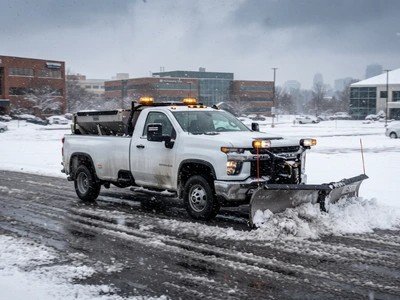
There are various types of snow removal equipment that are required for different commercial properties.
Contractors may use:
Plow Trucks
Ideal for driveways, access roads and parking lots.
Skid Steers
Good for snow pile management and areas that are more difficult to access.
Wheel Loaders
Can assist in the removal of substantial amounts on larger commercial properties.
Snow Pushers
Designed for efficiently moving snow across large open surfaces.
Snow Blowers
Can be beneficial in some pedestrian or limited use areas.
Spreaders
Used to apply ice management materials as needed.
Equipment should be matched to the size and layout of the property. A small commercial site may not require the same equipment resources as a large shopping center, warehouse, or industrial facility.
Ask About Backup Equipment
Winter equipment is used in harsh weather conditions. Breakdowns can occur. When hiring a contractor, ask what happens if an assigned truck, loader, or other piece of equipment becomes unavailable during a storm.
A business provider might have:
- Backup plows
- Additional operators
- Spare equipment
- Repair procedures
- Crew reassignment plans
This may be particularly relevant when there is a large number of customers requiring service at the same time during a widespread storm.
Prepare an Internal Communication Plan
Winter preparation is more than just the contractor. It is also important that businesses determine how to communicate information within the organization.
Staff should be aware of:
- Where to park
- Which entrances are open
- Whether operating hours have changed
- Which areas are temporarily restricted
- Who to contact about property conditions
It can help to have one member of staff or facility manager as the main contact for winter.
The snow contractor is also supposed to be familiar with the person who will have authority to approve further work.
Establish Contractor Communication Procedures
If the winter season is coming up, make sure you know how you’ll be communicating with your provider.
Ask:
- Who is our main contact?
- Is there an emergency number?
- How do we request additional service?
- Are service updates provided?
- How do we report a missed area?
- Who approves snow hauling?
Clear communication becomes especially important during long storms when property conditions can change throughout the day.
Keep Winter Service Records
Documentation of snow and ice services can be beneficial to businesses.
Records can include:
- Service dates
- Approximate service times
- Areas serviced
- Weather observations
- Materials applied
- Additional visits
- Reported issues
Some of this information may be included in the paperwork supplied by the contractors. Property managers can also keep their own personal records for inspection if appropriate. Having an organized documentation plan in place enables the assessment of the effectiveness of the winter maintenance plan.
Understand Snow Relocation
Snow piles may be so large in specific areas as winter goes on. Snow relocation is the process of shifting the snow from one area to another on the property. This can involve the use of loaders or other equipment.
Relocation can serve to restore:
- Parking spaces
- Visibility
- Traffic movement
- Access to drainage
Businesses should check and ask if relocation is covered in the standard contract.
In many situations, it may be considered additional work.
Know When Snow Hauling May Be Needed
There is very limited storage at some properties. Following successive storms, it may be necessary to completely clear the site of snow cover.
Some snow hauling operations might entail:
- Collecting snow in the loading area.
- The use of loaders for loading trucks.
- Snow moving to a suitable area.
This is typically a service that needs extra equipment and labour. Before winter begins, discuss snow-hauling availability, pricing, and authorization procedures with your contractor. Planning ahead is easier than arranging hauling after snow piles have already reduced usable parking and access.
Commercial Snow Removal for Different Property Types
For each business, a list of priorities will vary in the winter.
Retail Centers
May focus on customer entrances, major parking areas, accessible ways, and pick-up areas.
Office Buildings
May work on clearing before the start of the workday.
Warehouses
May prioritize loading docks, truck routes, gates, employee parking, and delivery access.
Healthcare Properties
May need to have access to patient/staff areas continually.
Hotels
May require 24 hours snow management because guests and staff can arrive or leave outside normal business hours.
Restaurants
May need to provide night, weekend, delivery and customer parking coverage.
A strong Albany commercial snow removal plan should reflect these differences.
Conclusion
Professional Commercial Snow Removal Albany NY planning should begin before the first significant snowfall. A strong winter strategy considers the entire property, including parking lots, sidewalks, entrances, loading areas, accessible routes, drainage, snow storage, and ice management.
Effective commercial snow removal also requires cooperation between the business and contractor. Property managers should communicate operating hours, identify priority areas, establish parking procedures, and understand exactly what is included in the service agreement.
When comparing Albany commercial snow removal providers, businesses should look beyond price alone. Equipment availability, backup resources, commercial experience, communication, snow storage planning, and the ability to provide additional business snow removal services when conditions change can all influence service quality.
Most importantly, winter snow removal Albany planning should account for the entire season rather than a single storm. Snow piles grow, temperatures change, meltwater can refreeze, and available storage can decrease as winter progresses.
By inspecting the property early, creating clear priorities, establishing a snow management plan, and selecting a qualified commercial provider before severe weather arrives, Albany businesses can enter winter better prepared to maintain access and continue day-to-day operations.
Frequently Asked Questions
1. What does commercial snow removal include?
Depending on the contract, it may include parking lot plowing, sidewalk clearing, ice management, snow relocation, and snow hauling.
2. When should Albany businesses arrange snow removal services?
Businesses should ideally prepare before winter conditions arrive so there is time for site assessment, planning, and contract review.
3. What is the difference between snow plowing and snow removal?
Plowing generally moves snow to another location on the property, while snow removal can also refer to broader services such as relocation or hauling.
4. How should businesses prepare parking lots for winter?
Inspect pavement, mark obstacles, identify priority routes, plan snow storage, and establish procedures for employee vehicles.
5. Does commercial snow removal include sidewalks?
It depends on the service agreement. Businesses should confirm whether sidewalks and entrances are included.
6. What happens during a long snowstorm?
Depending on the contract, crews may perform multiple passes to maintain critical access before completing final cleanup.
7. When is snow hauling necessary?
It may become useful when snow piles interfere with parking, visibility, drainage, traffic movement, or normal property operations.
8. Should ice management be included in the plan?
Yes, businesses should determine how slippery conditions will be managed because plowing alone may not address every winter hazard.
9. How do I choose Albany commercial snow removal services?
Compare commercial experience, equipment, backup resources, service scope, communication, insurance, documentation, and pricing.
10. Why is early winter preparation important?
Early planning allows businesses and contractors to identify priorities, obstacles, snow storage areas, service expectations, and communication procedures before severe weather arrives.


