
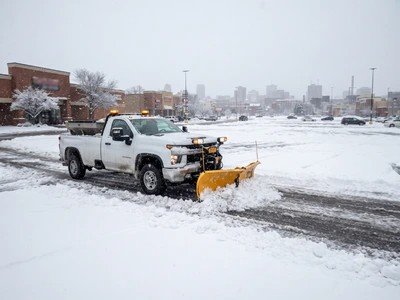
How Often Should Parking Lots Be Plowed in Albany NY? This is a common question for businesses, property managers, and facility owners preparing for winter weather. The answer depends on factors such as snowfall amounts, storm duration, parking lot traffic, operating hours, and changing temperatures. Regular parking lot snow removal Albany NY services can help keep commercial properties accessible while reducing problems caused by accumulated snow and ice.
Every property is different and has its own schedule. A small office parking lot might need a strategy that is different than, for example, a shopping center, an apartment complex, a medical center or an industrial property. Factors that may influence how often snow should be removed include the type of business, available storage space, temperature, traffic volume and amount of precipitation.
The primary objective for businesses that are considering parking lot plowing Albany services should be to ensure that key areas remain accessible while controlling the snow before it becomes difficult to manage.
Why Parking Lot Plowing Frequency Matters
The job of clearing snow is more than just getting rid of snow after a storm. If it snows over an extended period or a great deal, it may be possible to wait until the last flakes have fallen and then have a few inches of snow.
When the snow is deep, it can become heavier and more difficult to move. Vehicles may also compact the snow, making it more difficult to drive on and more slippery when the snow is cold.
Use of routine commercial snow plowing during the storm can assist in providing driving lanes and parking areas that are usable. The frequency is different for various properties and conditions.
For instance, a retail parking lot that is heavily trafficked will require more frequent monitoring than a private parking lot that is infrequently accessed, as vehicles and pedestrians are moving in and out of the property.
How Often Should a Parking Lot Be Plowed?
One way to do this is to start plowing early enough to avoid the challenges of snow handling and plowing as it gets heavier.
Plowing may be timed for commercial property if snow accumulates to a predetermined depth for the property rather than when the entire storm is over.
The service triggers can vary depending on the following:
- Snow accumulation
- Storm duration
- Expected additional snowfall
- Temperature
- Traffic levels
- Business operating hours
- Parking lot size
- Number of entrances and exits
- Available snow storage
- Safety requirements
It should be decided in advance with the snow removal contractor what constitutes the trigger point.
Snowfall Amount and Plowing Frequency
How much snow is forecasted during a storm is one of the most influential factors in determining a plow schedule.
If there is a light snowfall, one pass of the mowing may be sufficient. If a major storm lasts for several hours, it could require several passes.
| Snow Conditions | Possible Approach |
| Light accumulation | Monitor and clear as needed |
| Moderate snowfall | Schedule a plowing visit before accumulation becomes difficult |
| Heavy snowfall | Multiple plowing passes may be necessary |
| Long-duration storm | Continue clearing throughout the storm |
| Snow followed by freezing temperatures | Clear promptly and address slippery areas |
| Major snow event | Use a storm-specific plan with repeated service |
The following are examples of planning and do not reflect strict requirements for all activities. The requirements of each property must be determined by considering the specific property.
Why Waiting Until the Storm Ends Can Cause Problems
Some property owners want to wait until there is no snowfall before calling for service. This can be useful for some of the least trafficked properties, but can cause issues during heavy storms.
If snow persists, vehicles can drive over it many times. Snow can be compacted into a dense layer of snow with tires, making it harder to remove later.
Other possible side effects of waiting are:
- Narrower driving lanes
- Blocked entrances
- Reduced parking capacity
- Snow-packed pedestrian areas
- Larger snow piles
- More difficult cleanup
- Increased disruption to customers and employees
It may be easier to keep access open during a storm, rather than trying to do one big clean-up after the event on a busy commercial property.
High-Traffic Parking Lots May Need More Frequent Service
All parking lots do not have the same volume of traffic.
Vehicles may be entering or exiting a shopping center, supermarket, restaurant, hospital or office complex all during the storm. This can rapidly consolidate snow and cause problems with traffic.
A service plan may be useful for high-traffic properties, and may require more frequent clearing.
In contrast, a tiny business which shuts down during harsh weather conditions could have other needs.
A simple question that cannot be answered is not, “How many times is the lot to be plowed? Whether the property can remain reasonably accessible and manageable during the storm.
Overnight Snowfall and Morning Opening
Depending on the business, the snow removal day might be different from the snow removal day of businesses that open later in the day.
When a parking lot is blanketed with several inches of snow overnight, it will cause unnecessary disruption if they wait for employees and customers to arrive.
An overnight parking maintenance plan can be developed to keep critical parking areas, entrances, and driving lanes clear for opening during the winter.
This is especially true of:
- Medical facilities
- Hotels
- Restaurants
- Retail stores
- Apartment communities
- Schools
- Office buildings
- 24-hour businesses
Being well prepared can minimize the chances of finding an off-road parking lot right before you open.
Parking Lot Size Affects Plowing Frequency
More time and equipment may be needed to clear a large parking lot than a small lot.
Larger properties may also have:
- Multiple entrances
- Several driving lanes
- Loading areas
- Pedestrian routes
- Separate parking sections
- Fire lanes
- Snow storage zones
The sequence for clearing these areas may need to be planned by the contractor. Snow removal should be considered a coordinated process rather than just sending a plow across the lot once, for large commercial properties.
Temperature Changes Can Affect Snow Removal
Temperature is another important factor.
If there is snow that is still loose, it may be relatively easy to move. However, moisture can turn to hard-packed snow or ice when the temperatures drop.
A storm that starts with wet snow and finishes with freezing temperatures may require a quicker response than a snowfall under colder-storm conditions.
That’s why it’s important to take snow and weather temperature into account when it comes to parking lot maintenance in Albany, NY.
Snow Plowing During Long Storms
Persistent winter storms may last for an extended period of time. In these cases, one plowing visit might not be sufficient.
A repeated service cycle is allowed for a contractor:
Storm begins → Snow accumulates → Initial plowing → Continued snowfall → Additional plowing → Final cleanup → Ice treatment if needed
Accumulations, property use, storm conditions, and agreed service plan determine the number of cycles. This helps avoid the parking lot from being completely cleared before the next time of clearance.
What Areas Should Be Prioritized?
When clearing a parking lot, it’s not always necessary to go through it in the same sequence.
During active snowfall, priority areas may include:
- Main entrances and exits
- Primary driving lanes
- Accessible parking spaces and routes
- Fire lanes
- Loading and delivery areas
- High-use parking sections
- Secondary parking areas
- Less-used areas
The order of priority will depend on the physical and functional requirements of the property.
Snow Storage Should Be Considered Before Winter
Plowing does not destroy snow; it is only moved.
The available storage areas may reduce with the accumulation of snow from several storms. Large piles can eventually block off parking spaces, obstruct views, cause drainage problems, or create traffic issues.
Property managers should plan snow storage areas before the winter season.
This may require hauling snow away, instead of constantly shoveling new snow onto the top of piles that are becoming too large.
This may impact the entire snow management program and snow removal budget.
Plowing Frequency and Pedestrian Areas
The maintenance of parking lots should not be only about the vehicles.
Besides, there must be safe pathways for customers and employees to get from parking to buildings.
Planning for snow removal may involve:
- Sidewalks
- Crosswalks
- Building entrances
- Walkways
- Ramps
- Accessible routes
- Steps
Having a parking lot that’s available for cars and not available for pedestrians is not ready for business.
Commercial Snow Plowing Contracts
Various arrangements of services can be adopted in accordance with the needs of the business.
A contract can include:
- Snowfall trigger
- Service hours
- Number of visits
- Priority areas
- Ice treatment
- Snow relocation
- Snow hauling
- Emergency service
- Communication procedures
A written contract is a good way for the property owner and the contractor to communicate what to expect in the event of a storm.
Discussing storm response procedures before winter can be particularly beneficial for properties that cannot afford prolonged closures.
Comparing Different Snow Plowing Approaches
| Approach | Potential Benefit | Possible Limitation |
| One-time post-storm plowing | Simple scheduling | Snow may become compacted |
| Trigger-based plowing | Service begins based on accumulation | Requires clear trigger levels |
| Multiple storm passes | Keeps accumulation under control | May cost more |
| Overnight clearing | Helps prepare for opening | Requires after-hours planning |
| Priority-area clearing | Keeps critical areas accessible | Secondary areas may wait |
| Plowing plus snow hauling | Helps when storage is limited | Adds transportation costs |
This depends on the size of the property, the use of the property, the budget, and the winter weather conditions.
How Businesses Can Plan Snow Plowing Frequency
Before the first big winter storm, property managers can put in place a very simple plan.
Step 1: Assess the Property
Locate parking areas, entrances, driving lanes, pedestrian traffic, loading areas, and possible snow storage areas.
Step 2: Consider Business Hours
Figure out the peak time of operation for the property.
Step 3: Establish Snowfall Triggers
Collaborate with the contractor to decide on the time of the service.
Step 4: Identify Priority Areas
Ensure that crucial points of access are well marked.
Step 5: Plan for Major Storms
Explain the consequences of prolonged periods of snow or amounts of snow higher than average.
Step 6: Review Snow Storage
Identify places where snowpack is safe.
Step 7: Establish Communication
Determine the person or people who will be communicating with the contractor during a storm and how quickly changes will be made.
Common Mistakes With Snow Plowing Frequency
A few parking lot issues are related to snow removal being a secondary activity.
Waiting for Too Much Snow
When a large snowfall occurs, plowing may be more difficult.
Using the Same Schedule for Every Storm
A light snowfall and a significant winter storm could call for all different approaches.
Ignoring Business Hours
A spot at noon that is available may not be available when the lot is opened at 7 a.m. after an overnight storm has blown through.
Forgetting Pedestrian Areas
Winter vehicle access is just one component of winter vehicle property maintenance.
Failing to Plan Snow Storage
Storms can take up a lot of space in a short period of time.
Not Reviewing the Contract
Property managers should know the time when the contractor will be there, what services will be provided, and what will be done if there are extra services.
How Albany Weather Can Affect Snow Plowing Frequency
Winter weather in Albany can have many different characteristics from one storm to another. However, this could be a light snowfall at one time and a heavy snowfall at another. The snow can also melt or freeze when temperatures change, which may cause it to become loose or compact and icy.
Because of this variability, parking lot plowing Albany schedules should be flexible enough to respond to actual storm conditions.
A fixed calendar is not as useful as a plan that is dependent upon snowfall, property activity, and changing conditions.
Choosing a Parking Lot Snow Removal Provider
Businesses should not just consider the price of a service when they are comparing contractors.
Consider asking:
- What snowfall amount triggers service?
- How frequently will the lot be cleared during a major storm?
- Is overnight service available?
- Are sidewalks included?
- Is ice treatment included?
- How is snow relocation handled?
- Is snow hauling available?
- How are emergency requests handled?
- Who communicates with the property manager?
- What equipment is used for larger properties?
When there are clear answers, it can assist businesses in selecting the right service agreement for their winter necessities.
A Simple Snow Plowing Frequency Checklist
Before winter, property managers can review the following:
| Planning Item | Completed? |
| Property layout reviewed | |
| Snow storage areas identified | |
| Snowfall trigger established | |
| Priority areas identified | |
| Business hours discussed | |
| Overnight service discussed | |
| Sidewalk service confirmed | |
| Ice treatment discussed | |
| Snow hauling requirements reviewed | |
| Emergency contact established | |
| Major storm plan discussed |
This is a checklist that will help avoid confusion during the first big snowfall.
Final Thoughts
There is no universal answer to how often a parking lot should be plowed in Albany. The appropriate snow plowing frequency depends on snowfall, temperature, traffic, property size, operating hours, and the needs of people using the property.
For many commercial buildings, clearing can be more practical than snow accumulation for proactive clearing during a storm. Priority areas, pedestrian access, snow storage, ice conditions and multiple service visits during significant weather events are all factors that should be considered in a well-planned parking lot snow removal Albany NY program.
By planning these details before winter arrives, businesses and property managers can make their Albany NY parking lot maintenance strategy more organized and responsive when severe weather occurs.
Frequently Asked Questions
1. Does the type of parking lot surface affect snow removal?
Yes. Asphalt, concrete, gravel, and other surfaces can respond differently to plowing. The surface type may affect equipment selection, plowing techniques, and how carefully operators need to work around the property.
2. Can parked vehicles make snow plowing more difficult?
Yes. Vehicles left throughout a parking lot can limit access to certain areas and make it harder for plow operators to clear snow evenly. Businesses may establish temporary parking arrangements during major storms to improve access.
3. Should parking lot lines be considered during snow removal?
Yes. Repeated plowing can gradually push snow into or across marked parking spaces. After a storm, businesses may need to check whether accumulated snow is reducing usable parking capacity or covering important markings.
4. Can snow plowing damage parking lot curbs?
Improper plowing techniques or poor visibility can potentially damage curbs, islands, signs, or other fixed features. Experienced operators generally need to account for these obstacles when clearing a property.
5. How can parking lot lighting affect snow removal?
Good lighting can make it easier for operators to identify curbs, islands, parked vehicles, signs, and other obstacles during nighttime or early-morning service. Poor visibility may make certain areas more challenging to clear safely.
6. Does the parking lot layout affect where snow should be pushed?
Yes. Islands, drainage areas, entrances, buildings, pedestrian routes, and other features can influence where snow can safely be moved. A suitable snow placement plan can help avoid creating new access problems.
7. Can repeated plowing affect landscaping around a parking lot?
It can. Snow pushed onto landscaped areas may contain salt, debris, or other materials that can affect plants and grass. Operators may need to consider landscaping when deciding where accumulated snow should be placed.
8. Why should drainage areas be considered after snow removal?
Snow piles can sometimes obstruct drainage points or create problems when melting snow needs to flow away from the parking area. Keeping important drainage paths accessible can help manage melting water during temperature changes.
9. Does the type of snow affect how a parking lot should be cleared?
Yes. Light, dry snow can behave differently from heavy, wet snow. Slushy or partially frozen snow may also require different equipment or techniques, depending on the property’s conditions.
10. Should parking lot owners inspect the property after plowing?
Yes. A post-plowing inspection can help identify blocked drains, damaged property features, remaining snow, inaccessible areas, or other issues that may need attention before normal parking activity resumes.


