
Commercial Snow Removal Albany NY: Emergency Snow Removal After Major Storms is an important service for businesses facing unexpected winter storms, heavy snowfall, and rapidly changing weather conditions. During large snowfall events, commercial properties may have more than normal winter maintenance issues. Snow buildup can impact business operations, restrict access for emergency vehicles, impact delivery schedules, and make it challenging to employees and customers to get to buildings safely. In such cases, companies must have an emergency response plan to deal with the issues created by extreme weather conditions, instead of just a standard snow removal service.
Major winter storms can generate complex situations in commercial buildings. Heavy snowfall can make entries, parking spaces, loading areas and passageways difficult, and cause large snow banks to form that make it hard to see. Previously cleared surfaces can become slippery due to freezing temperatures. It’s hard to cope with all of these problems on one snow removal pass on a property, as they occur at different paces.
Planning for emergency snow removal includes a commercial property owner or facility manager being aware of the severity of a storm on various parts of a facility, knowing how to prioritize work that needs to be done immediately and when extra equipment or snow hauling services may need to be hired. This guide discusses the issues that arise during significant storms, how to deal with disasters, and the factors that businesses need to take into account when planning to hire a professional snow removal service.
1. Why Major Snowstorms Require a Different Commercial Snow Removal Approach
Commercial property maintenance demands vary with regular snowfalls and big weather events during the winter season. In normal winter conditions, snow clearance can include snow removal from parking areas, snow maintenance of parking areas, and snow clearing of smaller accumulations. But during a major storm, unceasing snowfall, strong winds, drifting snow and surface conditions that change rapidly are possible.
This is the time to be more flexible.
For example, a parking lot can be cleared in the morning, and then be covered again several hours later with another snowfall. Strong winds can also blow snow back on previously cleared access roads and entrances.
Emergency snow removal is targeted at the response to these changing conditions.
Challenges that need to be addressed are:
- Rapid snow accumulation: can melt faster than the snow can be removed by regular maintenance.
- Restricted property access: Entrances, car parks, driveways and connections to the parking areas can become inaccessible.
- Changing visibility: The prospect of snowbanks and blowing snow may make it difficult to see property lines.
- Repeated snowfall: Areas that had been cleared before may need further attention as the storm is developing.
- Small storage space: Commercial properties may not have adequate places to temporarily store snow.
- Operational interruptions: It may be difficult for employees, suppliers and customers to contact the property or services.
Emergency snow removal for commercial purposes is not just about clearing a massive amount of snow. It’s about determining the greatest challenges and reopening functional access to critical areas on the site.
2. Common Commercial Property Problems After Major Winter Storms
Not all commercial properties will have the same issues in the event of a major snowfall. The configuration of the building, parking facilities available, road access, building size, and the activities that occur in the building all affect what kind of snow removal is needed.
Recognizing these differences will enable property managers to locate where emergency services are required.
Parking Lot Capacity Problems
Often, parking lots are the first to be impacted by heavy snowfall. Snow can be in the parking spaces, and narrow driving lanes can impair safe vehicle turns.
The number of usable spaces available can also be decreased due to large snow banks. This can be a major concern for shopping centres, office complexes, medical facilities and other buildings and properties that require constant access to vehicles.
Emergency snow removal can include removal of other portions of the parking lot, removal of snow from key parking areas and reopening sufficient space for regular parking operations.
Blocked Building Entrances
Snow buildup around entryways can make it hard for visitors and employees to get in and out of the building. All entrances, including the main entrance, side doors, service entrances, and emergency exits, could need improvement.
If the pedestrian access routes to the building are still covered, but the parking lot is completely visible, then the parking is problematic.
Loading Dock and Delivery Disruptions
Accessible loading areas are a key requirement for warehouses, distribution centres, retail outlets and industrial premises.
Snow buildup around loading docks may disrupt delivery schedules and cause problems for trucks trying to enter, turn, or reverse.
Space for loading equipment, employees around these areas, and delivery vehicles should be taken into account when planning emergency snow removal.
Snow Drifts Around Buildings
Winds can carry snow to areas outside of those directly impacted by the initial snowfall.
Can result in deep accumulations around corners of buildings, fences, entrances and around edges of parking lots. Roads to the main parking area may also be blocked by snow drift if the parking area is cleared.
Limited Snow Storage Areas
In a large snow event, a company could find that it doesn’t have enough space to store snow as it normally does.
Large snow accumulations can take up parking spaces, hinder traffic flow and block visibility. More snow removal or off-site removal may be required.
3. How Emergency Snow Removal Albany Services Respond to Severe Storms
When you’re looking for emergency snow removal Albany businesses, you need to start with an understanding of the immediate condition of the property and the action priorities it has.
A suitable response is not necessarily the same for every commercial site. Different access requirements apply to different medical facilities, shopping centres, warehouses, or office buildings.
There are usually multiple phases to a professional Emergency Response.
Step 1: Assessing the Property Conditions
The first step is to determine which areas have been most impacted by the storm.
A property assessment can take into account:
- Current snow accumulation across the site.
- Blocked entrances and access roads.
- Parking lot conditions.
- Snowdrifts around buildings and structures.
- Loading dock accessibility.
- Pedestrian routes.
- Existing snow piles and available storage areas.
This type of assessment will help identify the equipment, labor, and removal method needed.
Step 2: Identifying Priority Areas
After the main issues have been identified, the next step is to set up an order of work.
Priority areas could be:
- Emergency vehicle access ways.
- Main building entrances and emergency exits.
- Parking lot driveways to main parking lots.
- Pedestrian access routes.
- Loading docks and delivery areas.
- Important internal traffic lanes.
- Parking that has not been used and secondary parking.
The sequence should be based on the order of use of a property, immediate hazards and the appropriate safety measures.
Step 3: Selecting Suitable Equipment
It is important that the type of equipment used varies according to the type of snow.
A smaller commercial property might require compact snow-clearing equipment, whereas a bigger distribution centre might require a number of loaders, plows and hauling vehicles.
Equipment selection should take into account the layout of the property, the depth of the snow, available working space and type of surface being cleared.
Step 4: Clearing and Relocating Snow
Once priority areas are determined, crews start to remove built-up snow.
This can range from plowing, pushing snow in designated storage zones, moving large snow piles or having off-site hauling done, depending on the property.
The aim is a reclaimed usable space without inducing the introduction of new access issues.
Step 5: Checking the Cleared Areas
Emergency snow removal should not end immediately after the main clearing work.
Property managers or service providers should inspect completed areas for leftover accumulations, closed or restricted access, and issues that need further attention.
This is especially important when the temperatures are low or additional snow is forecast.
4. Choosing the Right Snow Removal Equipment for Major Storms
With heavy snowfalls, the ability of a commercial property to recover depends on the equipment that is used.
Not selecting the right machinery for the property may extend the time required for clearing operations and cause problems around buildings, parked vehicles and narrow access.
The following are some of the more frequently used equipment options.
| Equipment | Main purpose | Suitable applications |
| Snowplows | Push accumulated snow away from driving surfaces | Parking lots, access roads, and driveways |
| Skid steers | Move and reposition snow in restricted spaces | Smaller lots and tight commercial areas |
| Wheel loaders | Handle large snow accumulations | Shopping centres and industrial properties |
| Snow blowers | Break up and discharge accumulated snow | Areas where pushing snow is difficult |
| Dump trucks | Transport snow away from the property | Sites with limited snow storage |
| Snow pushers | Move large quantities of snow efficiently | Wide parking areas and commercial lots |
Why Equipment Selection Matters
Heavy snowfall can cause uneven snowfall on a property.
For example, a wide parking area might be appropriate for large plow equipment, but a narrow pedestrian area may only be appropriate for smaller plow equipment or hand pulling.
With proper equipment, crews can manage a commercial property’s various areas without having to use one piece of equipment for each.
It is also important for property managers to know if equipment operators have experience working around parked vehicles, curbs, landscaping, drainage structures, and building entrances.
5. When Commercial Snow Removal Requires Off-Site Snow Hauling
After a big snowfall, one of the most difficult tasks is figuring out what to do with the snow that has been cleared.
In smaller properties, snow may be removed to designated snow storage areas. But on larger commercial sites, space becomes an issue in just a few days with continued snowfall.
If there is enough snow off-site that it is interfering with the normal use of the property, it may be necessary to remove the snow from that location.
Signs That Snow Hauling May Be Needed
Consider additional snow removal when:
- Valuable parking spaces are being taken up by snow piles.
- Intersections are becoming harder to see in the snow.
- Delivering into loading areas is becoming a hindrance.
- Storage areas for snow are becoming full.
- It is hard to keep pedestrian routes in good condition.
- More snow is possible and space is limited.
How the Hauling Process Works
Collecting snow that has accumulated on the ground with loaders or other suitable equipment and loading it onto dump trucks is the usual practice of snow hauling.
This snow is then moved by the trucks to an appropriate place for disposal.
This will involve coordinating the actions of the equipment operators and truck drivers, especially in locations where there is restricted access for vehicles.
Businesses that are open during normal business hours may need to consider customer traffic, deliveries and employee movement when planning their haul schedules.
After the winter storms, off-site hauling may alleviate parking space needs and enhance the property layout of a commercial property.
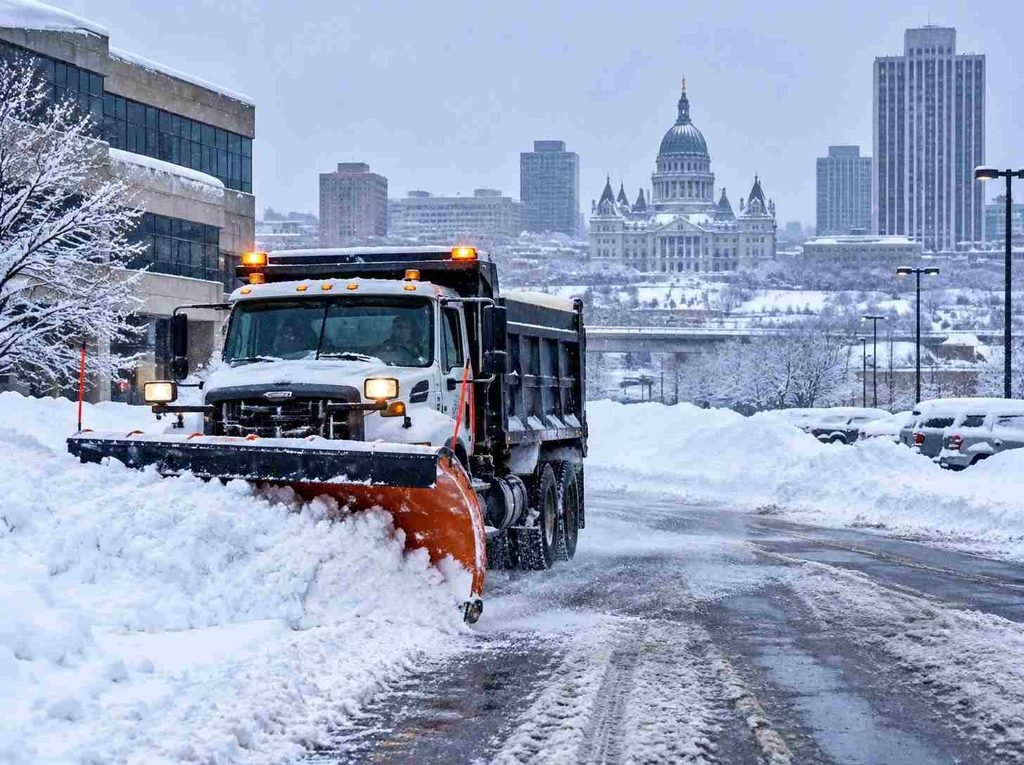
6. Emergency Snow Removal for Different Types of Commercial Properties
How a business is used is critical to its snow removal needs when considering emergency needs.
What works in a retail parking lot doesn’t necessarily work for an industrial facility.
Shopping Centres and Retail Properties
Shopping centres rely on ease of access for both their customers and staff, along with delivery vehicles and service providers.
Following a major storm, the following needs may be involved in snow removal:
- Main parking lot entrances.
- Staging, parking and traffic lanes.
- Pedestrian walkways.
- Shopping centre entrances.
- Delivery and service areas.
- Snowbanks affecting visibility.
Businesses with a high volume of customers who require parking facilities are especially interested in the restoration of parking.
Office Buildings
In the event of a major storm, significant access issues can arise to office properties when employees arrive during or immediately following the storm.
Emergency work can involve clearing building entrances, visitor parking, internal driveways, sidewalks and any designated accessible route.
Property managers can also need to coordinate access needs with various businesses located within the multi-tenant office buildings.
Warehouses and Distribution Centres
Reliable truck, forklift, loading, and employee vehicle access are critical to warehouses.
Consider turning areas, loading docks, trailer parking, and internal vehicle routes for snow removal.
Obstructed loading areas may impact goods movement and cause delays in operations.
Conclusion
Businesses may encounter significant problems during major snowstorms when parking lots become full, buildings are blocked off, loading docks become impassable, and roads become impassable for people. Commercial Snow Removal Albany NY services can support businesses in solving these issues by providing organised snow removal, the right equipment, relocation of snow, and other ice management services as needed.
The first step in an effective emergency response is to be aware of the immediate needs of the property. Areas of priority access, snow storage areas, communication of operational requirements, and understanding when off-site snow hauling may be required should be identified.
An experienced commercial snow removal company can also help if bad weather necessitates needs beyond standard snow removal.
Commercial snow removal can be a hassle for businesses in the city, which is why it’s important to partner with a professional team like KD Landscaping to prepare for the snow. Please give KD Landscaping a call to talk about your needs during the winter and to obtain a free quote for business snow clearing.
Frequently Asked Questions
1. What is included in emergency commercial snow removal?
Emergency commercial snow removal may include clearing parking lots, driveways, building entrances, sidewalks, loading areas, and internal access roads. Depending on the property’s requirements, services may also include moving large snow piles, off-site snow hauling, and ice management.
2. When should a business request emergency snow removal in Albany?
A business should consider requesting emergency snow removal when heavy snowfall blocks important entrances, reduces parking capacity, restricts vehicle movement, or creates unsafe pedestrian conditions. Early communication with a contractor can help organise the required response.
3. Can commercial snow removal companies work during an active snowstorm?
Yes. Depending on weather conditions, equipment availability, and service arrangements, contractors may perform snow clearing while snowfall is continuing. Additional visits may be necessary because cleared areas can accumulate more snow before the storm ends.
4. What happens when a commercial parking lot runs out of space for snow?
When available snow storage areas become insufficient, off-site snow hauling may be required. Contractors can use loaders and dump trucks to collect accumulated snow and transport it to an appropriate disposal location.
5. Does emergency snow removal include ice management?
Not always. Some service agreements include ice management, while others treat it as an additional service. Businesses should confirm whether de-icing applications, sidewalk treatment, and follow-up visits are included in their agreement.
6. How do contractors decide which areas to clear first?
Contractors generally consider emergency access, building entrances, pedestrian routes, primary driveways, parking areas, and loading zones. The exact priorities depend on the property’s layout, operational needs, and immediate safety concerns.
7. What equipment is used for heavy commercial snow removal?
Common equipment includes snowplows, skid steers, wheel loaders, snow pushers, snow blowers, and dump trucks. The equipment combination depends on the property size, snow depth, available working space, and whether snow needs to be transported off-site.
8. How does heavy snowfall affect commercial property operations?
Heavy snowfall can reduce parking availability, restrict employee and customer access, delay deliveries, block loading areas, and create slippery walking surfaces. Businesses may experience operational interruptions until important areas are cleared.
9. Is snow hauling necessary after every major snowstorm?
No. Snow hauling depends on the amount of accumulated snow and the available storage space. Properties with sufficient designated snow storage areas may not require hauling, while sites with limited space may need it to restore parking and vehicle access.
10. How much does emergency commercial snow removal cost in Albany, NY?
Pricing depends on property size, snowfall depth, equipment requirements, labour, number of service visits, and whether additional services such as snow hauling or ice management are needed. Businesses should request a property-specific estimate to understand the expected costs.


