
Hardscaping Albany NY: How to Plan a Backyard That Handles Freeze-Thaw Weather is an important consideration for homeowners who want to create attractive and durable outdoor spaces that can withstand changing seasonal conditions. It is important to carefully plan hardscaping projects in Albany, NY, as patios, walkways, retaining walls and landscape features are subject to freezing winter temperatures, snowfall, thawing and fluctuating moisture levels. They can creep, change shape, and crack over time due to these repeated temperature changes. With knowledge of how freeze-thaw weather affects the hardscape components, homeowners can select appropriate materials, incorporate drainage and improve their backyard to be a year-round enjoyable and functional space.
Understanding How Freeze-Thaw Weather Affects Hardscaping
Freeze-thaw weather refers to the alternating high and low temperatures above and below freezing. This is especially critical for paved areas outside where water may seep into minor cracks within the paving, joints, and ground below.
As the temperature decreases, the moisture gets trapped and freezes, which creates expansion. The heat makes the ice melt and the water flows around the material. Repeated cycles can weaken surfaces over time and impact the stability of hardscape installations over time.
The winter season can pose multiple challenges to winter backyard hardscaping in Albany.
Common problems include:
- Cracked pavers: Water that gets into cracks may freeze and cause cracking or surface deterioration.
- Uneven patios: Transport and movement caused by soil moisture fluctuations can cause paving stones to move.
- Loose retaining walls: Poor drainage and frost pressure on walls may cause poor stability.
- Damaged walkways: Frequent freezing and thawing can lead to uneven surfaces and tripping hazards.
- Joint deterioration: Water entering paving joints can weaken joint materials over time.
- Drainage problems: When water fails to have a clear path of flow around hardscape features, it can cause drainage issues.
Awareness of these risks before construction will help homeowners select the right materials and installation techniques.
Choose Materials That Can Handle Freeze-Thaw Conditions
One of the most crucial aspects of Hardscaping Albany NY projects is material selection. Not all outdoor materials are equal in terms of repeated freezing, thawing, moisture exposure, and winter maintenance.
When choosing the material for exterior use in cold climates, homeowners should consider those best suited for their needs.
Concrete Pavers
Concrete pavers are a popular option for patios, walkways, and outdoor seating areas.
They are easy to use where small amounts of ground movement can take place due to their individual unit design. Unlike a continuous concrete slab, each paver is free to move when settling occurs in an area.
Benefits include:
- Commonly come in various shapes, sizes and colours.
- Ideal for patios and walkways in the garden.
- It is possible to replace individual units as needed if they are damaged.
- Can be installed on an adequate compacted sub-base.
- Fits a variety of backyard aesthetics.
Homeowners should choose pavers that have been tested for use in exterior applications and are resistant to freeze-thaw destruction. Correct installation and drainage continue to be vital.
Natural Stone
When choosing the right stone, natural stone can add a unique look to an outdoor space and can also be used to create a long-lasting surface.
Depending on properties and installation requirements, stones such as granite might be appropriate for cold climate applications.
Important considerations include:
- Water absorption.
- Resistance to freezing and thawing.
- Surface texture and grip.
- Stone thickness.
- Installation method.
- Adaptability to the underlying material.
Not every natural stone is suited to winter use. Porous materials can absorb more water, causing potential damage during cold weather.
Brick Pavers
Brick pavers can complement traditional and modern backyard designs.
They come in various colors and patterns, which can be used for patios, pathways, and decorative edges.
Homeowners should choose brick that is outdoor-rated and is produced for exterior paving use and that is suitable for the amount of winter exposure the brick is likely to have.
Ensuring that joints are installed correctly and are properly drained will help minimize water accumulation and flow.
Poured Concrete
Poured concrete creates a level surface that can be used for walkways, patios, outdoor seating areas, and more.
But concrete has a tendency to crack when it is subjected to ground movement, temperature changes, and improper installation.
When installing, be mindful of:
- Appropriate concrete mix for exterior exposure.
- Proper subgrade preparation.
- Suitable reinforcement where required.
- Correctly placed control and expansion joints.
- Adequate drainage.
- Proper curing and finishing.
Homeowners should check with their contractor whether a concrete patio will withstand freezing and thawing before making a decision.
Build a Strong Base Beneath Patios and Walkways
Even the best paving materials can have issues if placed on an improper base.
A correctly prepared foundation will provide the final surface with stability and control moisture and seasonal temperature movements.
For a freeze-thaw resistant patio, base preparation should be treated as an essential part of the project rather than an optional installation step.
Excavation and Soil Preparation
Soils should be tested prior to any excavation works.
If the soil is soft, unstable, or unsuitable, it may require removal to provide a stable foundation.
The depth required for excavation will depend on some factors such as:
- Soil conditions.
- Surface material used for the pavement.
- Expected surface loads.
- Local frost conditions.
- Drainage requirements.
- Future uses of the patio.
No one excavation depth fits all backyards. It’s the contractor’s responsibility to figure out the construction elements for the property.
Install a Suitable Aggregate Base
Compacted aggregate base is a compacted material that is used for structural support under paving material.
This is the reason why crushed stone is often used, as it can be easily designed to provide a stable base while allowing water to drain through the base.
This includes the following important installation practices:
- Removing unsuitable soil.
- Preparing and grading the subgrade.
- Installing appropriate aggregate material.
- Compacting the base in suitable layers.
- Checking the finished elevation and slope.
- Preparing the bedding layer according to the selected paving system.
Inadequate compaction can result in settlement, uneven surfaces and pavers that shift.
Use Appropriate Bedding Materials
The bedding layer is used to place and level individual pavers and to achieve a uniform finished surface.
The paving system and manufacturer’s installation guidelines will dictate which material is used.
Appropriate bedding material and appropriate installation of the bedding material can cause movement and irregularities in the surface.
Plan Proper Drainage to Prevent Winter Damage
One of the most crucial factors to take into account when creating a backyard, which is supposed to endure the harsh winters in Albany, is drainage.
Water that accumulates under or around the hardscape elements can be a cause of movement, erosion and surface deterioration due to frost.
A good drainage system will take water away from patios, walkways, retaining walls and building foundations.
Create the Correct Surface Slope
Paved areas, especially patios, should have a proper slope to remove rainwater and melting snow from buildings.
Careful consideration must be given to the slope in order to avoid water accumulation near entries, outdoor seating areas, and adjacent property.
Install Drainage Solutions Where Needed
A backyard can be enhanced with:
- French drains.
- Perforated drainage pipes.
- Channel drains.
- Gravel drainage zones.
- Catch basins.
- Correctly installed downspout extensions.
The appropriate solution depends on the amount of water, soil conditions, property elevation, and available discharge locations.
Design Retaining Walls to Handle Ground Movement
Retaining walls have the ability to provide level outdoor spaces, provide support for changes in grade and enhance the overall layout of a backyard.
They, however, should be tailored to deal with soil pressure, water flow, and seasonal ground conditions.
Inadequately built walls can bend, move, or develop structural issues over time.
Provide Proper Wall Drainage
Water can build up behind a retaining wall, which can lead to more pressure against the wall.
An appropriate drain system can be:
- Use a free-draining aggregate behind the wall.
- Use perforated pipes for drainage if necessary.
- Use a filtering fabric to minimize soil dispersal.
- Proper drainage outlets.
- Appropriate surface grading.
These components are used to control water in order to prevent excessive pressure from building up behind the wall.
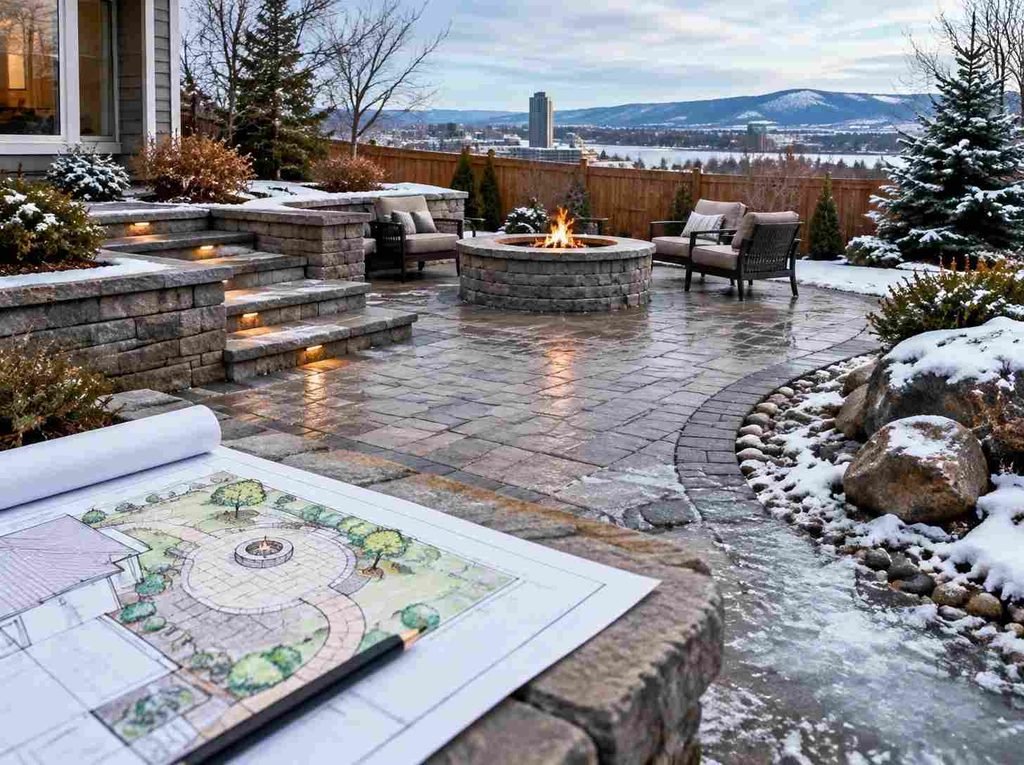
Choose Suitable Wall Materials
You can use the following materials for retaining walls:
- Segmental concrete retaining wall blocks.
- Natural stone.
- Concrete masonry units.
- Engineered retaining wall systems.
The choice depends on wall height, soil conditions, appearance, and structural requirements.
Taller or heavily loaded retaining walls may require engineering input and additional permits.
Plan Walkways and Steps for Safe Winter Access
Walkways and outdoor steps should be practical all year round, even when it snows or is icy.
There is a well-planned pathway to connect different areas of the backyard and to lessen unnecessary movement across wet or uneven ground.
When planning walkways, consider:
- Choosing materials with suitable slip-resistant surface textures.
- Maintaining consistent step heights.
- Providing stable support beneath paved surfaces.
- Avoiding unnecessary low spots where water can collect.
- Directing runoff away from walking routes.
- Allowing enough width for comfortable movement and maintenance.
Walkway location is also important. Access to the house, patio, garage and garden should be easy and accessible.
When choosing paving materials, homeowners should consult with their property manager about the need for winter maintenance where snow is likely to fall often.
Consider Outdoor Living Features During the Design Stage
Some backyard hardscape projects have more to offer than patios and walkways. Some extra outdoor amenities can enhance accessibility as well as provide greater organization to the landscape.
These features, however, must be designed to take into account the seasonal weather.
Outdoor Fire Pits
Fire pits can make for a relaxing outdoor oasis during the chill evenings.
The area around the patio needs to be level with a stable surface, and materials need to be suited to the temperature.
It’s also important for homeowners to know about clearances, local fire codes, and safe locations that will prevent combustible materials and structures from being in the way.
Outdoor Kitchens
Backyard entertaining can be easier with an outdoor kitchen.
They need to be designed to drain, connect to utilities, use the right kind of paving material for them, and protect equipment in winter.
Exterior exposed Cabinetry, countertops, and Appliances should be chosen.
Seating and Gathering Areas
A backyard doesn’t need a lot of remodeling to be more functional with a dedicated seating area.
Consider water drainage around the patio and furniture space for winter maintenance when making furniture placement decisions.
Common Hardscaping Mistakes to Avoid in Albany
Sometimes backyard hardscape issues occur as a result of decisions taken prior to the start of construction.
Avoiding common mistakes can help improve the performance and lifespan of outdoor installations.
| Common mistake | Potential problem | Better approach |
| Choosing unsuitable materials | Cracking and surface deterioration | Select products rated for exterior freeze-thaw exposure |
| Poor base preparation | Settling and uneven pavers | Install and compact a suitable aggregate base |
| Ignoring drainage | Water accumulation and frost movement | Plan surface grading and drainage systems |
| Incorrect patio slope | Water collecting near the house | Establish appropriate drainage direction |
| Using inadequate joint materials | Joint deterioration and movement | Follow the paving system’s installation guidelines |
| Poor retaining wall drainage | Increased pressure and wall movement | Install appropriate drainage behind the wall |
| Ignoring winter maintenance | Surface damage and safety problems | Follow suitable snow and ice maintenance practices |
Before construction, homeowners should talk to their contractor about these ideas to prevent extra costs.
How to Choose Hardscape Contractors in Albany NY
One of the most crucial components of planning a long-lasting backyard is picking an experienced contractor.
Building a decorative wall and placing paving stones are not a part of professional hardscape installation. Contractors need to be familiar with site preparation, drainage, choice of materials, grading, and construction methods that are appropriate for the climate.
The following factors should be taken into account when deciding on a hardscape contractor in Albany NY.
Experience With Cold-Climate Projects
Ask if the contractor has finished patios, walkways, and retaining walls in areas where there is repeated freeze-thaw.
Learning from similar projects can provide insight into suitable installation needs.
Previous Project Examples
Look at pictures of finished work and see what the contractor is capable of doing and how he works.
If at all possible, inquire about examples of patios or walkways that have not moved or shifted over a number of winters.
Material Recommendations
There should be a good explanation for why certain materials are suitable for the project from a knowledgeable contractor.
Inquire about the ratings of the exterior products, maintenance needs, and installation process.
Drainage and Base Preparation
Discuss with the contractor how they will prepare the ground and will control water.
A proposal should cover the significant aspects of the construction work, and should not just be about the visible paving materials.
Written Estimates and Project Details
Prior to approval of a project, ask for a written quote that includes:
- Materials and quantities.
- Excavation and preparation work.
- Base installation.
- Drainage components.
- Labor costs.
- Project schedule.
- Warranty information where applicable.
When comparing estimates in detail, homeowners can gain insight into what the contractors are offering.
Conclusion
Designing a long-lasting backyard in Albany involves planning for seasonal weather, soil type, and the choice of materials and drainage. Patios, walkways, retaining walls, and other outdoor structures can be damaged by freeze-thaw cycles, which occur when water is allowed to penetrate the ground or into the paving materials and then freezes and thaws.
Successful Hardscaping Albany NY projects begin with proper backyard hardscape planning, including a stable foundation, suitable paving materials, effective drainage, and thoughtful outdoor layouts. Choosing a freeze-thaw resistant patio system and working with experienced hardscape contractors Albany NY homeowners can rely on can also help reduce the risk of premature damage.
Homeowners can design spaces outside their homes that are appealing, usable, and more resilient to the changing seasons around Albany by taking these factors into account before building and engaging in proper maintenance during the seasons. KD Landscaping can help homeowners plan and create durable outdoor spaces with hardscaping solutions designed to meet their property’s needs.
Frequently Asked Questions
1. How does freeze-thaw weather damage hardscaping?
Water enters small openings, freezes, and expands. Repeated cycles can contribute to cracks, shifting, and surface deterioration.
2. What is the best patio material for Albany winters?
Exterior-rated concrete pavers, suitable natural stone, and properly installed concrete can all work well when selected for local conditions.
3. Why is drainage important for backyard hardscaping?
Proper drainage prevents water from collecting beneath patios, around retaining walls, and near building foundations.
4. Are concrete pavers suitable for freeze-thaw conditions?
Yes. Quality exterior-rated pavers can perform well when installed over a properly prepared and compacted base.
5. How deep should a patio base be in Albany?
The required depth depends on soil conditions, paving materials, intended use, and local frost requirements. A contractor should assess the property.
6. Can natural stone withstand Albany winters?
Certain dense natural stones can handle cold conditions, but performance depends on water absorption, durability, and installation quality.
7. How do I prevent patio pavers from shifting?
Proper excavation, base compaction, edge restraints, suitable bedding materials, and effective drainage help reduce movement.
8. When is the best time to install backyard hardscaping in Albany?
Spring, summer, and early fall are common installation periods when suitable weather and ground conditions allow proper construction.
9. How often should hardscaping be inspected?
Inspect outdoor surfaces at least twice a year, particularly before winter and after the spring thaw.
10. How do I choose reliable hardscape contractors in Albany NY?
Compare local experience, previous projects, material recommendations, drainage plans, written estimates, and warranty details before making a decision.


