
The blog explains the Hydroseeding Benefits for Fast and Healthy Lawn Growth in NY. If you have ever looked at a lawn that was patchy or bare or was worn down, and thought to yourself how did your neighbor’s lawn turn from dirt to a lush green lawn in such a short amount of time? You’ve probably thought about hydroseeding. Whether it’s a humid summer in Buffalo or a frigid winter in Rochester or the Hudson Valley, homeowners and property managers alike are choosing hydroseeding as their preferred choice for grass installation. It is quicker, less expensive than sod and better than dry seeding.
We will discuss what hydroseeding is, why it is so effective in New York’s soil and climatic conditions, and compare it to other methods of establishing a lawn. Whether you’re planning a full lawn overhaul or patching up problem areas, understanding the hydroseeding benefits available to you can help you make a smarter, more cost-effective decision.
What Is Hydroseeding?
The hydroseeder method of planting combines grass seed, mulch, fertilizer and a tackifying agent with water to create a slurry. That slurry is then applied evenly to the soil, using special equipment. The mulch component prevents water from reaching the seed, shields it from wind and erosion and provides a good microclimate to aid in germination.
Unlike sod, which is grown elsewhere and then brought in and installed as a pre-formed lawn, hydroseeding does not involve the transportation of pre-cut sod; instead, grass is grown from seed right on your property. Unlike dry seeding, in which seed is simply spread over bare ground, hydroseeding applies a protective and nourishing coating to each seed that greatly enhances the likelihood of successful germination.
This leaves a lawn that is grown more evenly, rooted deeper, and that thrives better in local soil conditions than most other alternatives.
Why Hydroseeding Works So Well in New York
The climate in New York poses some special problems for establishing lawns. The weather in winter can be very cold with snowfall, and spring in summer can be very wet with hot, low rainfall in between, and again in early summer. The variety of soils is also great throughout the state, ranging from the clayey soils found near Rochester to the sands and gravels found in the vicin6ity of the Great Lakes basin near Buffalo.
These conditions are well-suited to hydroseeding in a couple of ways:
- Adhesion of water to the seed: The mulch slurry retains water in the seed even in the event of variable weather conditions during spring planting to minimise the risk of seed drying out before germination.
- Erosion control: The bonded mulch layer may prevent seed and soil from washing out of the yard or property when it rains and the soil is loose, as may occur in Buffalo and Rochester during the spring thaw.
- Flexibility of soil amendment: The slurry mix can be tailored to match the pH and nutrient level of New York’s clay or sandy loam soils.
- Cold-season adaptability: The timing of the hydroseeding operation may be adjusted to either spring or early fall planting to fit New York’s two best planting seasons, prior to the onset of summer heat or winter freeze.
Top Hydroseeding Benefits for Homeowners
1. Faster, More Even Germination
The quick results that can be achieved with hydroseeding are one of the best known advantages. With the seed already soaked in a moisture-holding mulch matrix, germination can occur as early as 5 to 10 days when conditions are optimal, which is much more rapid than with traditional dry seeding, which often has uneven soil contact and moisture loss resulting in uneven growth.
2. Cost-Effective Compared to Sod
Sod is very quick to have a green surface, and it is very expensive, both in terms of the cost of the sod itself and in labor costs. In addition to being less expensive than sod installation per square foot, hydroseeding is often more attractive to larger property owners, commercial buildings and homeowners who have a specific landscaping budget.
3. Stronger Root Development
Hydroseeded grass always grows in one soil environment and can thrive more naturally than sod which is grown in another soil and then transplanted. Longer, more root adapted means more drought tolerance, and long-term drought resistance — much needed in New York’s erratic climate.
4. Excellent for Large or Irregular Areas
Large or irregularly shaped properties may require more labor to install sod on them and may yield higher costs. Hydroseeders are great for seeding large areas fast and evenly, in residential neighborhoods with large lots, on sports fields, at commercial sites and on steep slopes where erosion is a concern.
5. Built-In Fertilization and Soil Support
Because fertilizer and soil tackifiers are mixed directly into the hydroseeding slurry, your new lawn gets a nutrient boost right from the start. This head start supports fast lawn growth and reduces the need for immediate follow-up fertilizer applications during the critical early establishment period.
6. Environmentally Friendly Application
The hydroseeding mulch is usually comprised of recycled wood fiber or paper-based mulch, and the water use during hydroseeding is less than that of bare, exposed soil during germination. It also helps to prevent topsoil erosion and runoff — an important benefit on properties that border streams, ponds, or have steep slopes, which are prevalent in upstate New York.
Hydroseeding vs. Traditional Seeding vs. Sod
| Factor | Hydroseeding | Dry Seeding | Sod |
| Germination speed | 5–10 days | 10–20+ days | Instant (pre-grown) |
| Cost per square foot | Moderate | Low | High |
| Root development | Strong, native-adapted | Moderate | Can be weaker initially |
| Erosion resistance | High | Low | Moderate |
| Best use case | Full lawns, slopes, large areas | Small patches, budget projects | Instant curb appeal, small areas |
Dry seeding is the most inexpensive method in the beginning, but it is the least dependable method considering the diversity of New York’s weather. Sod provides almost instant results, but comes at a significantly higher cost and is not as well adapted to a specific soil. Hydroseeding is probably the best option for the homeowner who wants something that will grow quickly, be affordable and benefit the long-term health of their lawn.
Best Time of Year to Hydroseed in New York
Seed time is important to hydroseeding success. The two ideal windows in NYC are:
- Many landscaping professionals prefer to work in the fall since the weather is cooler, the rainfall is steady, and there are fewer weeds to contend with during the early fall (late August – September).
- Another good period of seeding opportunities is in the spring (April-May) after the last hard frost and before the heat of summer.
Generally, it is advised to avoid the summer months as high temperatures and erratic rainfall can cause stress to young grass before it can develop a good root system.
What to Expect After Hydroseeding
After your lawn has been hydroseeded, a little attention can make a lot of difference in helping your lawn grow quickly and stay healthy:
- Watering schedule: New hydroseeded lawns should be watered often, and shallowly, about as much as multiple waterings daily, for the first 2-3 weeks, to keep the mulch layer moist but not water-soaked.
- Foot traffic: Pets, children and lawn equipment should be kept off until after 2-3 mowings, when the grass root system should be sufficiently developed to withstand light use.
- First mow: Most hydroseeded lawns will be ready for a first mow in 3-4 weeks, when the grass is about 3-4 inches tall.
- Fertilization follow-up: Starter fertilizer is added to the initial slurry, but fertilization follow-up may be necessary around 6 to 8 weeks after germination to maintain good growth for the next season.
Better Lawn Establishment for New Construction Properties
New homes built and commercial developments often have problems establishing a healthy lawn. The topsoil may be compacted, disturbed or uneven during construction, which can make the installation of traditional grass seeding difficult. Hydroseeding is an effective method that evenly distributes grass seed, nutrients and protective mulch over newly prepared soil.
Hydroseeding allows building owners, property managers and homeowners in New York to create a beautiful green space sooner in areas that are being built. The slurry application will provide good seed contact with the soil so that the roots of the grass develop in an appropriate manner and provide a strong foundation for a lawn.
From a new home in the suburbs to a large commercial project, hydroseeding can be a practical solution for covering large areas with uniform sod.
Improves Lawn Density and Reduces Patchy Growth
A disadvantage of traditional seeding is that the grass may not grow evenly. Excessive and/or inadequate seeding rates may be experienced in some areas. Seeds can also be dispersed by wind, rain, birds and soil movement.
Many of these problems are eliminated when you hydroseed the lawn because the seed mixture is spread evenly throughout the lawn surface. The protective mulch layer keeps seeds in place, while ensuring sufficient moisture for successful germination.
This creates a thicker, more even grass surface with fewer bare areas. This is a great option for homeowners who are looking to get a beautiful lawn without having to wait a few years for grass to grow through the sod that they have established.
Helps protect against soil erosion
Soil erosion is a common problem on New York properties that feature slopes, hills, or areas prone to heavy rainfall. A loss of topsoil and grass seed before it’s established can be caused by storms when bare soil is exposed.
Another benefit of hydroseeding is that the mulch and tackifier mix keeps the seed firmly in place. This is particularly helpful for:
- Sloped residential yards
- Commercial landscaping projects
- Roadside properties
- Drainage areas
- Construction sites
- Properties near waterways
Hydroseeding will help protect the soil structure and create healthier lawns by minimizing erosion in the early growth stage.
Less Labor Compared to Traditional Lawn Installation
Seeding a lawn with traditional seeding practices can be labor intensive. The preparation of the ground, seeding, fertilizer application and protection of the land from erosion can take up a lot of time, particularly on larger properties.
Hydroseeding is a way to efficiently spray seed large areas with specialized equipment. Professional hydroseeding crews are able to apply seed to the property much faster than spreading seed by hand.
This lessens the need for manpower and offers larger coverage and uniform results. For homeowners and businesses with larger landscapes, hydroseeding is a more efficient method of installing grass than traditional lawn installation.
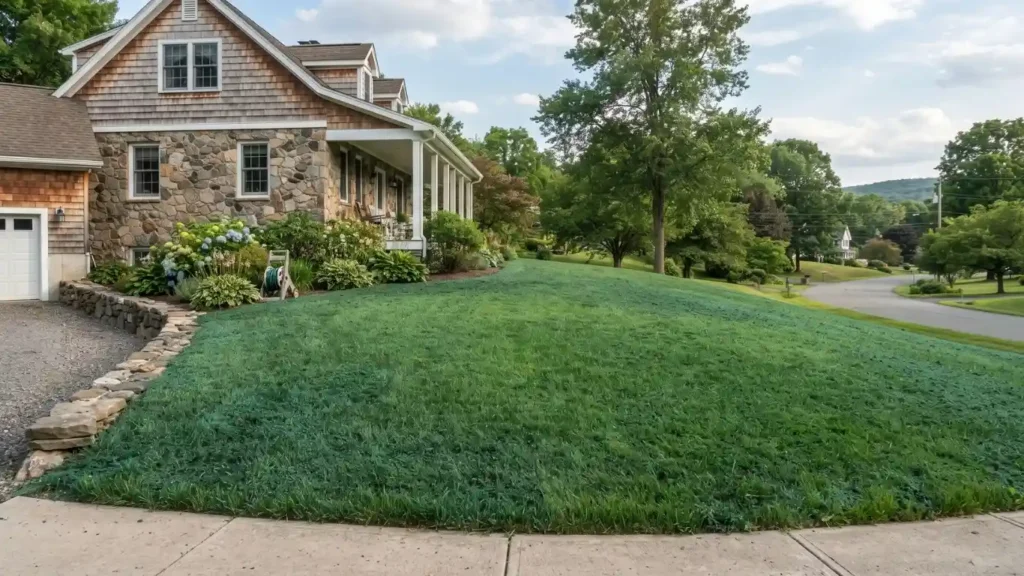
Custom Grass Seed Mixtures for New York Conditions
Soil conditions, sun exposure, drainage and lawn needs vary from property to property. Customizing the seed mixture according to the environment is one of the benefits of hydroseeding.
Professional contractors can choose grass species that thrive in New York’s climate such as mixes for:
- Full sun areas
- Shaded lawns
- High-traffic areas
- Drought-resistant landscapes
- Commercial properties
- Residential yards
This customization helps to make lawns more resilient and better suited to New York’s seasonal fluctuations.
Increases Long-Term Lawn Durability
Healthy grass doesn’t mean just quick green cover; it means building healthy grass to withstand changing weather conditions. Hydroseeding promotes improved root growth since the grass develops naturally from seed in soil already in place.
Lawns perform better under all of the following conditions with stronger roots:
- Summer heat
- Heavy rainfall
- Winter freezing temperatures
- Foot traffic
- Seasonal weather changes
With time, a good hydroseeded lawn can grow thicker, healthier and easier to care for than lawns that were not hydroseeded as well.
Final Thoughts
Hydroseeding is a great solution for New York homeowners and property managers who are seeking a more effective and cost-friendly way to get a lush, green lawn. It also offers a very economical alternative to traditional seeding with germination and erosion protection that more closely approximate sod. The ability to hold moisture and amend soil both naturally and seasonally, as provided with hydroseeding, is ideal for New York where soil conditions are variable and the weather changes from season to season.
Hydroseeding is an effective way to get a lawn up and growing quickly, whether you’re trying to regrow a lawn that has been salted over the winter, are working on a large new-construction project, or simply desire to plant a stronger lawn than the patchy dry-seeded option. Similar to any landscaping job, it is crucial to work with a seasoned local grass installation contractor that is knowledgeable about the soil and climate in New York.
Frequently Asked Questions
1. How long does hydroseeding take to show results?
Depending on the weather and watering consistency, the most common hydroseedered turf starts to germinate within 5-10 days and is usually covered with grass within 3-4 weeks.
2. Is hydroseeding more affordable than sod?
Yes. Typically, hydroseeding is much more cost-effective than sod installation and is a preferred option for larger properties or for budget-conscious projects.
3. When is the best time to hydroseed in New York?
Fall (late August to September) and spring (April to May) are the optimal time windows because there is more consistent rainfall and cooler weather during those periods than in the summer.
4. How often do I need to water a newly hydroseeded lawn?
New lawns will need frequent watering (several times per day) for the first 2 to 3 weeks to maintain a moist seed bed, but not so wet that it becomes waterlogged.
5. Can hydroseeding be used on slopes or erosion-prone areas?
Yes. Bonded mulch layer in hydroseeding helps maintain seed and soil on site and is a good choice on slopes or properties that are susceptible to erosion.
6. How does hydroseeding compare to traditional dry seeding?
Generally, hydroseeding results in faster, even germination and greater moisture retention than dry seeding because the seed is contained in a mulch slurry, which is rich in nutrients, that protects from germinating on bare ground.
7. When can I walk on or mow a hydroseeded lawn?
Most lawns are suitable for foot traffic and first mowing 2-3 weeks after cutting the grass, when it is 3-4 inches tall, following two or three cuts.
8. Does hydroseeding work well in New York’s clay soil?
Yes. The hydroseeding slurry can be tailored to the clay soil or variable soils found throughout the Buffalo and Rochester areas and can be amended with soil and fertilizers.
9. Is hydroseeding environmentally friendly?
Mulch is generally comprised of recycled wood fiber or paper and it helps prevent erosion and run-off of the topsoil during the germination process, as opposed to bare soil being exposed.
10. Do I need to fertilize after hydroseeding?
A starter fertilizer is supplied with the first application, but a second application of fertilizer around 6 to 8 weeks after germination is usually recommended to ensure continued good growth.


